

2 Bu – Japan
Japan
Context

Material
References
Numista: #27005
Value
Bullion value: $536.85
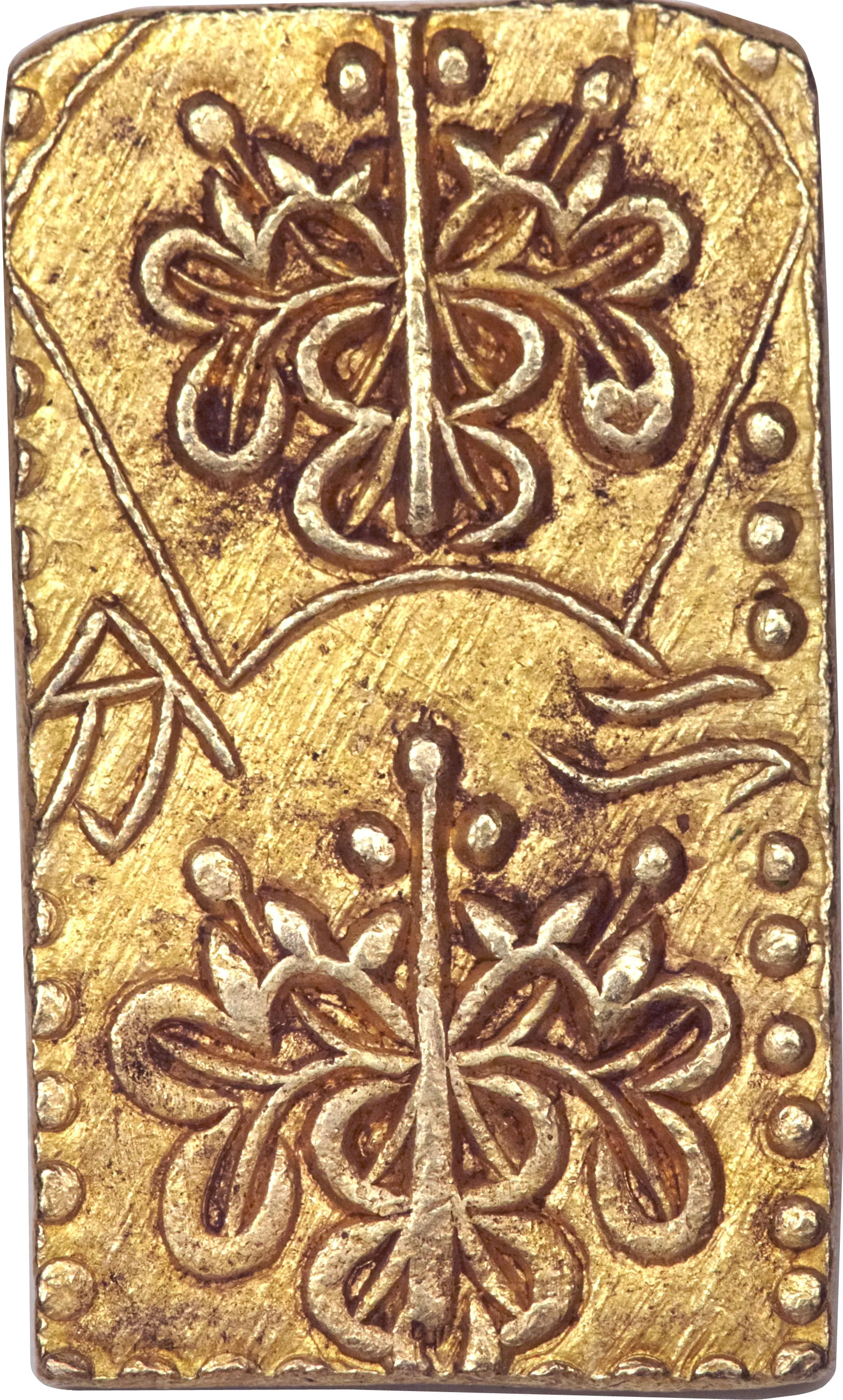
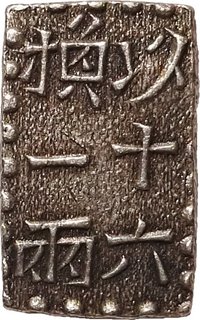
Obverse
Description:
Kiri crests above and below the central value.
Inscription:
分 二
Translation:
Two Fen
Language: Chinese
Engraver: Shozaburo Mitsutsugu
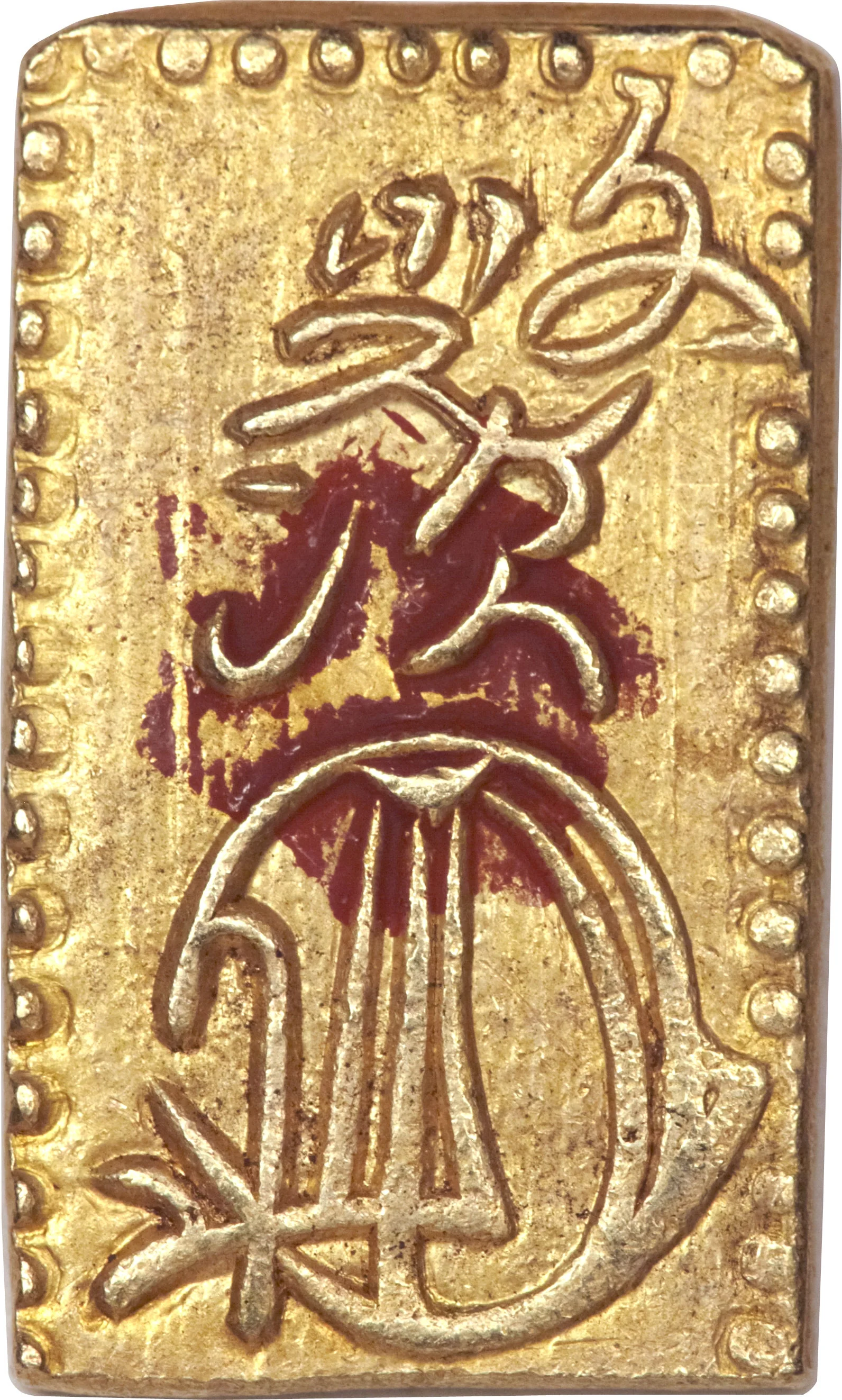
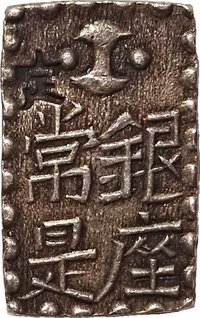
Reverse
Description:
The Mint Official and his signature.
Inscription:
文
光
次
光
次
Translation:
Civil and Military Affairs
Prosperity and Abundance
Prosperity and Abundance
Language: Chinese
Engraver: Shozaburo Mitsutsugu
Edge
Mints
| Name | Mark |
|---|---|
| Kinza, Edo | — |
Mintings
| Year | Mint Mark | Mintage | Quality | Collection |
|---|---|---|---|---|
| — | — | 4,066,123 |
Historical background
In 1828, Japan operated under a complex and strained multi-metallic currency system, strictly controlled by the Tokugawa shogunate. The official system was based on three coinages: gold koban (oval coins) for large domains and samurai stipends, silver chogin (bulky oval ingots) for major merchant transactions, and copper zeni for everyday use. Exchange rates between these metals were set by the shogunate, but the system was plagued by chronic debasement. Facing persistent fiscal deficits, the government repeatedly reduced the precious metal content in coins while maintaining their face value, leading to inflation and a loss of public trust in the currency.
The situation was further complicated by the proliferation of hansatsu, or domainal paper notes, issued by over 200 individual feudal domains (han). These notes, which circulated only within their issuing domain, were a response to both a shortage of central coinage and the domains' own desperate financial straits. Their value and reliability varied wildly, creating a chaotic patchwork of currencies that hampered nationwide trade. Furthermore, a thriving black market in currency exchange existed, where the actual market value of gold, silver, and copper diverged significantly from the shogunate's official rates, undermining its economic authority.
This unstable monetary environment reflected the broader structural weaknesses of the late Tokugawa period. The rigid feudal economy, burdened by samurai stipends and agricultural taxation, was ill-suited to the commercial expansion of the era. The currency crisis of 1828 was not an isolated event but part of a long-term decline, contributing to social unrest and weakening the shogunate's control. It set the stage for further financial turmoil in the 1830s, which would prompt the failed Tenpō Reforms in a last-ditch effort to restore stability before the system's eventual collapse.
The situation was further complicated by the proliferation of hansatsu, or domainal paper notes, issued by over 200 individual feudal domains (han). These notes, which circulated only within their issuing domain, were a response to both a shortage of central coinage and the domains' own desperate financial straits. Their value and reliability varied wildly, creating a chaotic patchwork of currencies that hampered nationwide trade. Furthermore, a thriving black market in currency exchange existed, where the actual market value of gold, silver, and copper diverged significantly from the shogunate's official rates, undermining its economic authority.
This unstable monetary environment reflected the broader structural weaknesses of the late Tokugawa period. The rigid feudal economy, burdened by samurai stipends and agricultural taxation, was ill-suited to the commercial expansion of the era. The currency crisis of 1828 was not an isolated event but part of a long-term decline, contributing to social unrest and weakening the shogunate's control. It set the stage for further financial turmoil in the 1830s, which would prompt the failed Tenpō Reforms in a last-ditch effort to restore stability before the system's eventual collapse.
✨ Legendary