

⅛ Ryō – Japan
Japan
Context
Material
Weight: 7.53 g
Silver weight: 7.36 g
Thickness: 2.2 mm
Shape: Irregular rectangular
Composition: 97.8% Silver
Magnetic: No
Techniques: Hammered, Countermarked
Alignment: Medal alignment
flip
References
Numista: #16681
Value
Bullion value: $21.36
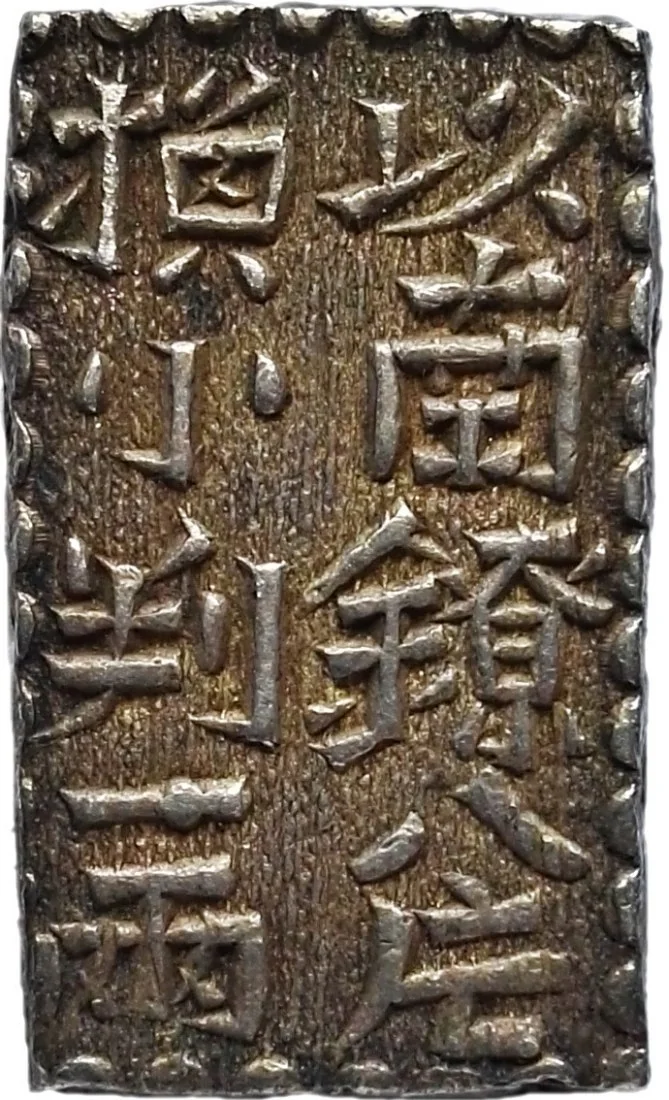
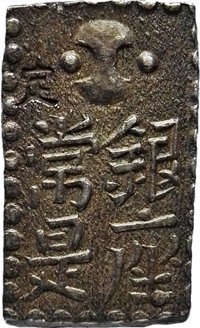
Obverse
Description:
"Ten kanji in pearl border: '以南鐐八片, 換小判一兩'."
Inscription:
換以
小南
判鐐
一八
兩片
小南
判鐐
一八
兩片
Translation:
Exchange for
Southern
Cash
Eighteen
Two Pieces
Southern
Cash
Eighteen
Two Pieces
Scripts: Chinese (traditional, regular script)
Language: Classical Chinese
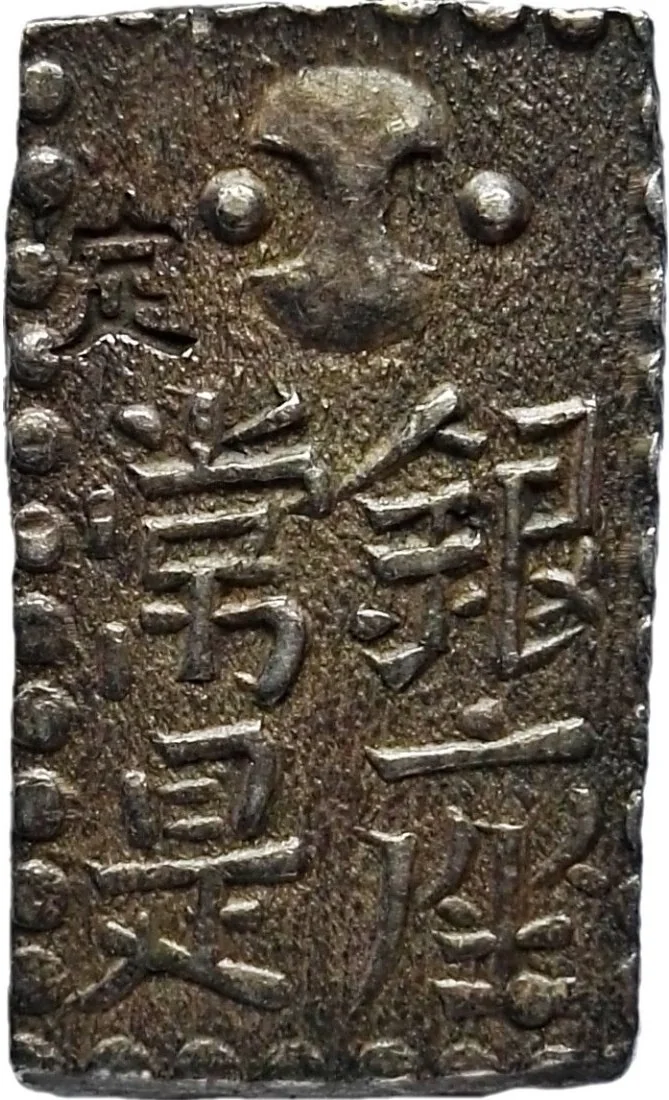
Reverse
Description:
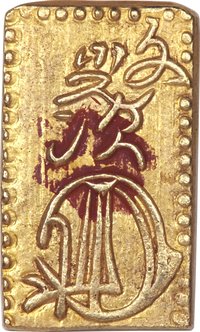
Fundō with incuse stamp 定 left of four kanji within a pearl border.
Inscription:
定
常銀
是座
常銀
是座
Translation:
Fixed Standard Silver;
This is the seat.
This is the seat.
Scripts: Chinese (traditional, regular script)
Language: Classical Chinese
Edge
Vertical reeding on short sidesslanted reeding on long sideswith incuse sakura
Mintings
| Year | Mint Mark | Mintage | Quality | Collection |
|---|---|---|---|---|
| — | — | 60,624,000 |
Historical background
In 1824, Japan's currency system was a complex and increasingly strained multi-metallic structure operating under the strict isolationist policy of the Tokugawa shogunate (sakoku). The economy relied on three primary coinages: gold (koban and ōban coins), silver (chōgin and mameita-gin), and copper (mon and kanmon strings). Critically, these currencies did not have a fixed exchange rate with each other; their values fluctuated against one another in different regions and on the private exchange markets (ryōgaeshō), leading to confusion and arbitrage opportunities. Furthermore, the shogunate and over 250 semi-autonomous domains issued their own paper scrip, known as hansatsu, which was only valid within the issuing domain's borders, further complicating nationwide trade and finance.
The system was under significant pressure due to decades of debasement. Facing chronic fiscal deficits, the shogunate had repeatedly reduced the precious metal content in its coins while maintaining their face value, a short-term measure to increase revenue that eroded public trust and spurred inflation. The outflow of gold and silver through limited but vital trade with Dutch and Chinese merchants at Nagasaki exacerbated specie shortages. By 1824, these structural weaknesses had created widespread economic malaise, price instability, and a thriving black market for currency exchange, which undermined the shogunate's control over the economy.
This precarious monetary environment set the stage for the Tenpō Reforms (1841-1843), a few years later. In 1824 itself, authorities were acutely aware of the disorder but were yet to enact major corrective measures. The inherent instability of the multi-currency system, combined with domainal debt and rising commodity prices, highlighted the growing disconnect between the rigid, feudal monetary policies and the needs of a commercializing economy. This financial fragility was a significant underlying stress point within the Tokugawa state, contributing to the unrest that would culminate in its eventual downfall decades later.
The system was under significant pressure due to decades of debasement. Facing chronic fiscal deficits, the shogunate had repeatedly reduced the precious metal content in its coins while maintaining their face value, a short-term measure to increase revenue that eroded public trust and spurred inflation. The outflow of gold and silver through limited but vital trade with Dutch and Chinese merchants at Nagasaki exacerbated specie shortages. By 1824, these structural weaknesses had created widespread economic malaise, price instability, and a thriving black market for currency exchange, which undermined the shogunate's control over the economy.
This precarious monetary environment set the stage for the Tenpō Reforms (1841-1843), a few years later. In 1824 itself, authorities were acutely aware of the disorder but were yet to enact major corrective measures. The inherent instability of the multi-currency system, combined with domainal debt and rising commodity prices, highlighted the growing disconnect between the rigid, feudal monetary policies and the needs of a commercializing economy. This financial fragility was a significant underlying stress point within the Tokugawa state, contributing to the unrest that would culminate in its eventual downfall decades later.
💎 Very Rare