

1⁄16 ryō – Japan
Add to wishlist
Japan
Context
Material
Weight: 2.63 g
Silver Weight:: 2.60 g
Thickness: 1.9 mm
Shape: Irregular rectangular
Composition: 98.9% Silver
Magnetic: No
Techniques: Hammered, Countermarked
Alignment: Medal alignment
flip
References
Numista: #16679
Value
Bullion value: $6.65
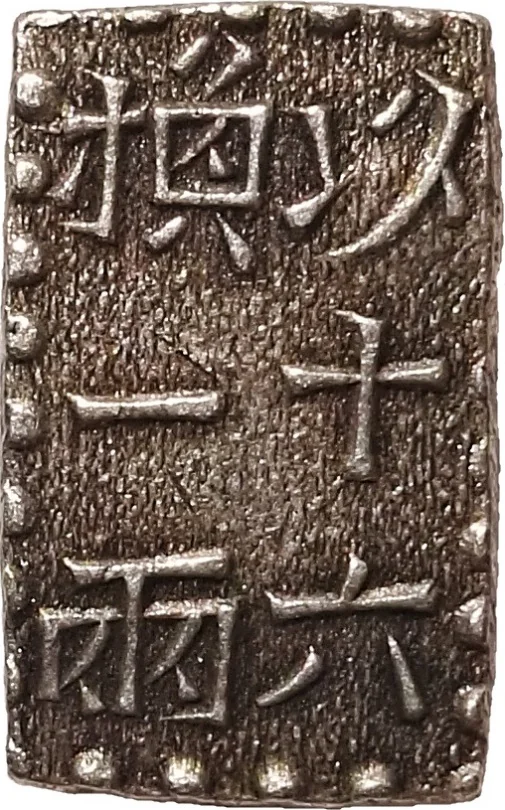
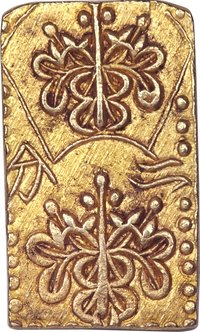
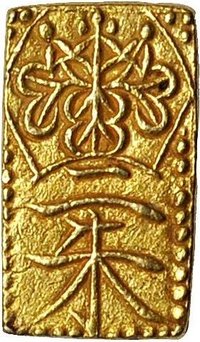
Obverse
Description:
Six kanji encircled by pearls.
Inscription:
換以
一十
兩六
一十
兩六
Translation:
Exchange for
Ten
Taels and Six Maces
Ten
Taels and Six Maces
Language: Chinese
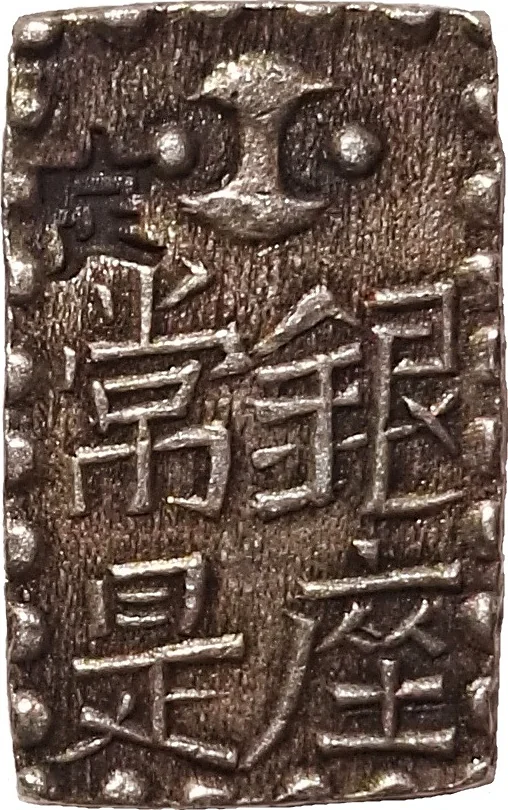
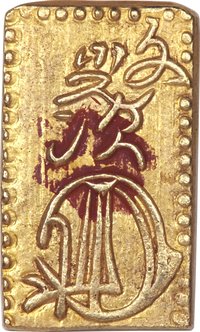
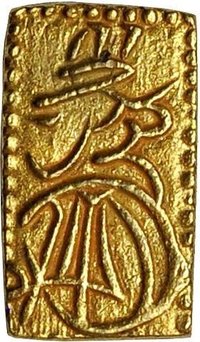
Reverse
Description:
Fundō with incuse stamp 定 left of four kanji within a pearl border.
Inscription:
定
常銀
是座
常銀
是座
Translation:
Fixed Standard Silver;
This is the seat.
This is the seat.
Language: Classical Chinese
Edge
Vertical reeding on short sidesSlanted reeding on long sides
Mintings
| Year | Mint Mark | Mintage | Quality | Collection |
|---|---|---|---|---|
| — | — | 139,915,000 |
Historical background
In 1829, Japan operated under a complex and strained multi-metallic currency system, strictly controlled by the Tokugawa shogunate. The official economy relied on three coinage types: gold ryō (and koban) for large transactions and the samurai elite, silver momme (in weighed ingots or coins) for regional commerce, particularly in Osaka, and copper mon (in strings of zeni) for everyday commoner use. This system was not nationally unified; exchange rates between gold, silver, and copper were set by government decree but fluctuated in practice based on region and market pressures, managed by official money changers (ryōgaeya).
The period was marked by severe financial instability and debasement. Facing chronic fiscal deficits, the shogunate, under Senior Councillor Mizuno Tadakuni, had embarked on the Tenpō Reforms (from 1842, but preceded by earlier measures). However, in the decades leading to 1829, successive debasements had eroded currency value. The government frequently recalled coins, re-minted them with lower precious metal content, and profited from the seigniorage to fill its coffers. This led to rampant inflation, economic confusion, and a loss of public trust in official currency, encouraging the circulation of private counterfeits and clan notes (hansatsu).
Consequently, the currency situation in 1829 was one of underlying crisis. While the formal tri-metallic system persisted, its integrity was crumbling. The debasements transferred wealth from the samurai (on fixed stipends) and commoners to the shogunate and merchant financiers, exacerbating social tensions. This monetary instability reflected the broader structural weaknesses of the Tokugawa regime, contributing to the economic discontent that would fuel the political upheavals of the coming decades.
The period was marked by severe financial instability and debasement. Facing chronic fiscal deficits, the shogunate, under Senior Councillor Mizuno Tadakuni, had embarked on the Tenpō Reforms (from 1842, but preceded by earlier measures). However, in the decades leading to 1829, successive debasements had eroded currency value. The government frequently recalled coins, re-minted them with lower precious metal content, and profited from the seigniorage to fill its coffers. This led to rampant inflation, economic confusion, and a loss of public trust in official currency, encouraging the circulation of private counterfeits and clan notes (hansatsu).
Consequently, the currency situation in 1829 was one of underlying crisis. While the formal tri-metallic system persisted, its integrity was crumbling. The debasements transferred wealth from the samurai (on fixed stipends) and commoners to the shogunate and merchant financiers, exacerbating social tensions. This monetary instability reflected the broader structural weaknesses of the Tokugawa regime, contributing to the economic discontent that would fuel the political upheavals of the coming decades.
💎 Extremely Rare