

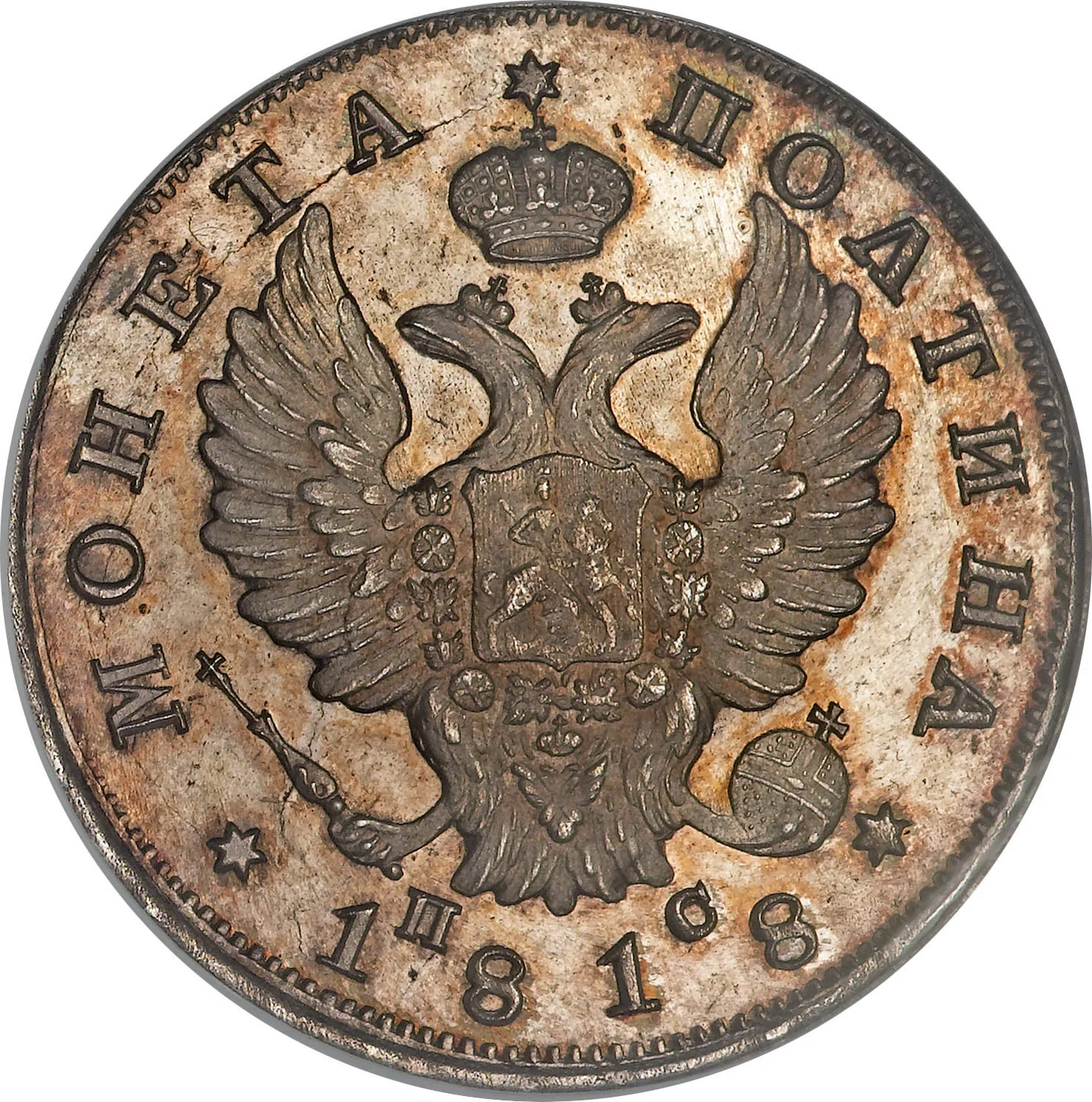
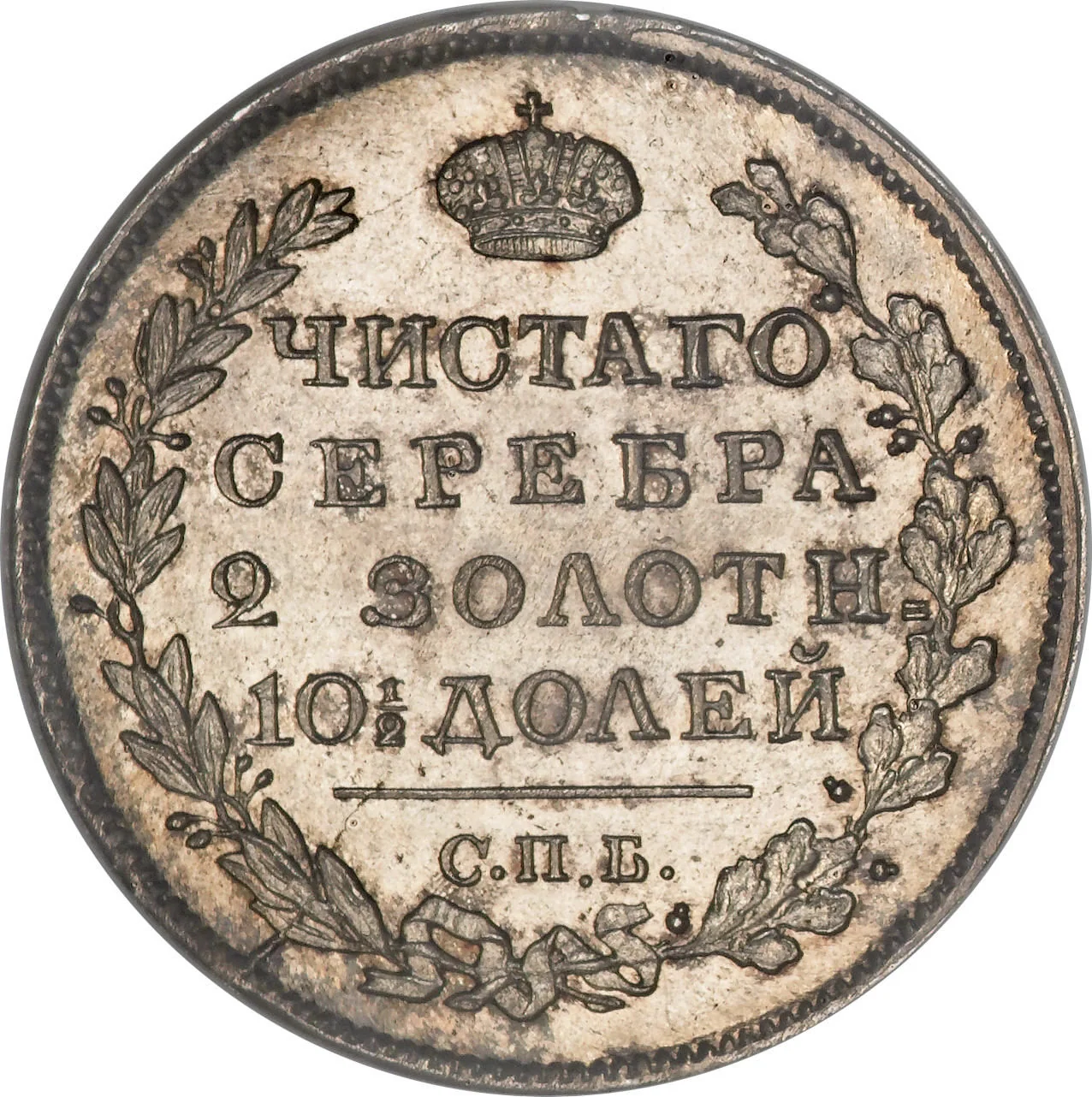
1 poltina – Russian Empire
Add to wishlist
Russia
Context
Years: 1810–1826
Country: Russia
Issuer: Russian Empire
Ruler: Alexander I
Currency:
(1700—1917)
Demonetized: Yes
Total mintage: 16,058,009
Material
References
Numista: #26901
Value
Bullion value: $22.82
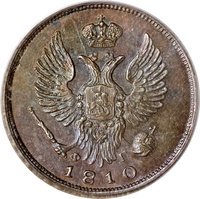
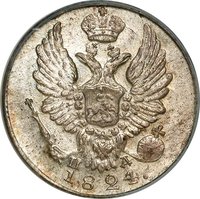
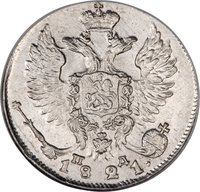
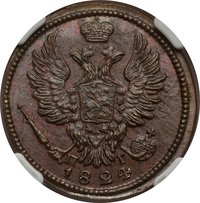
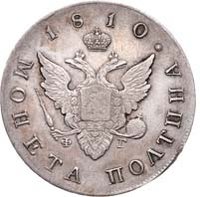
Obverse
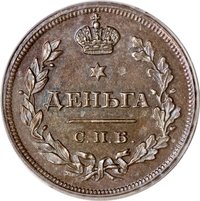
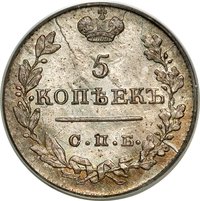
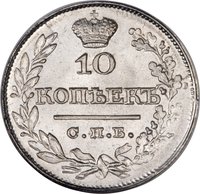
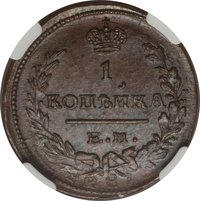
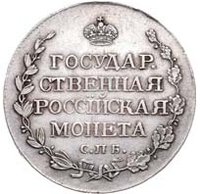
Reverse
Edge
Smooth with inscription
Categories
| Symbols> Coat of Arms |
Mints
| Name | Mark |
|---|---|
| Saint Petersburg | СПБ |
Mintings
Historical background
By 1810, the currency situation in the Russian Empire was one of severe crisis, directly tied to its near-constant state of war. To finance conflicts against the Ottoman Empire, Sweden, and, most significantly, the Napoleonic Wars, the government under Alexander I had resorted to massive printing of paper assignats (assignatsii) not backed by silver. This led to rampant inflation and a catastrophic divergence between the paper ruble and the silver ruble; by 1810, the assignat ruble had lost roughly three-quarters of its face value, trading at about 25-27 silver kopecks.
Recognizing the threat this posed to state credit, trade, and the economy, the Tsar’s government, influenced by his reform-minded advisor Mikhail Speransky, undertook a major financial reform in 1810. The manifesto "On the New Structure of the Monetary System" declared the silver ruble as the core monetary unit and fixed all taxes and state transactions in silver. It aimed to halt the printing of new assignats, withdraw a portion from circulation, and establish a loan bank to manage a state debt funded by new taxes. The goal was to restore public confidence and stabilize the currency by re-establishing a metallic standard.
However, the timing of this rigorous reform proved disastrous. The planned fiscal discipline was shattered by the imminent French invasion in 1812, which forced the government to abandon its austerity measures and return to unrestrained printing of assignats to fund the Patriotic War. Consequently, the well-conceived 1810 plan collapsed in practice. The inflationary spiral worsened, and the fundamental instability of the paper currency would remain a chronic problem for the Russian state until the more successful reforms of the 1830s and 1840s.
Recognizing the threat this posed to state credit, trade, and the economy, the Tsar’s government, influenced by his reform-minded advisor Mikhail Speransky, undertook a major financial reform in 1810. The manifesto "On the New Structure of the Monetary System" declared the silver ruble as the core monetary unit and fixed all taxes and state transactions in silver. It aimed to halt the printing of new assignats, withdraw a portion from circulation, and establish a loan bank to manage a state debt funded by new taxes. The goal was to restore public confidence and stabilize the currency by re-establishing a metallic standard.
However, the timing of this rigorous reform proved disastrous. The planned fiscal discipline was shattered by the imminent French invasion in 1812, which forced the government to abandon its austerity measures and return to unrestrained printing of assignats to fund the Patriotic War. Consequently, the well-conceived 1810 plan collapsed in practice. The inflationary spiral worsened, and the fundamental instability of the paper currency would remain a chronic problem for the Russian state until the more successful reforms of the 1830s and 1840s.
🌟 Limited