

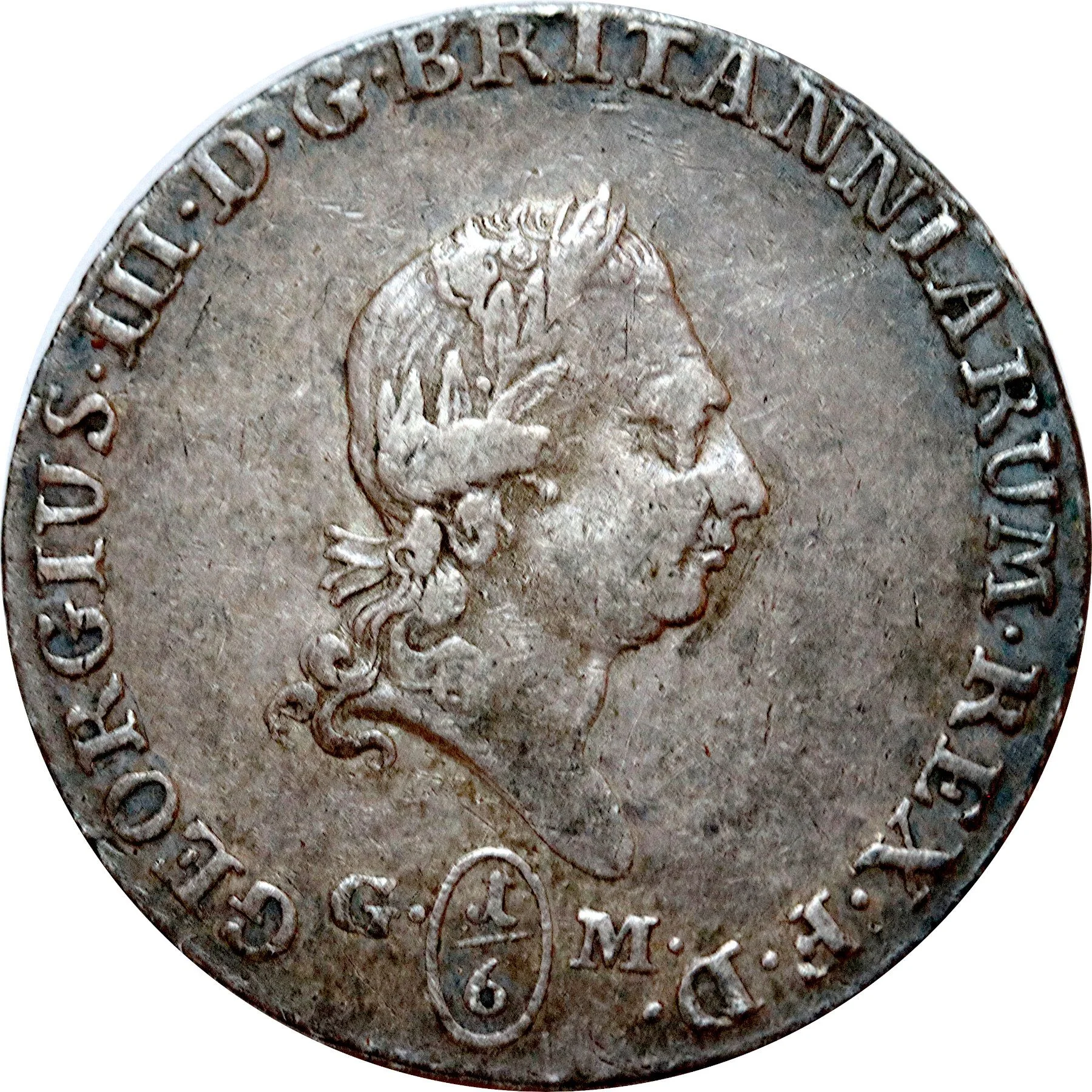
⅙ thaler – Brunswick-Lüneburg-Calenberg-Hannover
Add to wishlist
Germany
Context
Material
References
KM: #
Numista: #67782
Value
Bullion value: $8.27
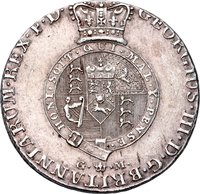
Obverse
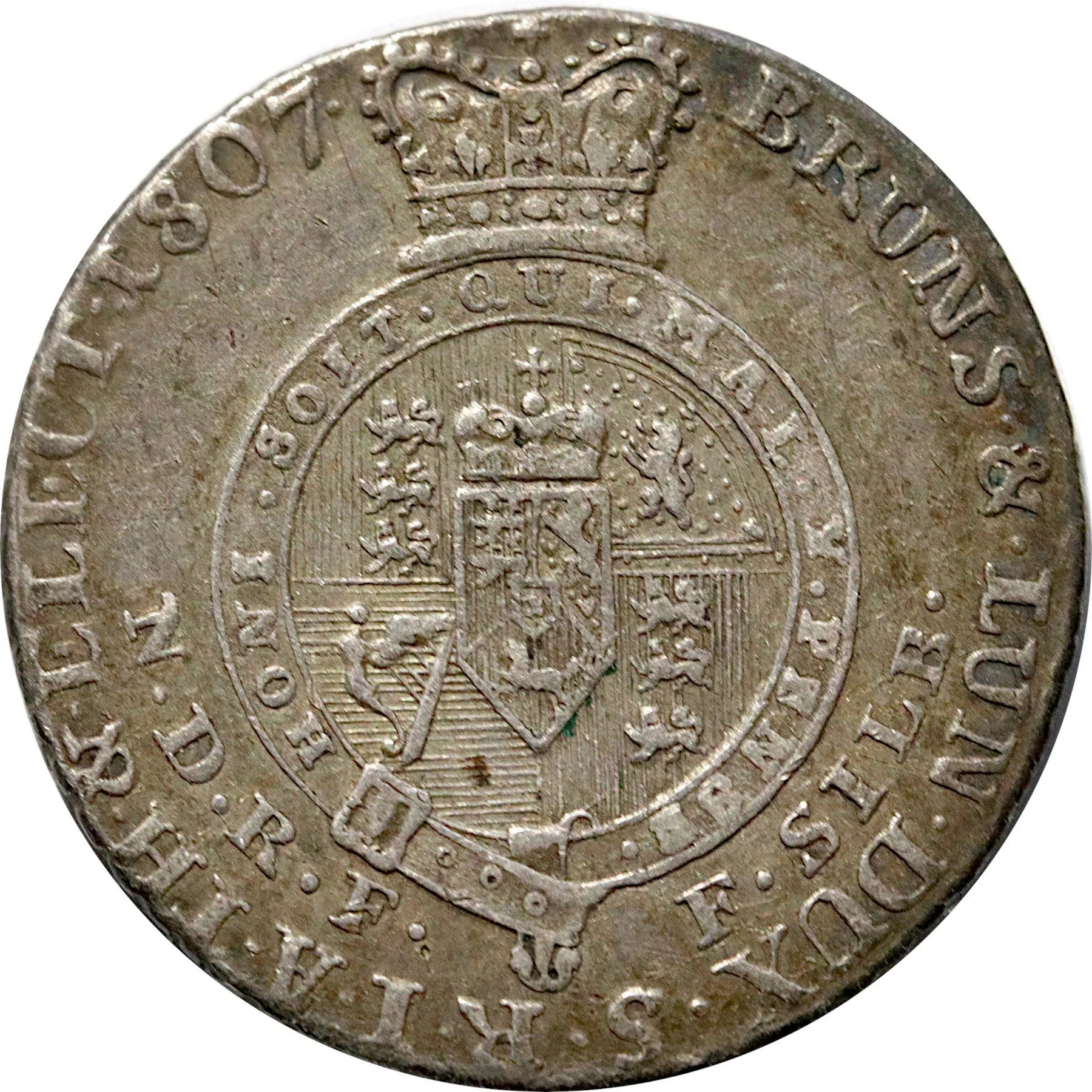
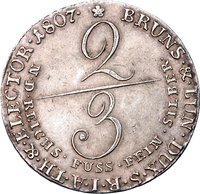
Reverse
Description:
Crowned arms within a belt; dated legend (Brunswick-Lunenburg duke, Holy Roman Imperial Arch-Treasurer and Elector, fine silver by imperial standard).
Inscription:
BRUNS. &. LUN.DUX.S.R.I.A.TH.&.ELECT.1807
N.D.R.F. F.SILB.
HONI SOIT QUI MAL Y PENSE
N.D.R.F. F.SILB.
HONI SOIT QUI MAL Y PENSE
Script: Latin
Edge
Milled.
Mints
| Name | Mark |
|---|---|
| Clausthal | — |
Mintings
| Year | Mint Mark | Mintage | Quality | Collection |
|---|---|---|---|---|
| 1807 | — | — |
Historical background
In 1807, the currency situation in the Duchy of Brunswick-Lüneburg, specifically the Principality of Calenberg (with its capital in Hanover), was one of profound instability and transition, directly caused by the Napoleonic Wars. The region was under French military occupation following the Prussian defeat at the Battle of Jena-Auerstedt in 1806. In 1807, it was formally incorporated into the newly created Kingdom of Westphalia, a French satellite state ruled by Napoleon's brother, Jérôme Bonaparte. This political upheaval severed the territory from its traditional economic and monetary systems, which had been loosely tied to the Holy Roman Empire's framework.
The existing monetary landscape was a complex patchwork. Prior to 1806, circulation included Reichsthaler and Gute Groschen from the Hanoverian mint, alongside a multitude of foreign coins from neighboring German states. The French imposition aimed to replace this system with the new Westphalian franc, pegged to the French franc, as part of a broader policy of economic integration into the Continental System. However, the transition was neither immediate nor complete. Older currencies remained in circulation, their value fluctuating wildly due to uncertainty, wartime requisitions, and a lack of public confidence in the incoming regime.
Consequently, 1807 was a year of monetary confusion and de facto dual circulation. The state mandated transactions in the new franc, but the old Hanoverian and regional German coins persisted in daily use, leading to complicated exchange rates and practical difficulties for trade. This period marked the forceful end of the territory's historic monetary autonomy, as its currency became a tool of French geopolitical strategy, resulting in inflation, scarcity of specie, and economic hardship for the local population.
The existing monetary landscape was a complex patchwork. Prior to 1806, circulation included Reichsthaler and Gute Groschen from the Hanoverian mint, alongside a multitude of foreign coins from neighboring German states. The French imposition aimed to replace this system with the new Westphalian franc, pegged to the French franc, as part of a broader policy of economic integration into the Continental System. However, the transition was neither immediate nor complete. Older currencies remained in circulation, their value fluctuating wildly due to uncertainty, wartime requisitions, and a lack of public confidence in the incoming regime.
Consequently, 1807 was a year of monetary confusion and de facto dual circulation. The state mandated transactions in the new franc, but the old Hanoverian and regional German coins persisted in daily use, leading to complicated exchange rates and practical difficulties for trade. This period marked the forceful end of the territory's historic monetary autonomy, as its currency became a tool of French geopolitical strategy, resulting in inflation, scarcity of specie, and economic hardship for the local population.
💎 Extremely Rare