

20 lepta – Greece
Add to wishlist
Greece
Obverse
Description:
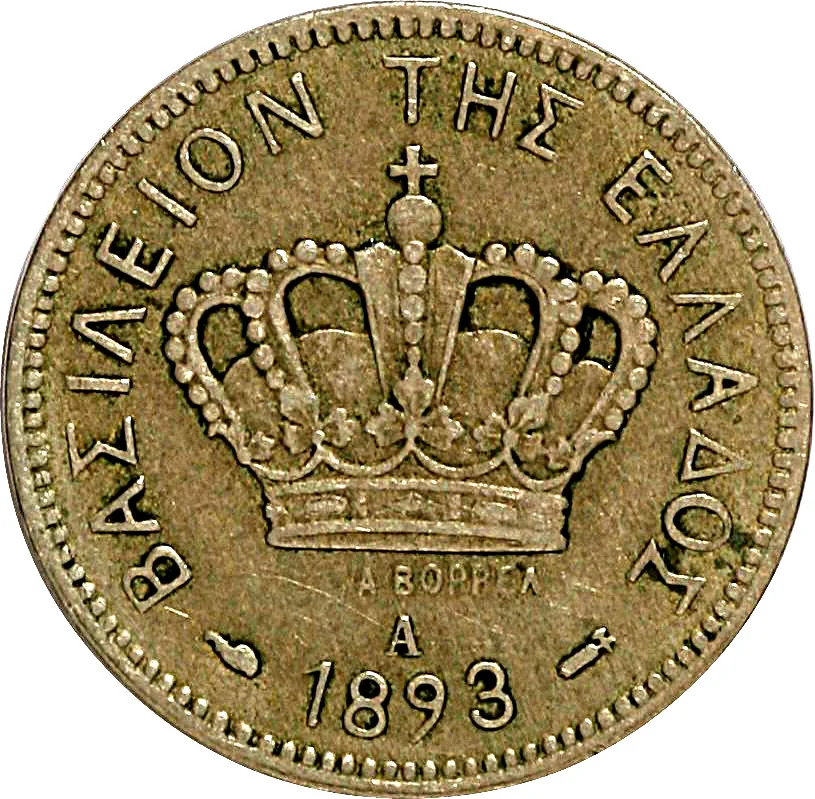
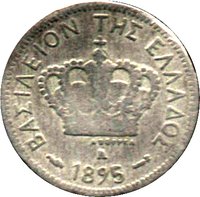
Crown above, date below.
Inscription:
ΒΑΣΙΛΕΙΟΝ ΤΗΣ ΕΛΛΑΔΟΣ
Α ΒΟΡΡΕΛ
A
1893
Α ΒΟΡΡΕΛ
A
1893
Translation:
KINGDOM OF GREECE
A BORREL
A
1893
A BORREL
A
1893
Script: Greek
Language: Greek
Engraver: Alfred Borrel
Reverse
Description:
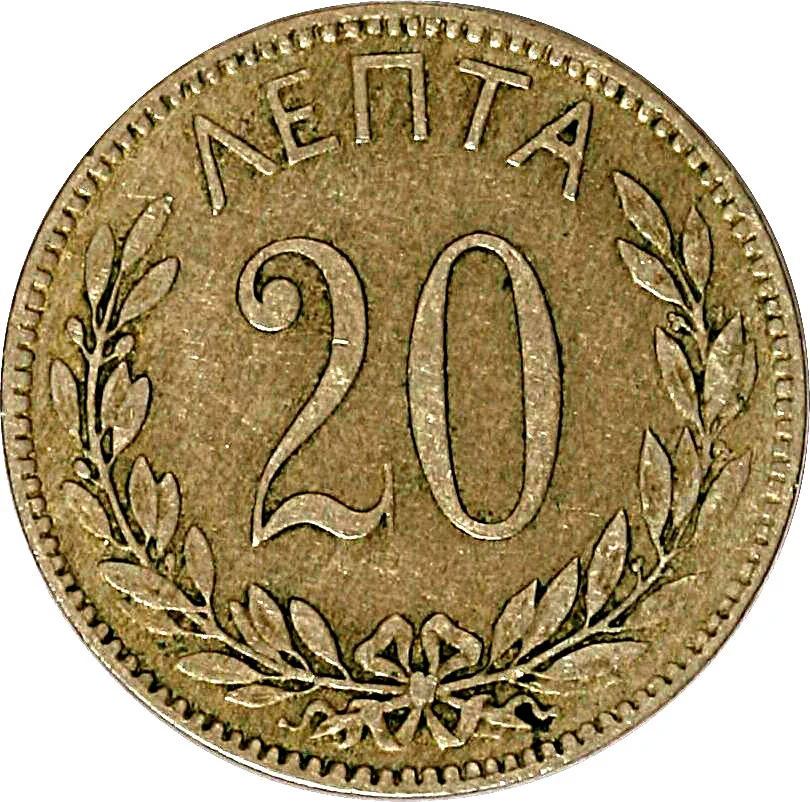
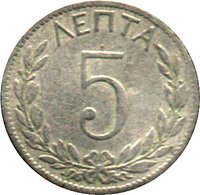
Wreath denomination
Inscription:
ΛΕΠΤΑ
20
20
Translation:
Small Coins
20
20
Script: Greek
Language: Greek
Engraver: Alfred Borrel
Edge
Plain
Mints
| Name | Mark |
|---|---|
| Monnaie de Paris | (A) |
Mintings
| Year | Mint Mark | Mintage | Quality | Collection |
|---|---|---|---|---|
| 1893 | A | 248,008 | ||
| 1894 | A | 4,751,992 | ||
| 1895 | A | 5,000,000 |
Historical background
In 1893, Greece faced a severe currency and debt crisis, culminating in a sovereign default. The root causes lay in decades of fiscal mismanagement, where successive governments, particularly under Prime Minister Charilaos Trikoupis, financed ambitious modernization projects, military expansion, and the 1893 Olympic Games revival through extensive foreign borrowing. This spending far outpaced the state's meager revenue base, which relied heavily on regressive taxes and was undermined by a narrow, agriculture-dependent economy and widespread tax evasion. By the early 1890s, debt servicing consumed over a third of the national budget, creating an unsustainable fiscal trap.
The immediate trigger was a sharp decline in the international price of currants, Greece's primary export, which devastated the agricultural sector and crippled the country's ability to earn foreign exchange. This coincided with a global financial contraction, making new loans prohibitively expensive. With gold reserves draining to service the debt in gold currency (as required by the Latin Monetary Union, to which Greece belonged), the government was forced to suspend convertibility of its paper drachma into gold in 1893. This effectively placed Greece on a fiat currency system, causing the drachma's value to plummet and inflation to surge.
Consequently, on December 10, 1893, Prime Minister Trikoupis famously declared to parliament, "Δυστυχώς επτωχεύσαμεν" ("Unfortunately, we are bankrupt"). Greece unilaterally suspended payments on its external debt, defaulting on approximately 40% of its obligations. This event led to intense international pressure and, in 1898, after a brief war with the Ottoman Empire, the imposition of the International Financial Control Commission. This body, managed by foreign powers, took control of key Greek revenue streams like customs and state monopolies to directly service the restructured debt, a humiliating loss of economic sovereignty that shaped Greek politics for a generation.
The immediate trigger was a sharp decline in the international price of currants, Greece's primary export, which devastated the agricultural sector and crippled the country's ability to earn foreign exchange. This coincided with a global financial contraction, making new loans prohibitively expensive. With gold reserves draining to service the debt in gold currency (as required by the Latin Monetary Union, to which Greece belonged), the government was forced to suspend convertibility of its paper drachma into gold in 1893. This effectively placed Greece on a fiat currency system, causing the drachma's value to plummet and inflation to surge.
Consequently, on December 10, 1893, Prime Minister Trikoupis famously declared to parliament, "Δυστυχώς επτωχεύσαμεν" ("Unfortunately, we are bankrupt"). Greece unilaterally suspended payments on its external debt, defaulting on approximately 40% of its obligations. This event led to intense international pressure and, in 1898, after a brief war with the Ottoman Empire, the imposition of the International Financial Control Commission. This body, managed by foreign powers, took control of key Greek revenue streams like customs and state monopolies to directly service the restructured debt, a humiliating loss of economic sovereignty that shaped Greek politics for a generation.
🌱 Very Common