

20 drachmai – Greece
Add to wishlist
Greece
Obverse
Description:
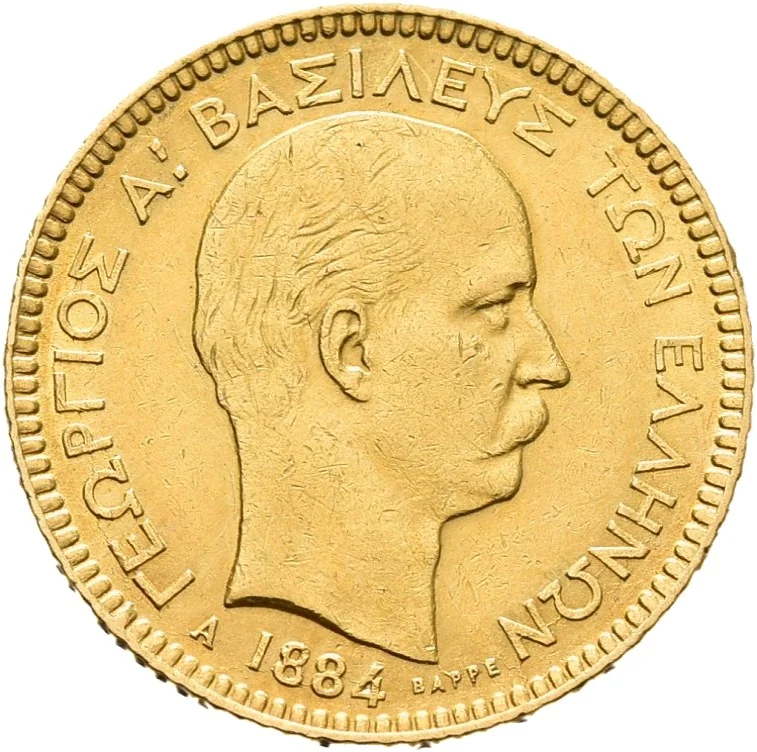
King George I, facing right. Date beneath.
Inscription:
ΓΕΩΡΓΙΟΣ Α! ΒΑΣΙΛΕΥΣ ΤΩΝ ΕΛΛΗΝΩΝ
A 1884 ΒΑΡΡΕ
A 1884 ΒΑΡΡΕ
Translation:
GEORGE A! KING OF THE GREEKS
A 1884 BARRÉ
A 1884 BARRÉ
Script: Greek
Language: Greek
Engraver: Jean-Auguste Barre
Reverse
Description:
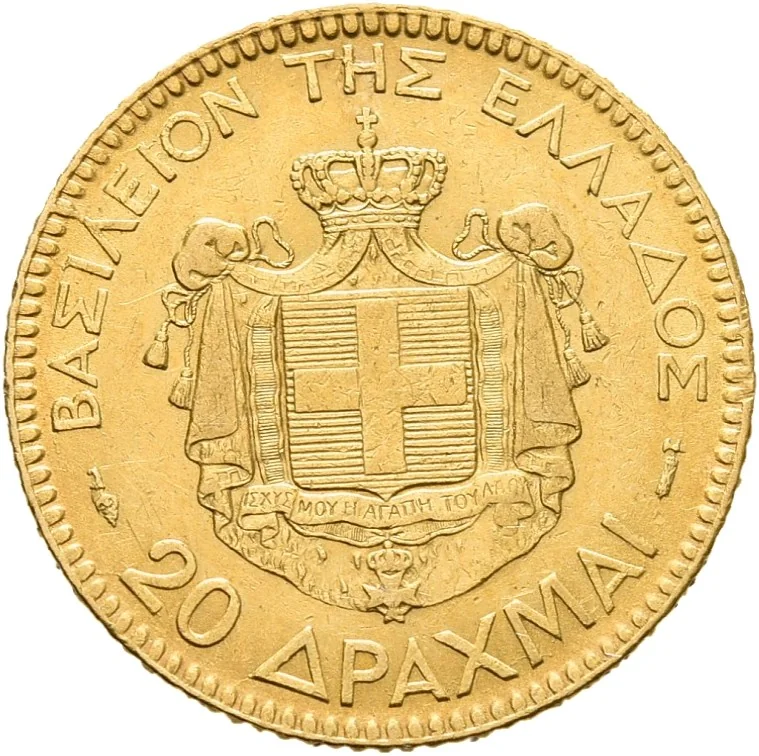
Arms in crowned mantle, denomination beneath.
Inscription:
ΒΑΣΙΛΕΙΟΝ ΤΗΣ ΕΛΛΑΔΟΣ
20 ΔΡΑΧΜΑΙ
ΙΣΧΥΣ ΜΟΥ Η ΑΓΑΠΗ ΤΟΥ ΛΑΟΥ
20 ΔΡΑΧΜΑΙ
ΙΣΧΥΣ ΜΟΥ Η ΑΓΑΠΗ ΤΟΥ ΛΑΟΥ
Translation:
KINGDOM OF GREECE
20 DRACHMAS
MY STRENGTH IS THE LOVE OF THE PEOPLE
20 DRACHMAS
MY STRENGTH IS THE LOVE OF THE PEOPLE
Script: Greek
Language: Greek
Engraver: Jean-Auguste Barre
Edge
Reeded
Categories
| Person> Monarch |
| Mustache/Beard |
| Symbol> Crown |
| Symbols> Coat of Arms |
Mints
| Name | Mark |
|---|---|
| Monnaie de Paris | (A) |
Mintings
| Year | Mint Mark | Mintage | Quality | Collection |
|---|---|---|---|---|
| 1884 | A | 550,000 | ||
| 1884 | A | — | Proof |
Historical background
In 1884, Greece found itself in a precarious monetary situation, characterized by a severe shortage of metallic currency and a heavily depreciated paper money system. The nation had long struggled with fiscal instability since its independence, financing deficits through foreign loans and the issuance of inconvertible paper drachma. By the early 1880s, the value of this paper currency had plummeted to less than half its nominal value against gold, creating a chaotic dual-system where gold coins traded at a significant premium. This disparity crippled everyday commerce and international trade, as public confidence in the state's finances reached a low point.
The immediate catalyst for the crisis in 1884 was the government's failed attempt to restore monetary order. Prime Minister Charilaos Trikoupis, committed to modernization and financial orthodoxy, had secured a large international loan in 1879 with the aim of stabilizing the currency. However, by 1884, much of these funds had been spent on infrastructure and military needs rather than establishing a gold reserve sufficient to guarantee convertibility. An attempt to force the parity of paper with gold by decree failed spectacularly, leading to a rush to exchange paper for gold and a rapid drain of metallic currency from circulation, exacerbating the very shortage it aimed to solve.
Consequently, 1884 marked a year of acute monetary distress and a turning point. The failed policy underscored the deep-rooted structural issues of the Greek economy: chronic budget deficits, a large public debt, and an over-reliance on foreign capital. The crisis strengthened Trikoupis's resolve to pursue austerity and fiscal reform, setting the stage for his later, more successful efforts. It also highlighted the immense political and social difficulty of aligning Greece with the international gold standard, a goal that would not be fully and successfully realized until 1910.
The immediate catalyst for the crisis in 1884 was the government's failed attempt to restore monetary order. Prime Minister Charilaos Trikoupis, committed to modernization and financial orthodoxy, had secured a large international loan in 1879 with the aim of stabilizing the currency. However, by 1884, much of these funds had been spent on infrastructure and military needs rather than establishing a gold reserve sufficient to guarantee convertibility. An attempt to force the parity of paper with gold by decree failed spectacularly, leading to a rush to exchange paper for gold and a rapid drain of metallic currency from circulation, exacerbating the very shortage it aimed to solve.
Consequently, 1884 marked a year of acute monetary distress and a turning point. The failed policy underscored the deep-rooted structural issues of the Greek economy: chronic budget deficits, a large public debt, and an over-reliance on foreign capital. The crisis strengthened Trikoupis's resolve to pursue austerity and fiscal reform, setting the stage for his later, more successful efforts. It also highlighted the immense political and social difficulty of aligning Greece with the international gold standard, a goal that would not be fully and successfully realized until 1910.
🌟 Limited