

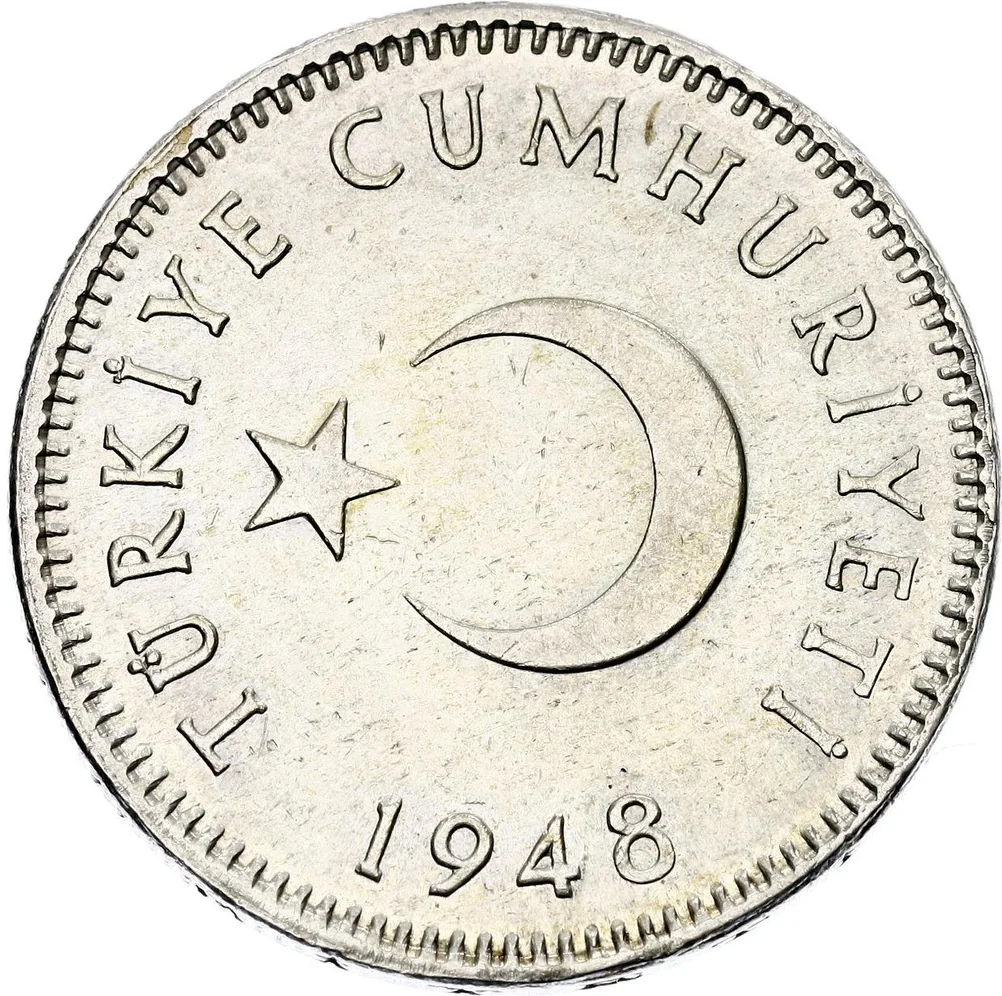

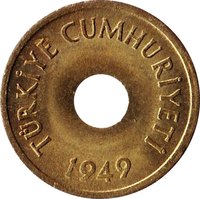
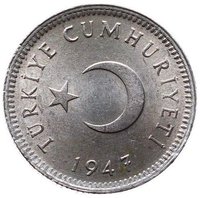
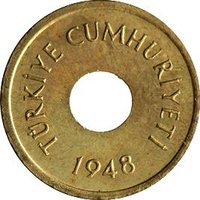
Obverse
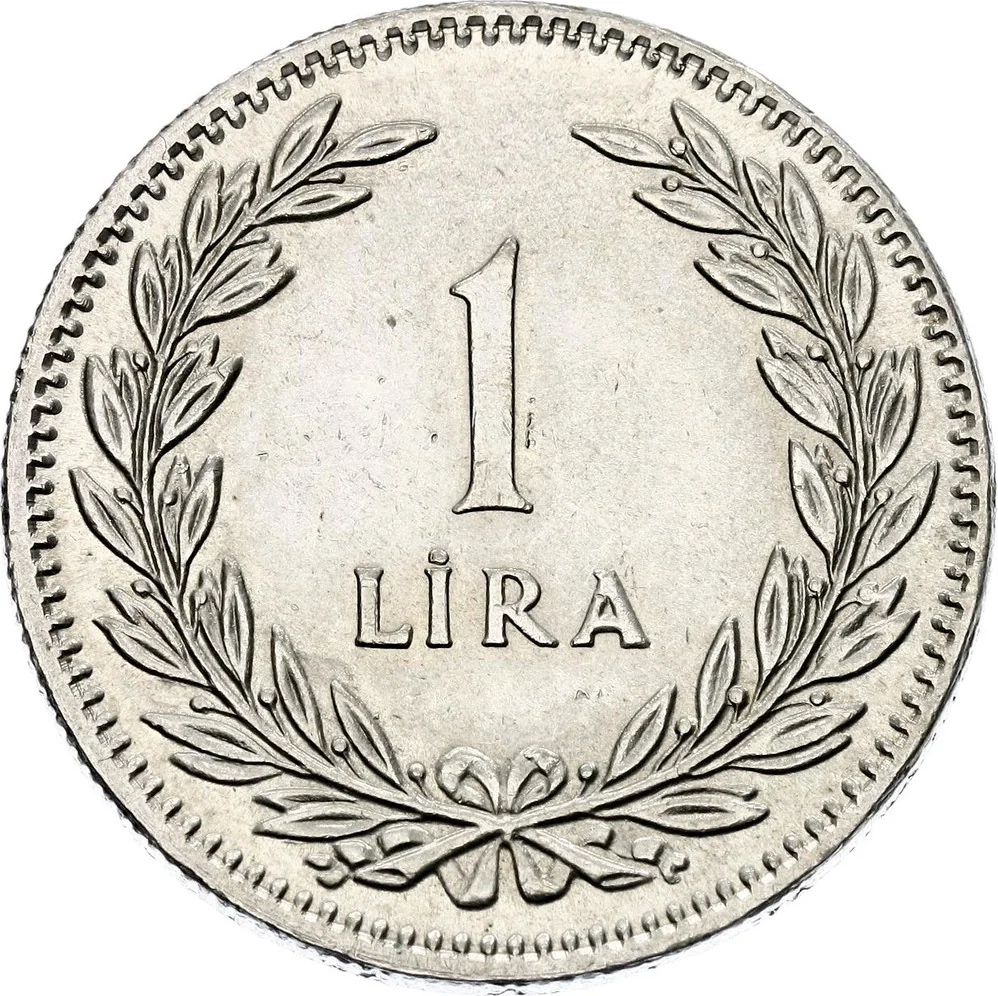
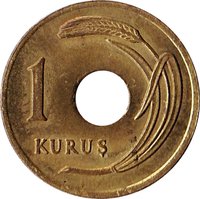
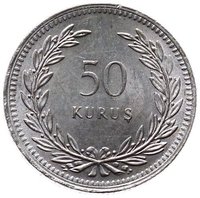
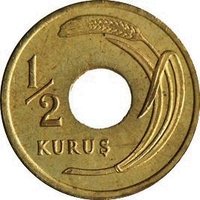
Reverse
Edge
Mintings
| Year | Mint Mark | Mintage | Quality | Collection |
|---|---|---|---|---|
| 1947 | — | 11,104,000 | ||
| 1948 | — | 16,869,000 |
Historical background
In 1947, Turkey’s currency situation was defined by the severe economic pressures of the post-World War II transition and the strains of a state-led industrialization drive. The country had maintained a stable lira during the war through strict state controls and a non-belligerent stance, but this stability was artificial. By 1947, the limits of this model were starkly apparent: the Central Bank's foreign exchange reserves were nearly depleted, a large budget deficit fueled inflation, and a complex multi-tiered exchange rate system created a thriving black market for dollars. The economy suffered from acute shortages of consumer goods, and the overvalued official lira discouraged vital agricultural exports, creating a severe balance of payments crisis.
The situation forced a major policy shift, culminating in the "7 September 1947 Decisions," a stabilization program crafted with advice from American experts. This package devalued the lira by over 50% against the US dollar, moving from TL 1.30 to TL 2.80, and began simplifying the exchange rate system to curb the black market. More significantly, it marked a strategic turn toward liberalization, easing strict state controls over foreign trade and seeking to integrate Turkey into the Western economic order. This shift was heavily influenced by the context of the emerging Truman Doctrine, as Turkey positioned itself as a key strategic ally against Soviet expansion, making it eligible for crucial American aid.
While the 1947 reforms did not immediately cure Turkey's economic ills—inflation persisted and full liberalization would take more than a decade—they were a pivotal turning point. The decisions ended the insular wartime economy and set Turkey on a path of alignment with the US-led Bretton Woods system. The devaluation and policy changes aimed to attract foreign capital and boost exports, laying the preliminary, albeit shaky, groundwork for the more comprehensive reforms that would follow in the 1950s under the Democrat Party government.
The situation forced a major policy shift, culminating in the "7 September 1947 Decisions," a stabilization program crafted with advice from American experts. This package devalued the lira by over 50% against the US dollar, moving from TL 1.30 to TL 2.80, and began simplifying the exchange rate system to curb the black market. More significantly, it marked a strategic turn toward liberalization, easing strict state controls over foreign trade and seeking to integrate Turkey into the Western economic order. This shift was heavily influenced by the context of the emerging Truman Doctrine, as Turkey positioned itself as a key strategic ally against Soviet expansion, making it eligible for crucial American aid.
While the 1947 reforms did not immediately cure Turkey's economic ills—inflation persisted and full liberalization would take more than a decade—they were a pivotal turning point. The decisions ended the insular wartime economy and set Turkey on a path of alignment with the US-led Bretton Woods system. The devaluation and policy changes aimed to attract foreign capital and boost exports, laying the preliminary, albeit shaky, groundwork for the more comprehensive reforms that would follow in the 1950s under the Democrat Party government.
🌱 Common