

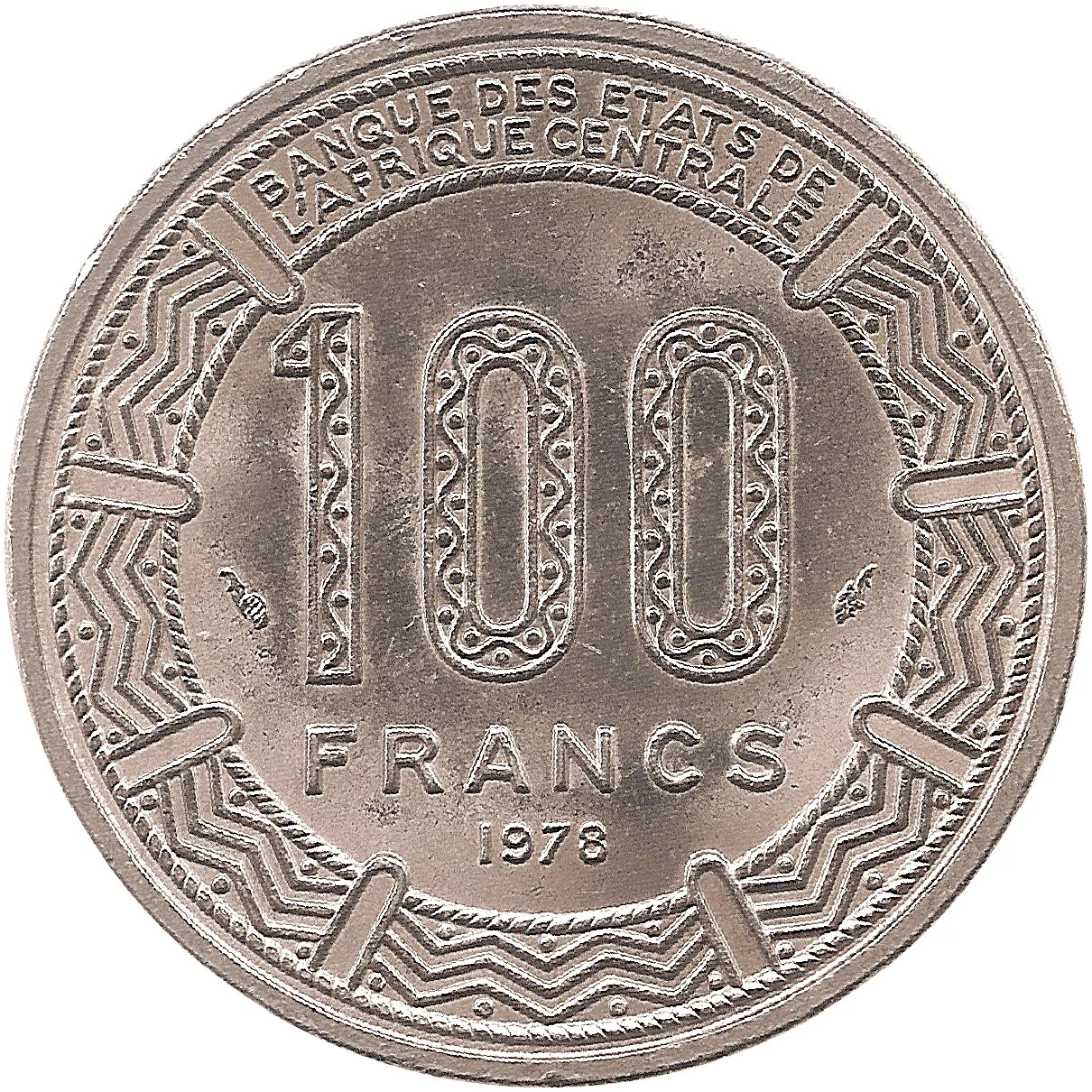
100 francs cfa – Chad
Add to wishlist
Chad
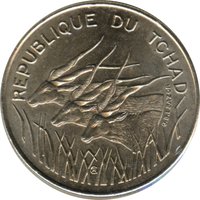
Obverse
Description:
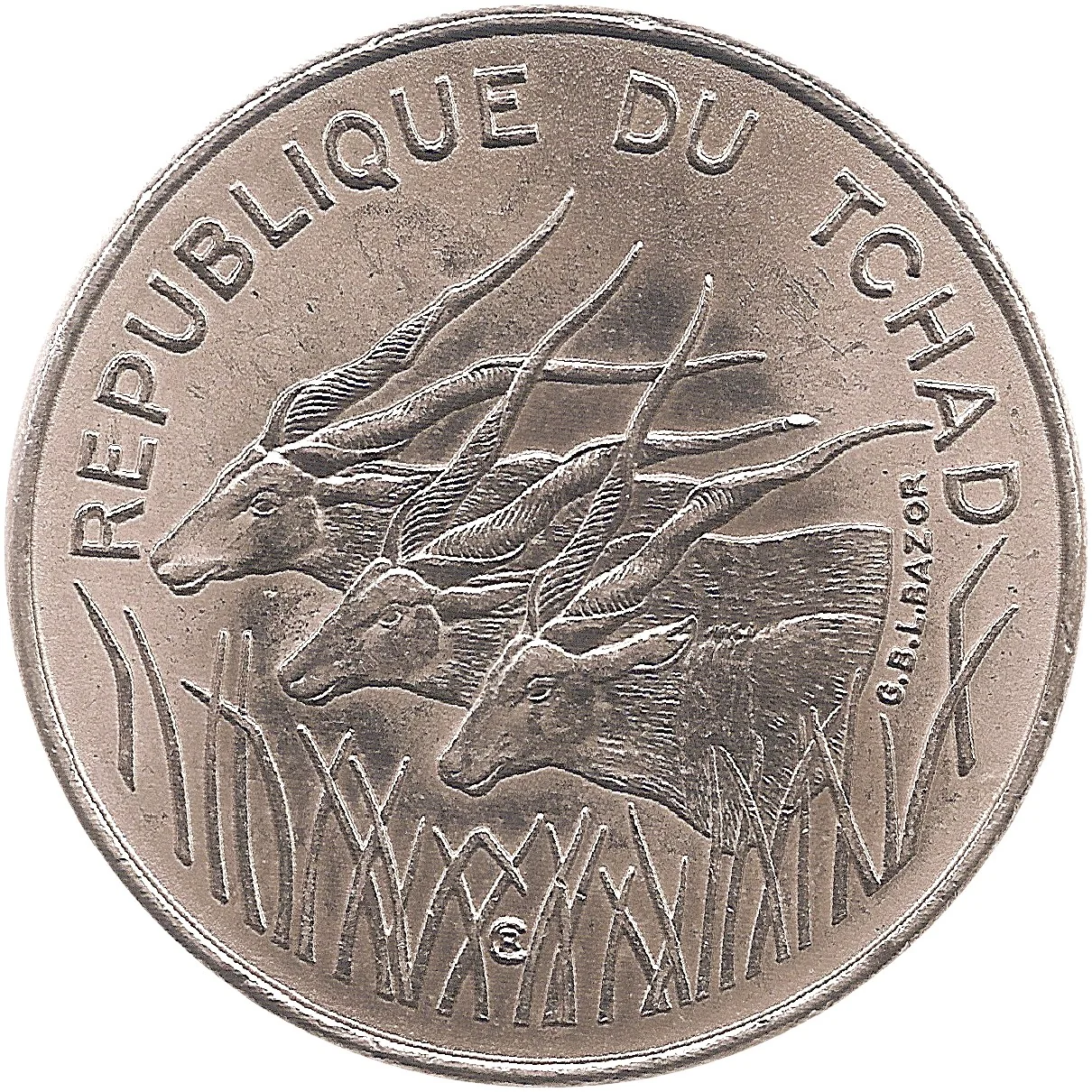
Three Giant Eland facing left.
Inscription:
REPUBLIQUE DU TCHAD
G.B.L.BAZOR
CR
G.B.L.BAZOR
CR
Translation:
REPUBLIC OF CHAD
G.B.L.BAZOR
CR
G.B.L.BAZOR
CR
Script: Latin
Language: French
Engraver: Lucien Georges Bazor
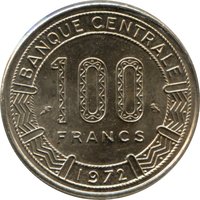
Reverse
Edge
Reeded
Mints
| Name | Mark |
|---|---|
| Monnaie de Paris | — |
Mintings
| Year | Mint Mark | Mintage | Quality | Collection |
|---|---|---|---|---|
| 1975 | — | 5,000,000 | ||
| 1978 | — | — | ||
| 1980 | — | — | ||
| 1982 | — | — | ||
| 1984 | — | 1,500,000 | ||
| 1985 | — | 2,500,000 | ||
| 1988 | — | 1,500,000 | ||
| 1990 | — | — | ||
| 1991 | — | 200,000 |
Historical background
In 1975, Chad's currency situation was directly tied to its membership in the French Franc Zone and the Central African Monetary Union (UMAC). The country used the CFA franc (Franc de la Coopération Financière en Afrique Centrale), a currency guaranteed by the French Treasury and pegged at a fixed rate to the French franc. This arrangement provided monetary stability and facilitated trade with France, but it also meant Chad had limited control over its own monetary policy, as key decisions were made by the regional central bank, the Banque des États de l'Afrique Centrale (BEAC), headquartered in Cameroon.
Economically, Chad was one of the poorest members of the franc zone. Its economy was overwhelmingly agrarian and vulnerable to drought, with the nascent cotton industry being the primary export earner. The discovery of oil in the south by a consortium led by Conoco offered future potential, but commercial production was still years away. Consequently, Chad contributed very little to the pooled foreign reserves of the franc zone and was largely dependent on French budgetary support and the stability the peg provided, despite the constraints.
Politically, this period was marked by escalating civil conflict, with northern rebel groups challenging the government of President Félix Malloum. The ongoing instability severely hampered economic development and strained public finances. Therefore, while the fixed CFA franc system insulated Chad from hyperinflation and currency volatility, it operated within a context of profound structural weakness and conflict, doing little to stimulate broad-based economic growth or address the country's deep-seated fiscal challenges.
Economically, Chad was one of the poorest members of the franc zone. Its economy was overwhelmingly agrarian and vulnerable to drought, with the nascent cotton industry being the primary export earner. The discovery of oil in the south by a consortium led by Conoco offered future potential, but commercial production was still years away. Consequently, Chad contributed very little to the pooled foreign reserves of the franc zone and was largely dependent on French budgetary support and the stability the peg provided, despite the constraints.
Politically, this period was marked by escalating civil conflict, with northern rebel groups challenging the government of President Félix Malloum. The ongoing instability severely hampered economic development and strained public finances. Therefore, while the fixed CFA franc system insulated Chad from hyperinflation and currency volatility, it operated within a context of profound structural weakness and conflict, doing little to stimulate broad-based economic growth or address the country's deep-seated fiscal challenges.
🌱 Common