

20 kroner (Niels Henrik Abel) – Norway
Add to wishlist
Circulating commemorative coins
Commemoration: 200th birthday of Niels Henrik Abel
Norway
Context
Material
References
KM: #
Numista: #2654
Value
Exchange value: 20 NOK
Inflation-adjusted value: 34.99 NOK
Obverse
Description:
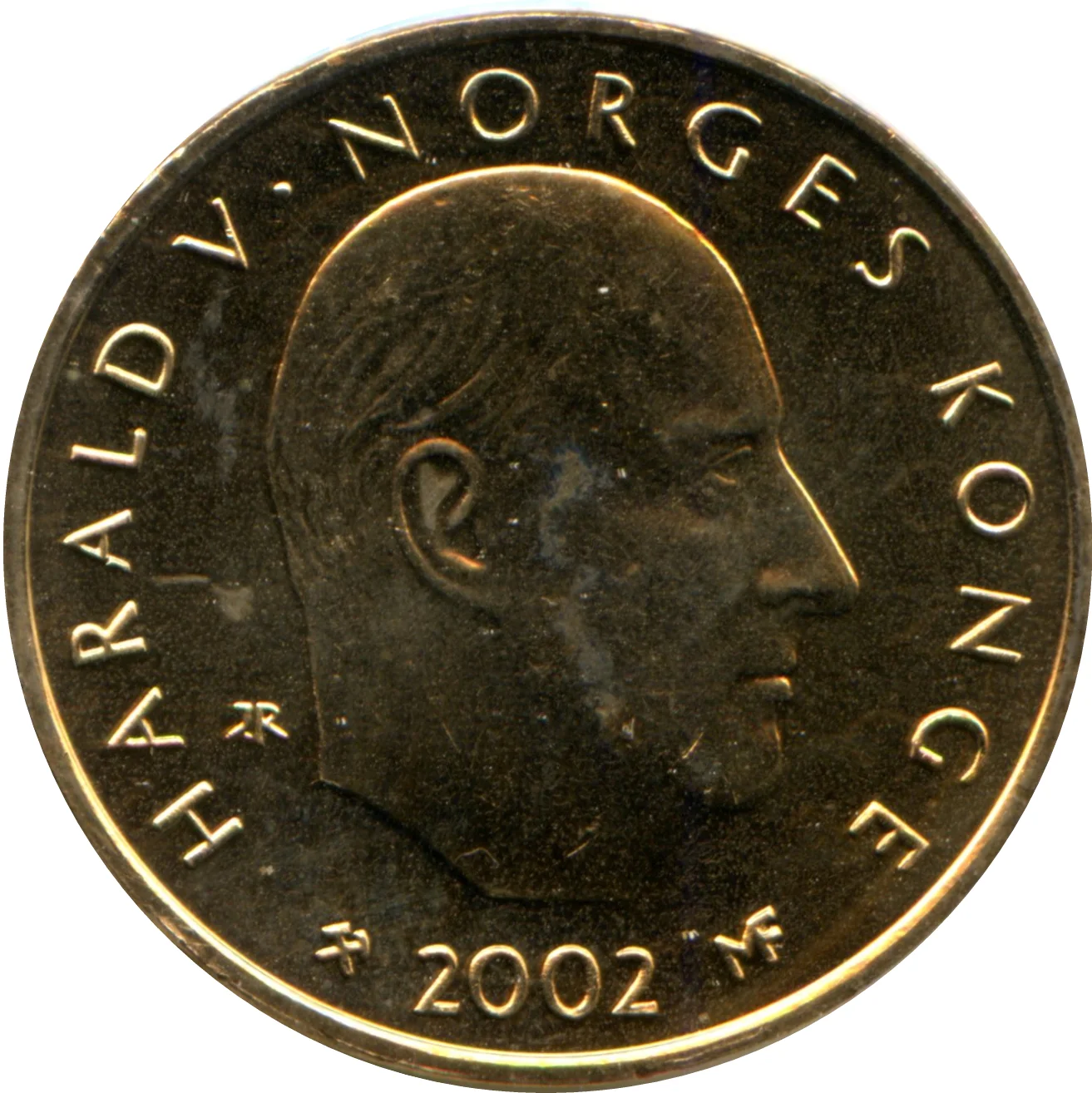
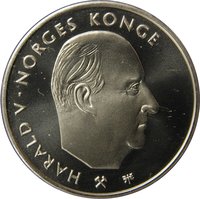
King Harald V bust facing right. Engraver's initials behind bust. Surrounding inscription. Mintmark, date, and mintmaster's initials below. Solid rim ring.
Inscription:
HARALD V · NORGES KONGE
IAR
⚒ 2002 MF
IAR
⚒ 2002 MF
Translation:
Harald V, Norway's King
IAR
Minted 2002 MF
IAR
Minted 2002 MF
Script: Latin
Engraver: Ingrid Austlid Rise
Reverse
Description:
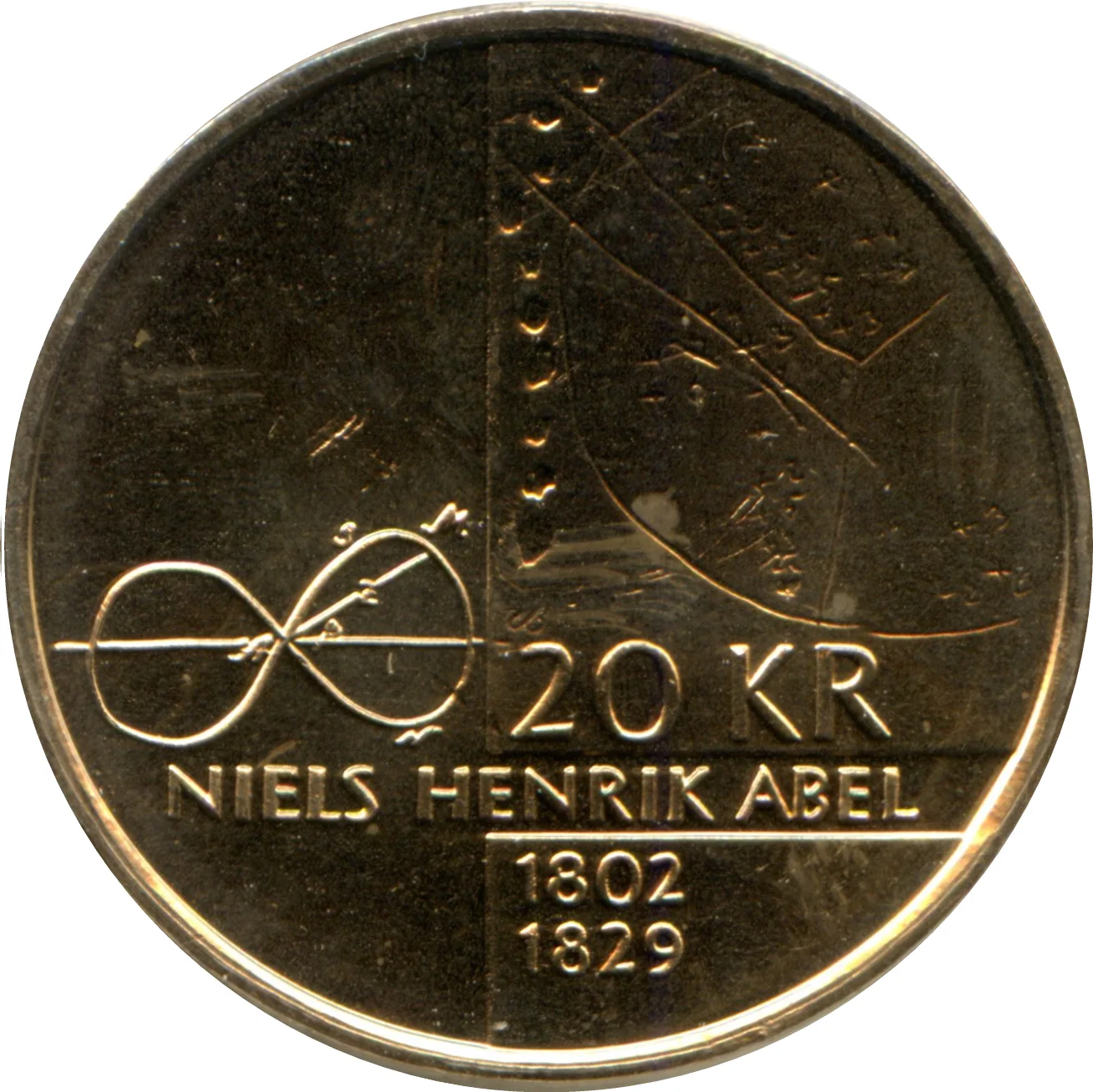
Several diagrams. Four-line text with values and dates. Solid rim ring.
Inscription:
S M
Z
A β
N
20 KR
NIELS HENRIK ABEL
1802
1829
Z
A β
N
20 KR
NIELS HENRIK ABEL
1802
1829
Translation:
His Majesty
Z
Alpha Omega
Norway
20 KR
NIELS HENRIK ABEL
1802
1829
Z
Alpha Omega
Norway
20 KR
NIELS HENRIK ABEL
1802
1829
Script: Latin
Engraver: Ingrid Austlid Rise
Edge
Plain
Categories
| Event> Birth anniversary |
Mints
| Name | Mark |
|---|---|
| Norwegian Mint | — |
Mintings
| Year | Mint Mark | Mintage | Quality | Collection |
|---|---|---|---|---|
| 2002 | — | 1,048,700 | ||
| 2002 | — | 10,000 | BU | |
| 2002 | — | 11,500 | Proof |
Historical background
In 2002, Norway's currency situation was fundamentally defined by its unique monetary policy framework. The country operated a flexible exchange rate regime for the Norwegian krone (NOK), but with a clear inflation-targeting mandate established by Norges Bank, the central bank. The primary objective was to maintain low and stable inflation, with an explicit target of 2.5% annual consumer price growth. This framework provided stability and predictability, distinguishing Norway from many European neighbours who had adopted the euro two years prior following a national referendum where Norwegians voted against EU membership for a second time.
The krone's value in 2002 was significantly influenced by high global oil prices and substantial petroleum revenues, which were being prudently managed through the Government Pension Fund Global (the oil fund). These inflows generally exerted upward pressure on the currency. However, Norges Bank faced a complex balancing act: it had to manage inflationary pressures from a strong domestic economy and high household debt levels while also considering the potential negative impact of an excessively strong krone on the non-oil export sector. Interest rates were the primary tool for this, and the key policy rate was set at 7.0% for much of the year before being cautiously lowered to 6.5% in December as global economic uncertainty persisted.
Overall, the Norwegian krone in 2002 was a stable, freely floating currency backed by robust macroeconomic fundamentals and a transparent central bank policy. Its strength was underpinned by the nation's substantial oil wealth and fiscal discipline, insulating it from the economic turbulence affecting many other regions. The monetary policy focus remained firmly on domestic inflation control, successfully navigating the challenges posed by the commodity-driven economy without the constraints of a fixed exchange rate or a shared currency like the euro.
The krone's value in 2002 was significantly influenced by high global oil prices and substantial petroleum revenues, which were being prudently managed through the Government Pension Fund Global (the oil fund). These inflows generally exerted upward pressure on the currency. However, Norges Bank faced a complex balancing act: it had to manage inflationary pressures from a strong domestic economy and high household debt levels while also considering the potential negative impact of an excessively strong krone on the non-oil export sector. Interest rates were the primary tool for this, and the key policy rate was set at 7.0% for much of the year before being cautiously lowered to 6.5% in December as global economic uncertainty persisted.
Overall, the Norwegian krone in 2002 was a stable, freely floating currency backed by robust macroeconomic fundamentals and a transparent central bank policy. Its strength was underpinned by the nation's substantial oil wealth and fiscal discipline, insulating it from the economic turbulence affecting many other regions. The monetary policy focus remained firmly on domestic inflation control, successfully navigating the challenges posed by the commodity-driven economy without the constraints of a fixed exchange rate or a shared currency like the euro.
🌱 Common