

Obverse
Description:
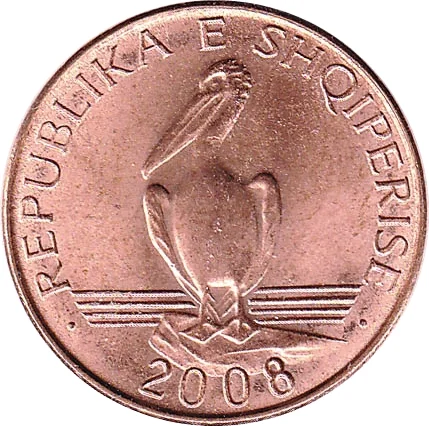
Dalmatian Pelican departing.
Inscription:
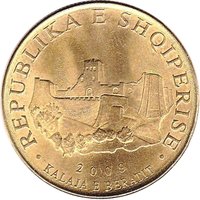
· REPUBLIKA E SHQIPERISE ·
2008
2008
Translation:
· REPUBLIC OF ALBANIA ·
2008
2008
Script: Latin
Language: Albanian
Engraver: Kujtim Qami
Reverse
Edge
Plain
Mintings
| Year | Mint Mark | Mintage | Quality | Collection |
|---|---|---|---|---|
| 2008 | — | — | ||
| 2013 | — | — |
Historical background
In 2008, Albania's currency situation was characterized by stability and a steady, managed appreciation of the lek (ALL) against major foreign currencies, particularly the euro. This period followed a phase of significant volatility and depreciation in the late 1990s. The stability was underpinned by a tight monetary policy from the Bank of Albania, which focused on controlling inflation and building foreign exchange reserves. Strong remittance inflows from Albanians working abroad (primarily in Greece and Italy), coupled with growing foreign direct investment and a burgeoning tourism sector, provided a consistent supply of foreign currency, strengthening the lek's position.
This appreciation, however, presented a double-edged sword for the economy. While it helped to keep inflation low (around 3.4% for the year) and reduced the cost of servicing foreign-denominated debt, it began to pressure export competitiveness and domestic producers competing with imports. Albanian exports, such as textiles and minerals, became relatively more expensive on the international market. Meanwhile, cheaper imports threatened local industries, a concern for policymakers balancing growth with stability.
The broader monetary framework in 2008 was one of a de facto euroization, though less pronounced than in other Western Balkan countries. While the lek was the sole legal tender, many large transactions, loans for businesses and mortgages, and savings were conducted or held in euros, reflecting deep public trust in the European currency. The Bank of Albania continued to promote the use of the lek, but the euro remained a dominant feature of the financial landscape. This stability was soon tested, however, by the onset of the global financial crisis in late 2008, which would lead to a slight reversal of the lek's gains in 2009 as remittance and capital inflows weakened.
This appreciation, however, presented a double-edged sword for the economy. While it helped to keep inflation low (around 3.4% for the year) and reduced the cost of servicing foreign-denominated debt, it began to pressure export competitiveness and domestic producers competing with imports. Albanian exports, such as textiles and minerals, became relatively more expensive on the international market. Meanwhile, cheaper imports threatened local industries, a concern for policymakers balancing growth with stability.
The broader monetary framework in 2008 was one of a de facto euroization, though less pronounced than in other Western Balkan countries. While the lek was the sole legal tender, many large transactions, loans for businesses and mortgages, and savings were conducted or held in euros, reflecting deep public trust in the European currency. The Bank of Albania continued to promote the use of the lek, but the euro remained a dominant feature of the financial landscape. This stability was soon tested, however, by the onset of the global financial crisis in late 2008, which would lead to a slight reversal of the lek's gains in 2009 as remittance and capital inflows weakened.
🌱 Very Common