

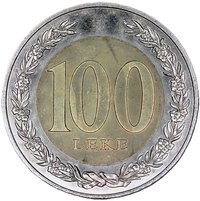
100 Lekë – Albania
Albania
Context
Material
References
KM: #Click to copy to clipboard80
Numista: #6531
Value
Exchange value: 100 ALL
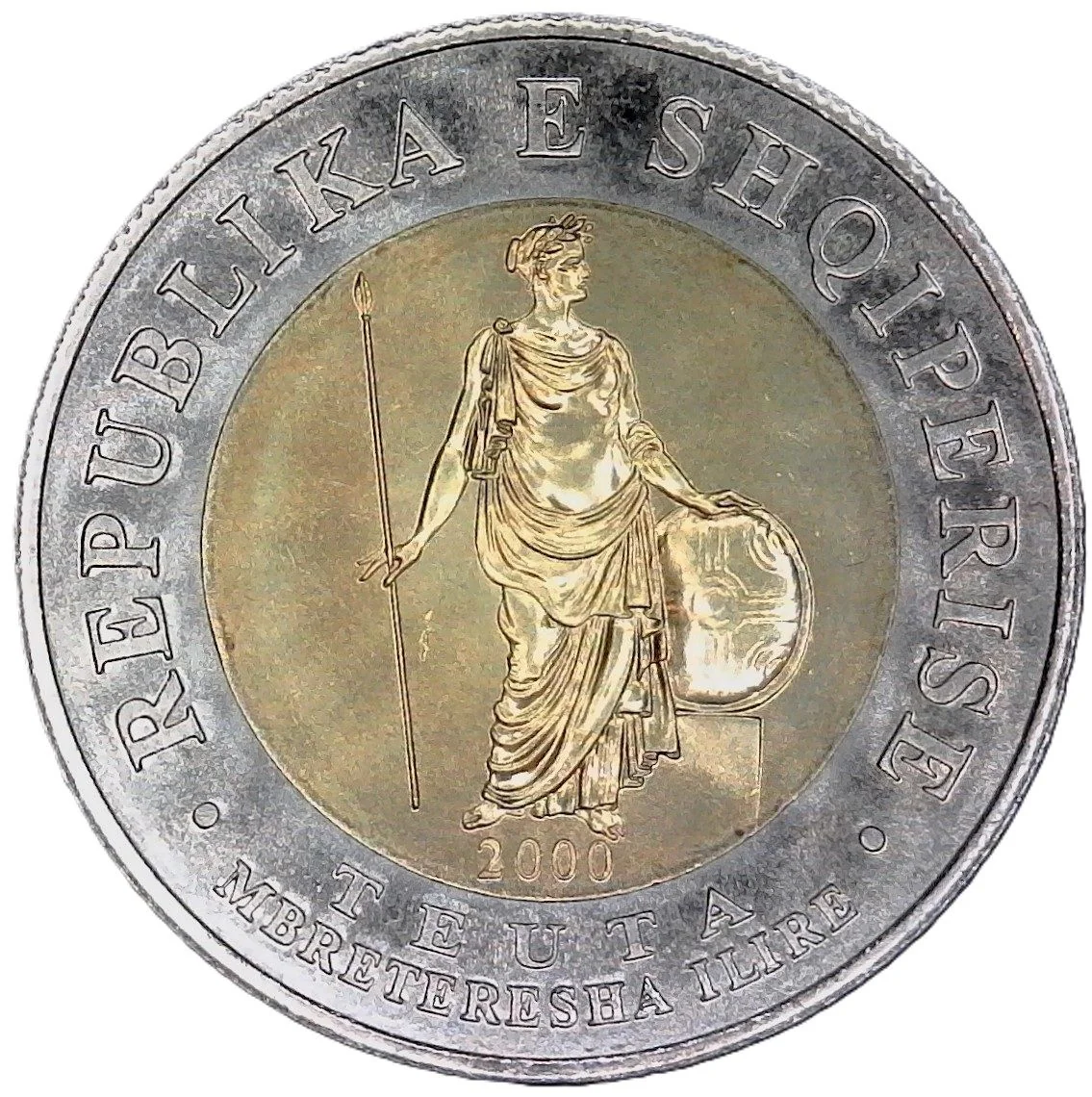
Obverse
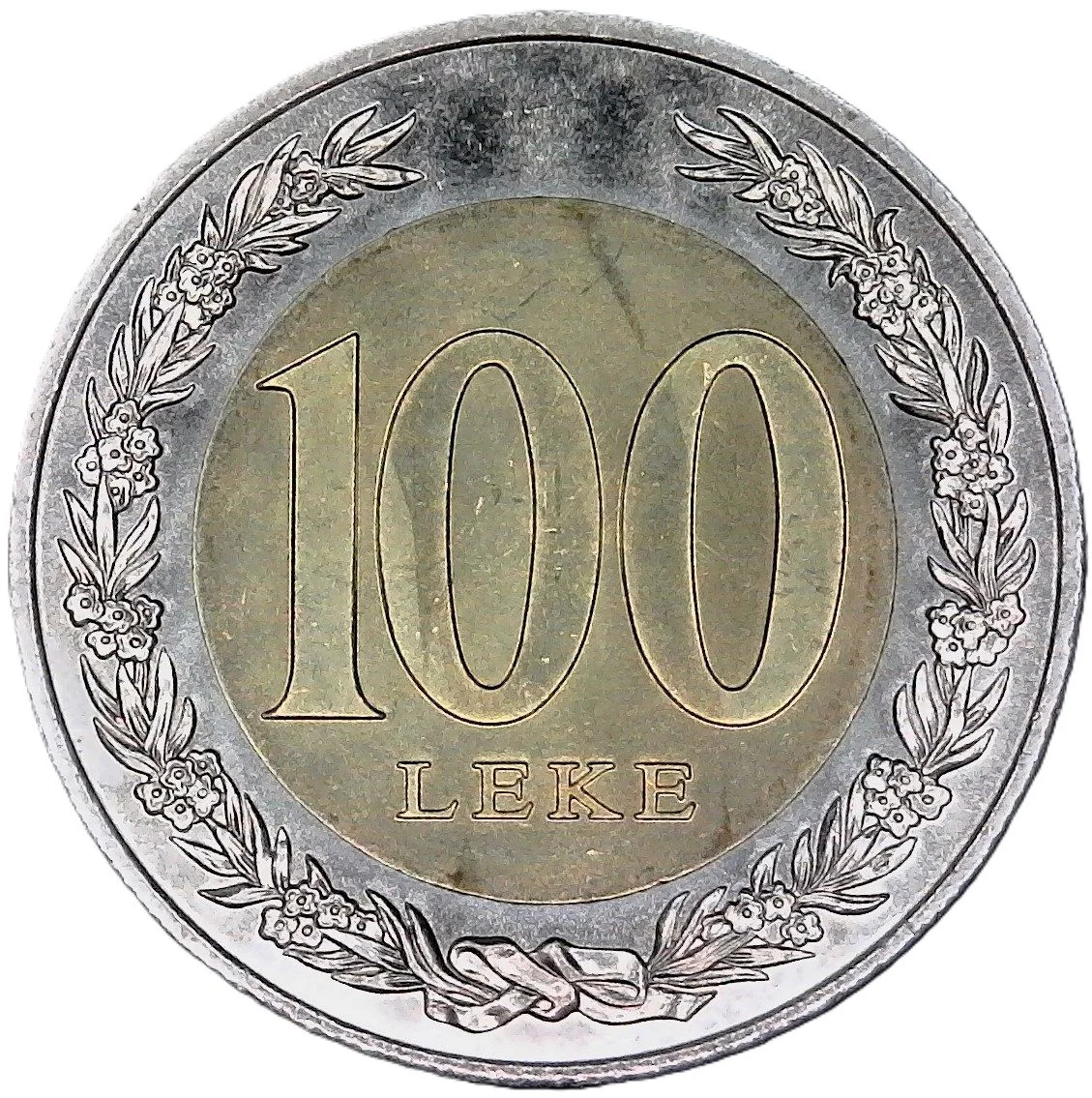
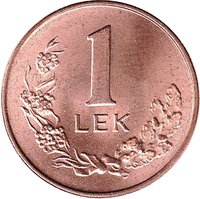
Reverse
Edge
Reeded
Mints
| Name | Mark |
|---|---|
| Mint of Poland | — |
| Monnaie de Paris | — |
Mintings
| Year | Mint Mark | Mintage | Quality | Collection |
|---|---|---|---|---|
| 2000 | — | — | ||
| 2023 | — | — |
Historical background
In the year 2000, Albania's currency, the lek (ALL), was in a period of relative stabilization following a decade of profound economic and political turbulence. The collapse of the infamous pyramid schemes in 1997 had triggered a national crisis, leading to hyperinflation, the lek's drastic devaluation, and widespread social unrest. By 2000, the country was under the governance of the Socialist Party, which, with IMF and World Bank guidance, was implementing strict macroeconomic reforms focused on fiscal discipline, banking sector restructuring, and controlling inflation. These efforts were beginning to bear fruit, moving the economy from post-crisis recovery toward a fragile stability.
The exchange rate regime was a managed float, with the Bank of Albania intervening to smooth out excessive volatility. The lek was not pegged to any major currency, but its value was heavily influenced by the euro and the US dollar, reflecting Albania's key trade and remittance relationships. While inflation had been tamed from its triple-digit peaks to around 4-6% by the end of 1999/2000, the memory of hyperinflation meant public confidence in the lek remained cautious. A significant dollarization (or euroization) of the economy persisted, with many large transactions, real estate deals, and private savings still conducted in foreign currency as a hedge against potential future instability.
Overall, the currency situation in 2000 was one of cautious optimism within a framework of ongoing vulnerability. The lek was stable but not strong, and its management was a central pillar of the broader reform agenda aimed at integrating Albania into the global market. The success of this stabilization was crucial for attracting foreign direct investment and securing further international financial support, setting the stage for the moderate economic growth that characterized the early 2000s.
The exchange rate regime was a managed float, with the Bank of Albania intervening to smooth out excessive volatility. The lek was not pegged to any major currency, but its value was heavily influenced by the euro and the US dollar, reflecting Albania's key trade and remittance relationships. While inflation had been tamed from its triple-digit peaks to around 4-6% by the end of 1999/2000, the memory of hyperinflation meant public confidence in the lek remained cautious. A significant dollarization (or euroization) of the economy persisted, with many large transactions, real estate deals, and private savings still conducted in foreign currency as a hedge against potential future instability.
Overall, the currency situation in 2000 was one of cautious optimism within a framework of ongoing vulnerability. The lek was stable but not strong, and its management was a central pillar of the broader reform agenda aimed at integrating Albania into the global market. The success of this stabilization was crucial for attracting foreign direct investment and securing further international financial support, setting the stage for the moderate economic growth that characterized the early 2000s.
🌱 Very Common