

Obverse
Description:
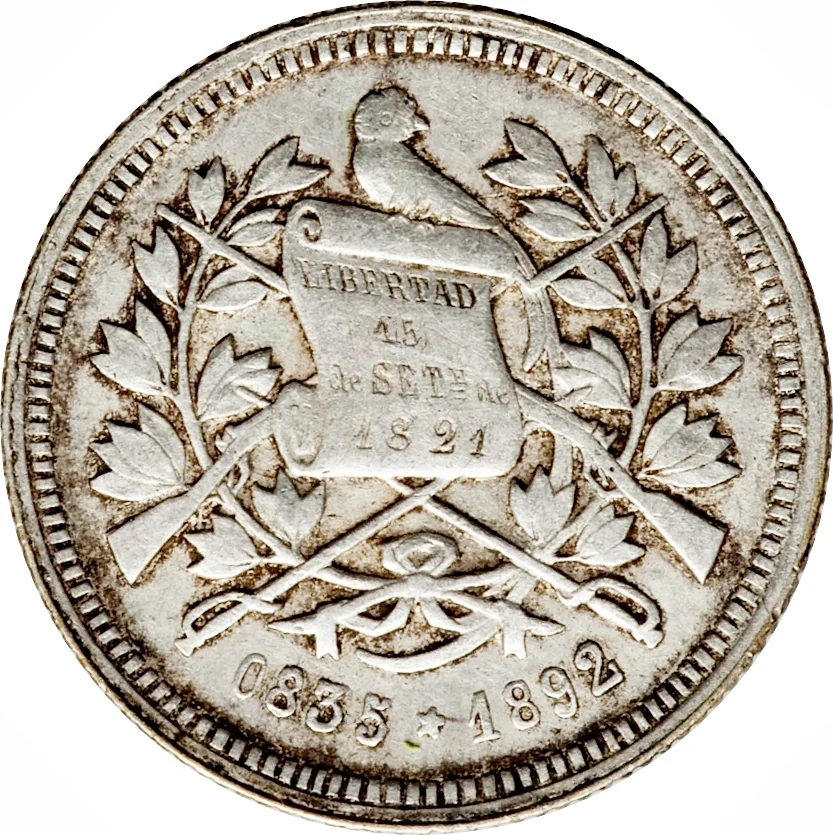
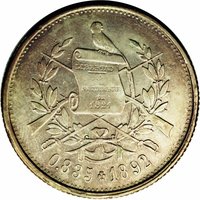
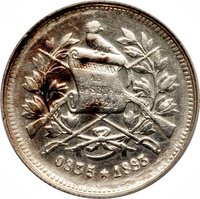
Coat of arms with star, fineness, and date below.
Inscription:
LIBERTAD
15
de SETE de
1821
0835 * 1892
15
de SETE de
1821
0835 * 1892
Translation:
LIBERTY
15
of SEPTEMBER of
1821
0835 * 1892
15
of SEPTEMBER of
1821
0835 * 1892
Script: Latin
Language: Spanish
Engraver: Johann-Baptist Frener
Reverse
Description:
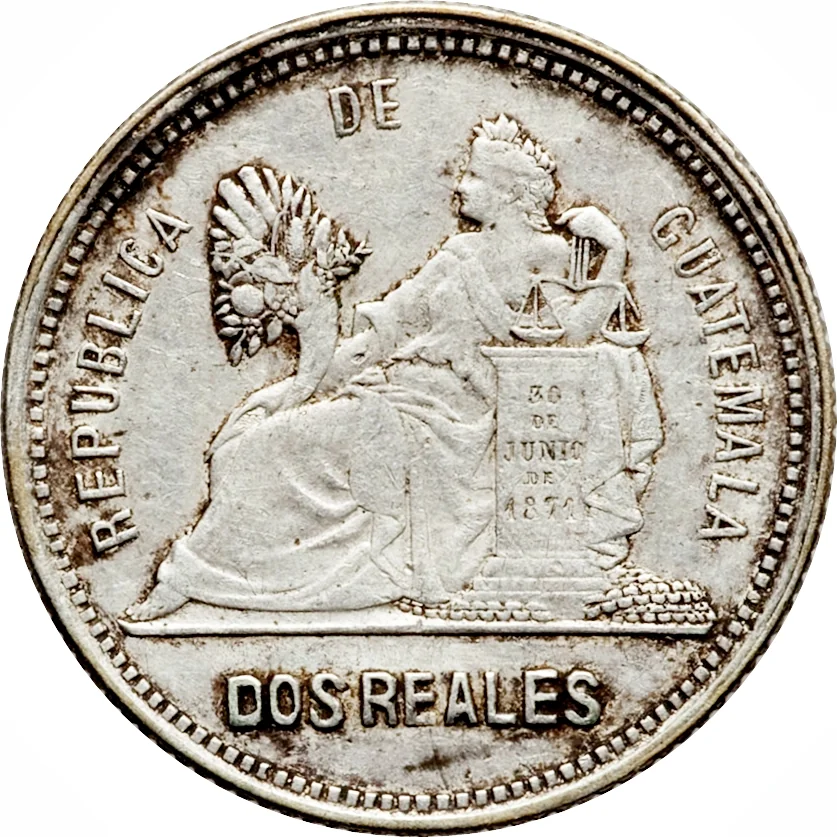
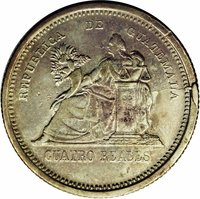
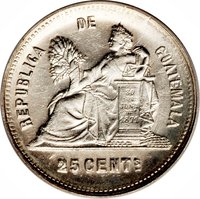
Seated Justice holds scales and a cornucopia, her arm resting on a constitution. Legend encircles; value below.
Inscription:
REPUBLICA DE GUATEMALA
30
DE
JUNIO
DE
1871
DOS REALES
30
DE
JUNIO
DE
1871
DOS REALES
Translation:
REPUBLIC OF GUATEMALA
30
OF
JUNE
OF
1871
TWO REALES
30
OF
JUNE
OF
1871
TWO REALES
Script: Latin
Language: Spanish
Engraver: Johann-Baptist Frener
Edge
Categories
| Symbols> Coat of Arms |
| Symbol> Allegory |
Mints
| Name | Mark |
|---|---|
| Casa de Moneda de Guatemala | — |
Mintings
| Year | Mint Mark | Mintage | Quality | Collection |
|---|---|---|---|---|
| 1892 | — | 152,000 | ||
| 1893 | — | — |
Historical background
In 1892, Guatemala's currency situation was characterized by a complex and often chaotic bimetallic system, a legacy of the colonial era and post-independence instability. The official monetary standard was the silver peso, divided into 100 centavos, but the economy also relied heavily on both Spanish and Mexican silver coins, as well as gold coins like the escudo and onza. A significant problem was the chronic shortage of small-denomination coinage (centavos), which severely hampered everyday commerce and led to the widespread use of inconvenient and easily counterfeited fichas (tokens) issued by local haciendas, municipalities, and even merchants as a substitute for official money.
This fragmentation was exacerbated by the government's fiscal struggles. Years of liberal reforms and infrastructure projects under President Justo Rufino Barrios (1873-1885) and his successors had left the treasury in debt. To generate revenue and streamline the system, the government had introduced a new silver coin, the peso fuerte, in 1859, but it failed to displace the older, often debased, coins in circulation. The lack of a strong, centralized bank—the Banco de Guatemala, established in 1881, was still finding its footing—meant there was no effective institution to regulate the money supply or ensure uniformity.
Consequently, by 1892, Guatemala stood on the precipice of major monetary reform. The global trend towards the gold standard and the desire to attract foreign investment, particularly for the booming coffee export economy, created strong pressure for modernization. The government was actively planning to abandon the bimetallic system, a process that would culminate just two years later with the Currency Law of 1894, which formally adopted the gold standard and introduced the quetzal as the new national unit of currency, named after the national bird and designed to be at parity with the US dollar. Thus, 1892 represents the final years of an outdated monetary order, with authorities laying the groundwork for a more stable and unified currency system.
This fragmentation was exacerbated by the government's fiscal struggles. Years of liberal reforms and infrastructure projects under President Justo Rufino Barrios (1873-1885) and his successors had left the treasury in debt. To generate revenue and streamline the system, the government had introduced a new silver coin, the peso fuerte, in 1859, but it failed to displace the older, often debased, coins in circulation. The lack of a strong, centralized bank—the Banco de Guatemala, established in 1881, was still finding its footing—meant there was no effective institution to regulate the money supply or ensure uniformity.
Consequently, by 1892, Guatemala stood on the precipice of major monetary reform. The global trend towards the gold standard and the desire to attract foreign investment, particularly for the booming coffee export economy, created strong pressure for modernization. The government was actively planning to abandon the bimetallic system, a process that would culminate just two years later with the Currency Law of 1894, which formally adopted the gold standard and introduced the quetzal as the new national unit of currency, named after the national bird and designed to be at parity with the US dollar. Thus, 1892 represents the final years of an outdated monetary order, with authorities laying the groundwork for a more stable and unified currency system.
✨ Legendary