

25 centavos – Guatemala
Add to wishlist
Guatemala
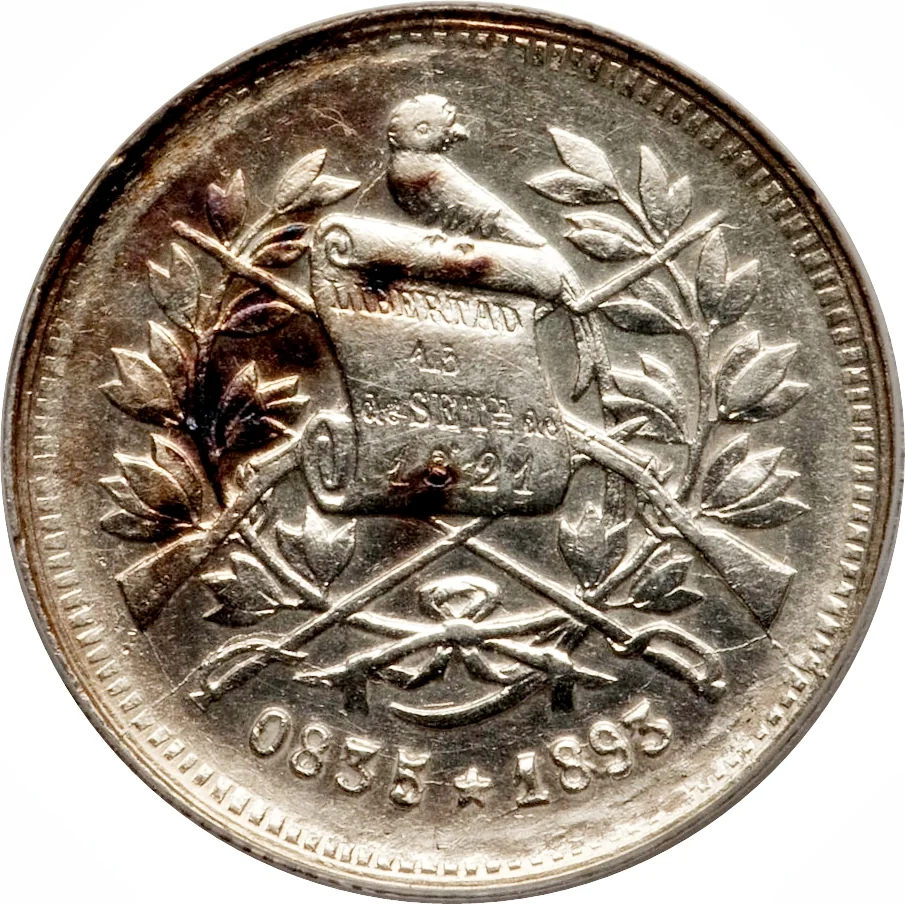
Obverse
Description:
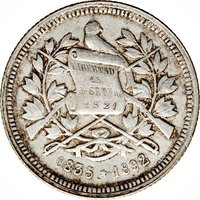
Coat of arms with star, fineness, and date.
Inscription:
LIBERTAD
15
de
SETe
de
1821
0835*1893
15
de
SETe
de
1821
0835*1893
Translation:
LIBERTY
15
of
SEPTEMBER
of
1821
0835*1893
15
of
SEPTEMBER
of
1821
0835*1893
Script: Latin
Language: Spanish
Engraver: Johann-Baptist Frener
Reverse
Description:
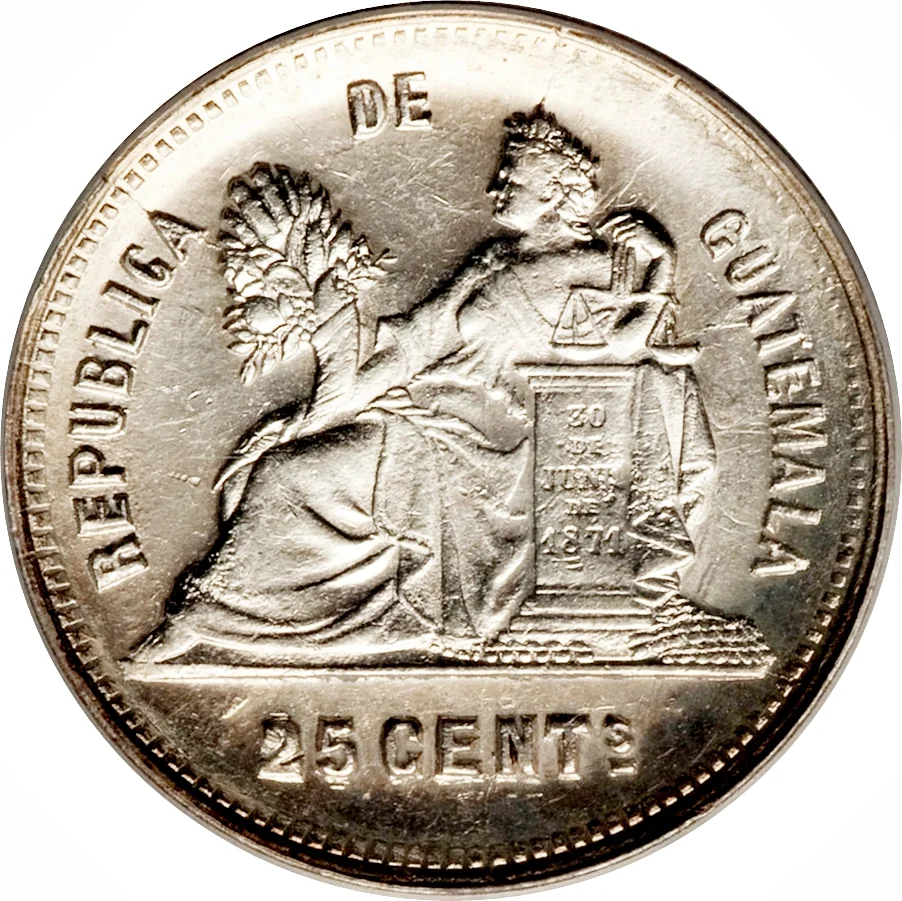
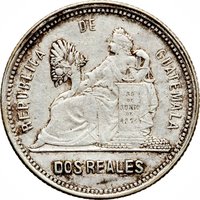
Seated Justice holds scales and a cornucopia, her arm resting on a constitution. Legend encircles; value below.
Inscription:
REPUBLICA DE GUATEMALA
30
DE
JUNIO
DE
1871
25 CENTs
30
DE
JUNIO
DE
1871
25 CENTs
Translation:
REPUBLIC OF GUATEMALA
30
OF
JUNE
OF
1871
25 CENTS
30
OF
JUNE
OF
1871
25 CENTS
Script: Latin
Language: Spanish
Engraver: Johann-Baptist Frener
Edge
Reeded
Categories
| Symbol> Allegory |
| Symbols> Coat of Arms |
Mints
| Name | Mark |
|---|---|
| Casa de Moneda de Guatemala | — |
Mintings
| Year | Mint Mark | Mintage | Quality | Collection |
|---|---|---|---|---|
| 1890 | — | — | ||
| 1892 | — | — | ||
| 1893 | — | 1,024,789 |
Historical background
In 1890, Guatemala’s currency system was in a state of complex transition, characterized by the circulation of multiple coinages and the absence of a unified national paper currency. The primary unit was the peso, but it existed alongside the older Spanish colonial real (8 reales = 1 peso) and, crucially, a significant influx of foreign silver. Most notably, the Mexican peso circulated widely and was legally accepted at par, creating a de facto bimetallic system where foreign and domestic silver coins mingled freely in commerce. This period followed the liberal reforms of the 1870s, which had reintegrated Guatemala into the global economy through coffee exports, increasing the need for a reliable and abundant medium of exchange.
The monetary landscape was further complicated by the government's chronic fiscal deficits and a global phenomenon known as the "silver crisis." As major powers like the United States moved toward the gold standard in the 1870s and 1880s, the international value of silver began a sustained decline. For Guatemala, a nation whose currency was based on silver, this meant the steady depreciation of its coinage against gold-backed currencies like the British pound sterling and the U.S. gold dollar. This depreciation increased the cost of servicing foreign debt and importing manufactured goods, creating economic instability and prompting debates about monetary reform.
Consequently, by 1890, the Guatemalan government under President Manuel Lisandro Barillas was actively seeking solutions to standardize and stabilize the currency. The immediate goal was to replace the heterogeneous mix of coins with a uniform national issue, a process that would culminate in the Currency Law of May 1894. This law formally introduced the quetzal as the new monetary unit, named after the national bird and designed to be at parity with the U.S. gold dollar, effectively moving Guatemala toward a gold exchange standard. Thus, the currency situation in 1890 represents the pivotal final years of a silver-based, fragmented system on the brink of a transformative modernization aimed at ensuring fiscal stability and facilitating international trade.
The monetary landscape was further complicated by the government's chronic fiscal deficits and a global phenomenon known as the "silver crisis." As major powers like the United States moved toward the gold standard in the 1870s and 1880s, the international value of silver began a sustained decline. For Guatemala, a nation whose currency was based on silver, this meant the steady depreciation of its coinage against gold-backed currencies like the British pound sterling and the U.S. gold dollar. This depreciation increased the cost of servicing foreign debt and importing manufactured goods, creating economic instability and prompting debates about monetary reform.
Consequently, by 1890, the Guatemalan government under President Manuel Lisandro Barillas was actively seeking solutions to standardize and stabilize the currency. The immediate goal was to replace the heterogeneous mix of coins with a uniform national issue, a process that would culminate in the Currency Law of May 1894. This law formally introduced the quetzal as the new monetary unit, named after the national bird and designed to be at parity with the U.S. gold dollar, effectively moving Guatemala toward a gold exchange standard. Thus, the currency situation in 1890 represents the pivotal final years of a silver-based, fragmented system on the brink of a transformative modernization aimed at ensuring fiscal stability and facilitating international trade.
⭐ Somewhat Rare