

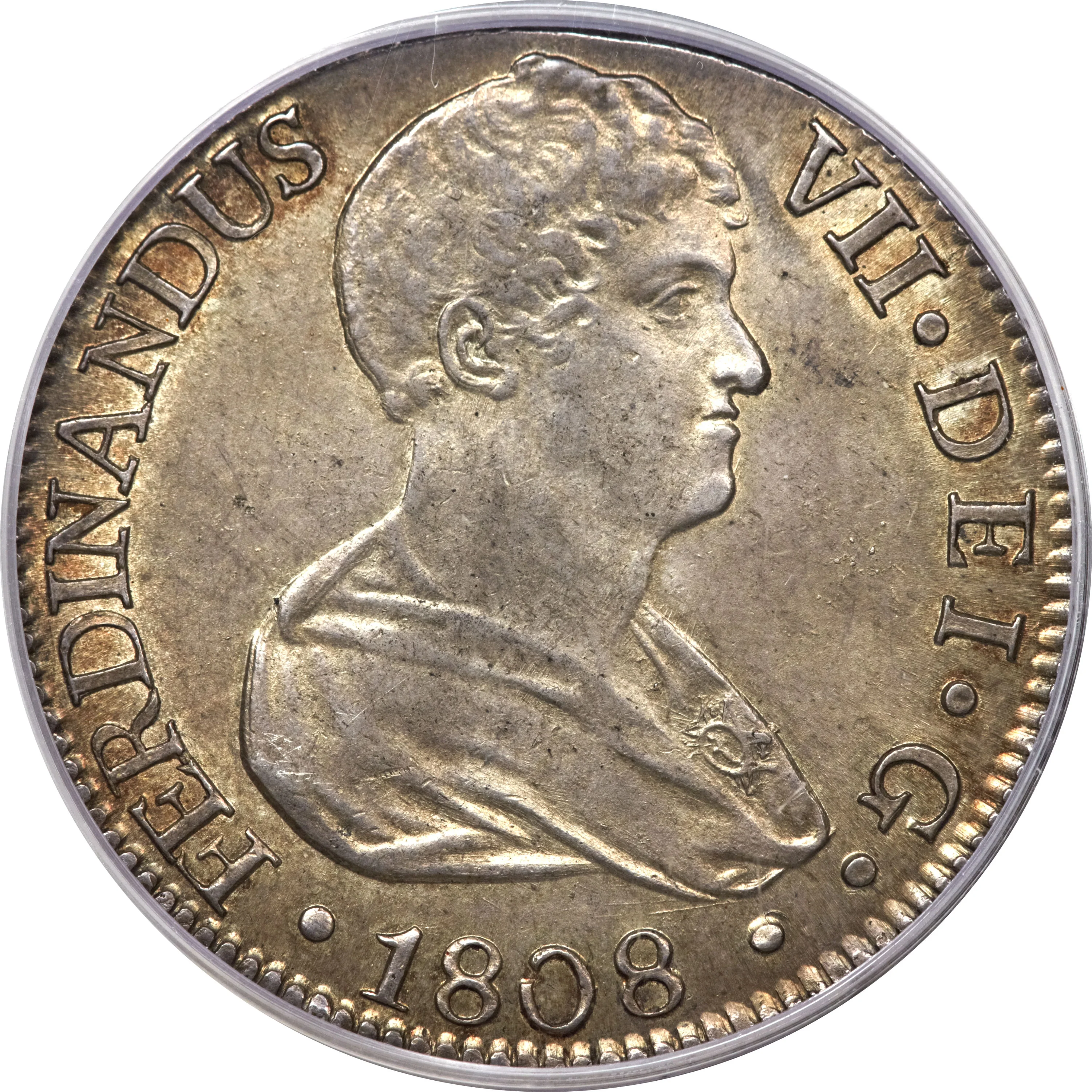
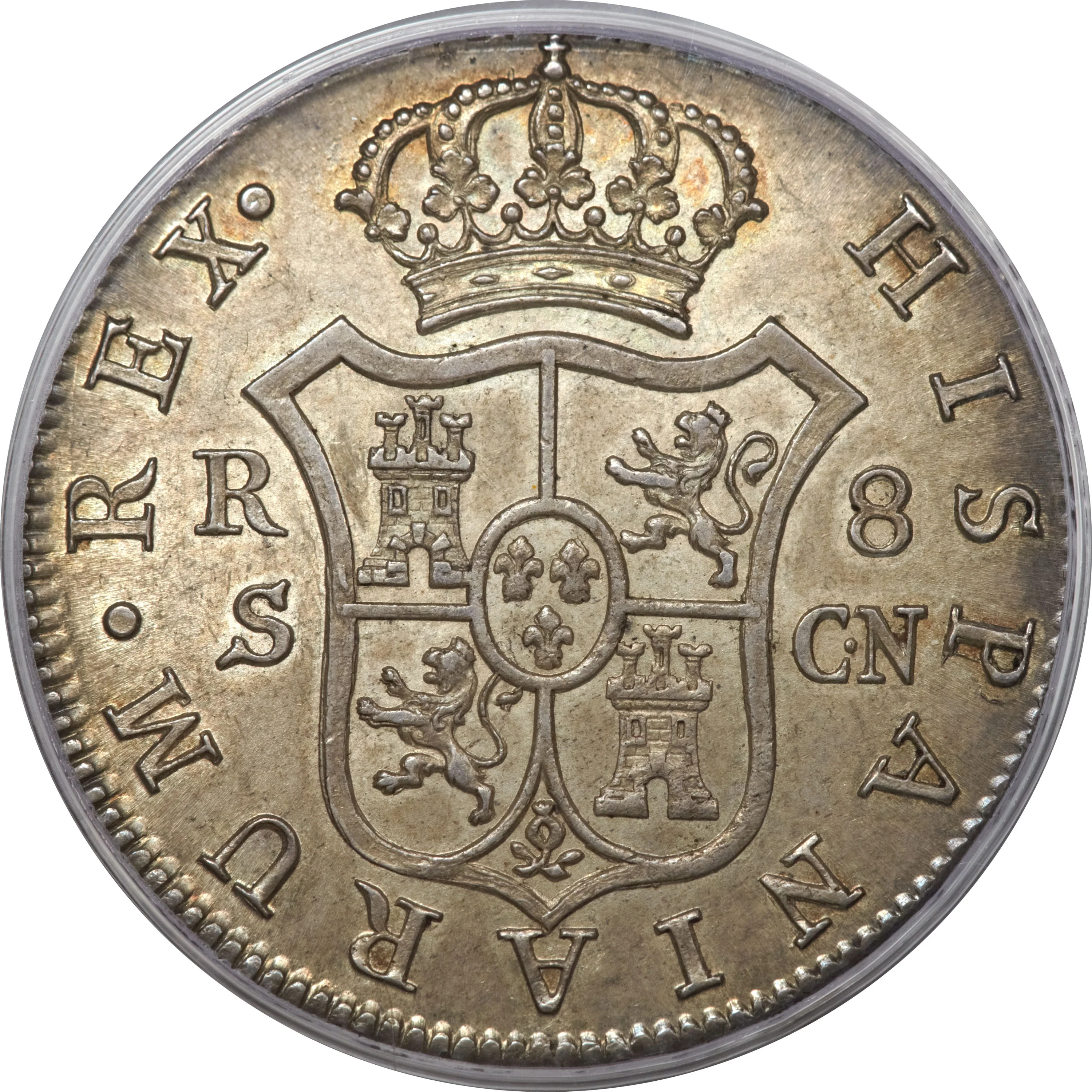
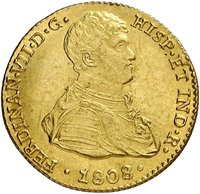
Obverse
Description:
Bust of Ferdinand VII facing right.
Inscription:
FERDINANDUS VII · DEI · G ·
· 1808 ·
· 1808 ·
Translation:
FERDINAND VII BY THE GRACE OF GOD
1808
1808
Script: Latin
Language: Latin
Engraver: Félix Sagau y Dalmau de Galcerán
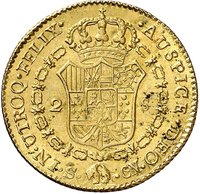
Reverse
Description:
Royal arms of Spain.
Inscription:
HISPANIARUM · REX ·
R 8
S C · N
R 8
S C · N
Translation:
King of the Spains
R 8
By Decree of the Senate
R 8
By Decree of the Senate
Script: Latin
Language: Latin
Engraver: Félix Sagau y Dalmau de Galcerán
Edge
Categories
| Symbols> Coat of Arms |
Mints
| Name | Mark |
|---|---|
| Royal Mint of Seville | S |
Mintings
| Year | Mint Mark | Mintage | Quality | Collection |
|---|---|---|---|---|
| 1808 | SCN | — | ||
| 1809 | SCN | — |
Historical background
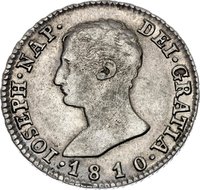
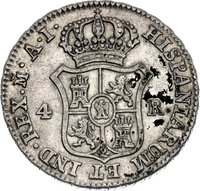
In 1808, Spain found itself in a state of profound monetary chaos, a direct consequence of the political crisis triggered by the Napoleonic invasion and the ensuing Peninsular War. The legitimate Spanish king, Ferdinand VII, was a prisoner of France, and Joseph Bonaparte had been installed as a new monarch. This created a fractured sovereignty, with competing authorities issuing currency to finance their war efforts. The traditional royal mints in cities like Madrid, Seville, and Barcelona operated under French control, producing coins (reales and escudos) bearing Joseph’s effigy, which were widely rejected by a hostile population.
Simultaneously, the patriotic resistance juntas and the later Central Junta, acting in Ferdinand VII's name, faced desperate financial needs. Their primary solution was to authorize provincial and local mints to strike immense quantities of low-quality silver and copper coins, often from melted-down church plate and other seized assets. These emergency issues, known as "obsidional" or siege coinage, varied wildly in weight, purity, and design from region to region, leading to a severe loss of public confidence. The economy became flooded with disparate coins of uncertain value, crippling commerce and fueling inflation.
Underlying this crisis was the collapse of the state's fiscal structure and the draining of the treasury to fund the war. The Bank of San Carlos (precursor to the Bank of Spain) saw its credibility shattered, and its paper notes, or vales reales, plummeted in value, becoming nearly worthless. Thus, by 1808, Spain was moving rapidly from a unified royal monetary system to a fragmented landscape of politically charged coinage, where the value of money was dictated less by its metallic content and more by which authority issued it and who was willing to accept it, laying the groundwork for years of economic instability.
Simultaneously, the patriotic resistance juntas and the later Central Junta, acting in Ferdinand VII's name, faced desperate financial needs. Their primary solution was to authorize provincial and local mints to strike immense quantities of low-quality silver and copper coins, often from melted-down church plate and other seized assets. These emergency issues, known as "obsidional" or siege coinage, varied wildly in weight, purity, and design from region to region, leading to a severe loss of public confidence. The economy became flooded with disparate coins of uncertain value, crippling commerce and fueling inflation.
Underlying this crisis was the collapse of the state's fiscal structure and the draining of the treasury to fund the war. The Bank of San Carlos (precursor to the Bank of Spain) saw its credibility shattered, and its paper notes, or vales reales, plummeted in value, becoming nearly worthless. Thus, by 1808, Spain was moving rapidly from a unified royal monetary system to a fragmented landscape of politically charged coinage, where the value of money was dictated less by its metallic content and more by which authority issued it and who was willing to accept it, laying the groundwork for years of economic instability.
Series: 1808 Spain circulation coins
💎 Extremely Rare