

1 Dollar – United States
Circulating commemorative coins
Commemoration: Native American $1 Coin Act
Series: Native American $1 Coin Act
United States
Context
Year: 2010
Issuer: United States 
Period:
(since 1776)
Currency:
(since 1785)
Total mintage: 82,469,364
Material
References
KM: #Click to copy to clipboard474
Numista: #9953
Value
Exchange value: 1 USD = $1.00
Inflation-adjusted value: 1.50 USD
Obverse
Description:
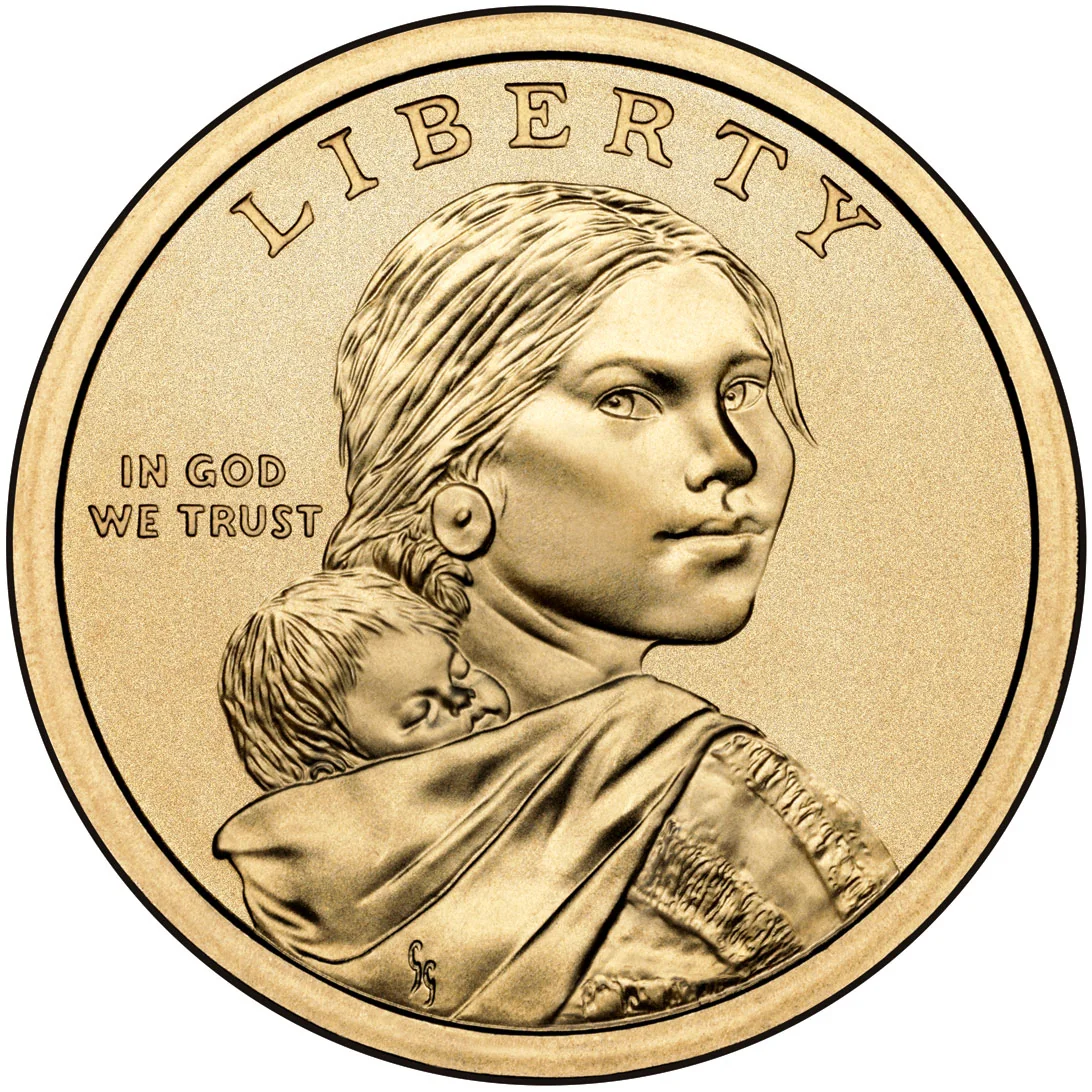
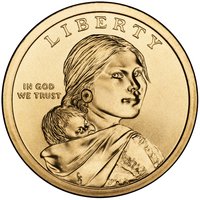
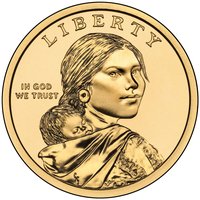
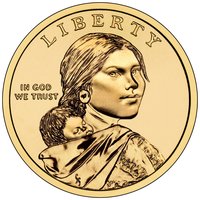
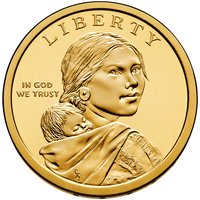
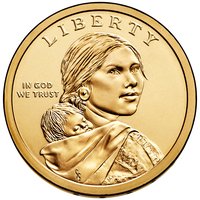
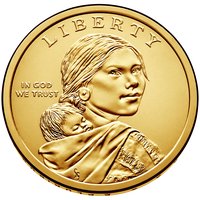
Sacagawea (1788-1812), a Shoshone guide and translator for Lewis and Clark, shown with her child.
Inscription:
LIBERTY
IN GOD
WE TRUST
GG
IN GOD
WE TRUST
GG
Script: Latin
Engraver: Glenna Goodacre
Reverse
Description:
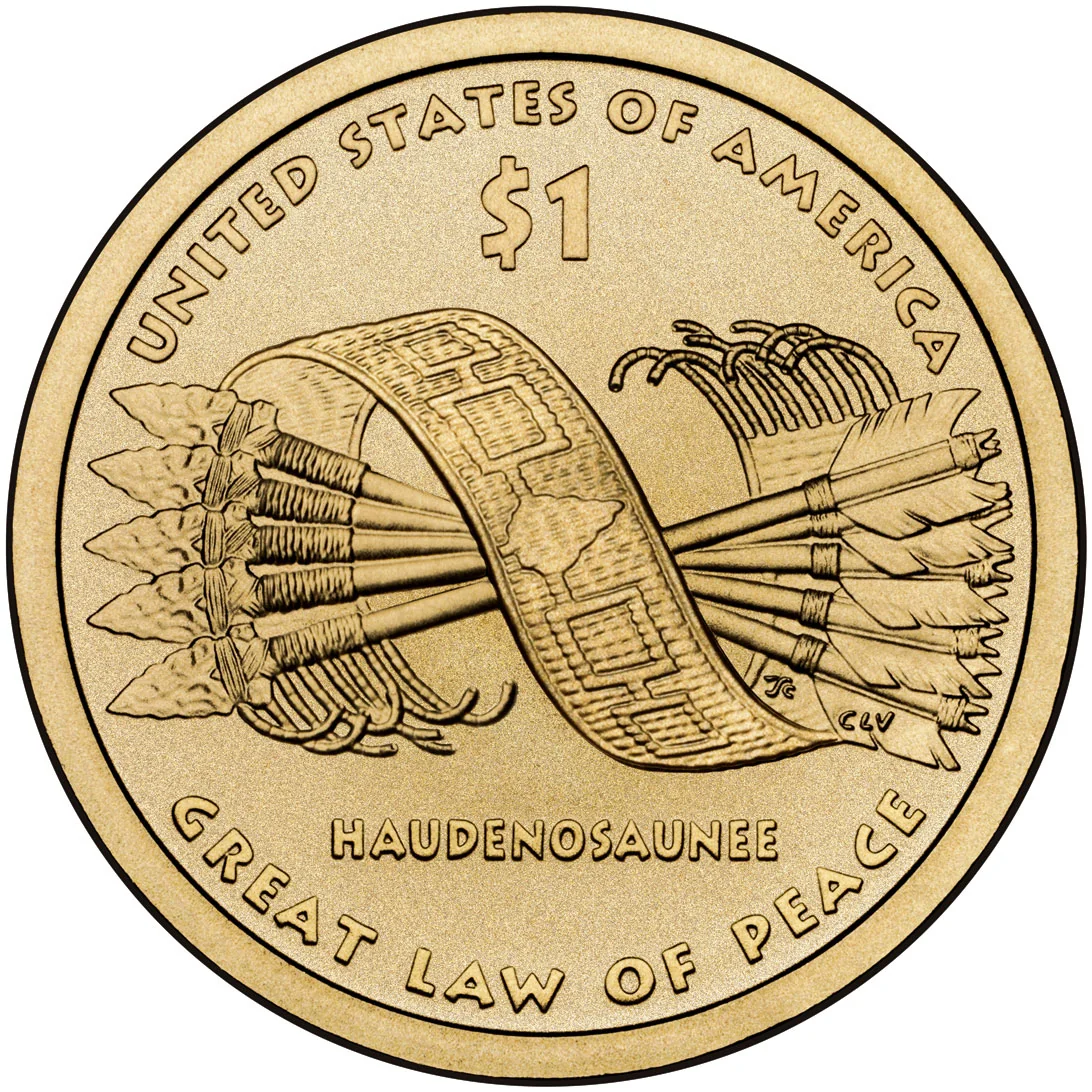
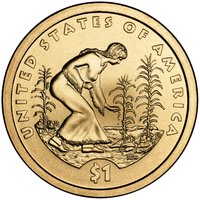
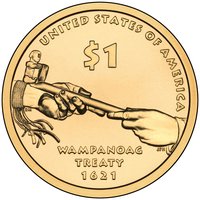
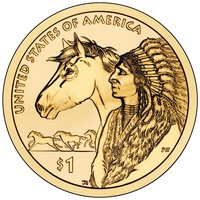
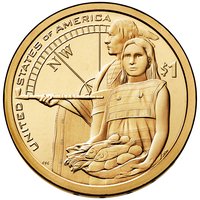
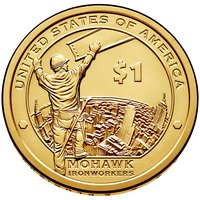
The belt depicts the Hiawatha Belt and five arrows, symbolizing Haudenosaunee ("People of the Longhouse") unity. Its four links represent the Mohawk, Oneida, Cayuga, and Seneca nations, while the central white pine is the Tree of Peace for the Onondaga. The reverse reads "Great Law of Peace," their constitution, which influenced the U.S. Constitution.
Inscription:
UNITED STATES OF AMERICA
$1
TC
CLV
HAUDENOSAUNEE
GREAT LAW OF PEACE
$1
TC
CLV
HAUDENOSAUNEE
GREAT LAW OF PEACE
Script: Latin
Engravers: Thomas Cleveland, Charles Lessie Vickers
Edge
Mints
| Name | Mark |
|---|---|
| United States Mint of Denver | D |
| United States Mint of Philadelphia | P |
| United States Mint of San Francisco | S |
Historical background
The United States entered 2010 in a fragile economic recovery from the Great Recession, with its currency policy dominated by the Federal Reserve's unprecedented monetary stimulus. In response to the financial crisis, the Fed had already lowered its benchmark interest rate to near zero in late 2008 and embarked on its first round of Quantitative Easing (QE1), purchasing massive amounts of Treasury and mortgage-backed securities. By 2010, this expansion of the money supply created concerns about potential long-term dollar debasement and inflation, though those pressures were largely muted by weak demand. The primary focus was on stimulating growth and preventing deflation, keeping the dollar relatively weak to support exports.
Internationally, the dollar's status as the world's primary reserve currency faced subtle scrutiny. China, a major holder of U.S. debt, publicly expressed concerns about the safety of its dollar-denominated assets due to the expanding U.S. budget deficit and the Fed's balance sheet growth. This period saw ongoing tensions over currency valuation, with the U.S. accusing China of artificially suppressing the value of the yuan to gain a trade advantage. Despite these frictions, the dollar remained the dominant safe-haven asset, as evidenced by its strengthening during the European sovereign debt crisis in mid-2010, when investors fled the euro.
Domestically, there was little public debate about physical currency, but a significant policy shift occurred with the passage of the Dodd-Frank Act in July 2010. While primarily focused on financial regulation, the Act had lasting implications for digital and alternative currencies. Its provisions on payment systems and the clarification of the regulatory landscape for "value that substitutes for currency" indirectly set the stage for future debates and frameworks surrounding emerging digital payment technologies and, later, cryptocurrencies, which were just beginning to gain attention with the launch of Bitcoin the previous year.
Internationally, the dollar's status as the world's primary reserve currency faced subtle scrutiny. China, a major holder of U.S. debt, publicly expressed concerns about the safety of its dollar-denominated assets due to the expanding U.S. budget deficit and the Fed's balance sheet growth. This period saw ongoing tensions over currency valuation, with the U.S. accusing China of artificially suppressing the value of the yuan to gain a trade advantage. Despite these frictions, the dollar remained the dominant safe-haven asset, as evidenced by its strengthening during the European sovereign debt crisis in mid-2010, when investors fled the euro.
Domestically, there was little public debate about physical currency, but a significant policy shift occurred with the passage of the Dodd-Frank Act in July 2010. While primarily focused on financial regulation, the Act had lasting implications for digital and alternative currencies. Its provisions on payment systems and the clarification of the regulatory landscape for "value that substitutes for currency" indirectly set the stage for future debates and frameworks surrounding emerging digital payment technologies and, later, cryptocurrencies, which were just beginning to gain attention with the launch of Bitcoin the previous year.
Series: Native American $1 Coin Act

🌱 Very Common