

1 dollar – United States
Add to wishlist
Circulating commemorative coins
Commemoration: Native American $1 Coin Act
Series: Native American $1 Coin Act
United States
Context
Year: 2011
Issuer: United States
Period:
(since 1776)
Currency:
(since 1785)
Total mintage: 79,013,276
Material
References
KM: #
Numista: #19974
Value
Exchange value: 1 USD = $1.00
Inflation-adjusted value: 1.47 USD
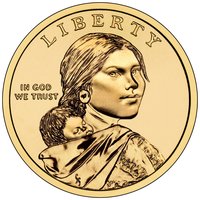
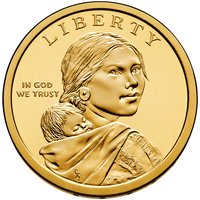
Obverse
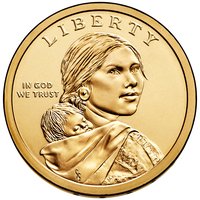
Description:
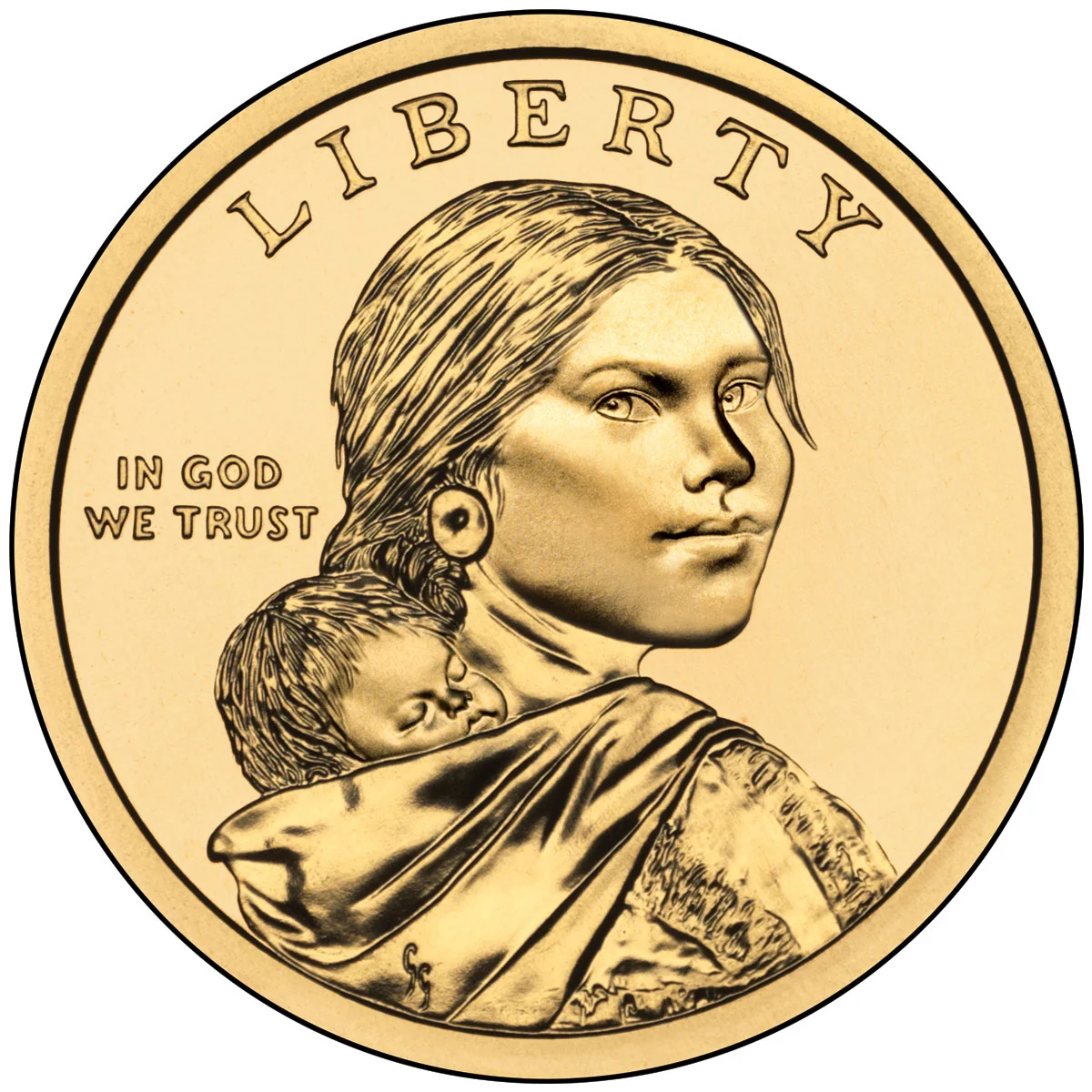
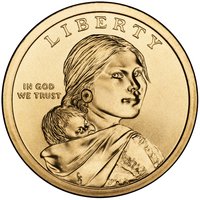
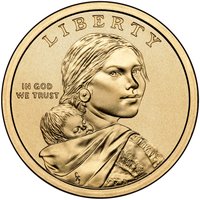
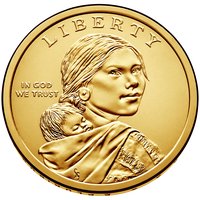
Sacagawea carrying her baby.
Inscription:
LIBERTY
IN GOD
WE TRUST
GG
IN GOD
WE TRUST
GG
Script: Latin
Engraver: Glenna Goodacre
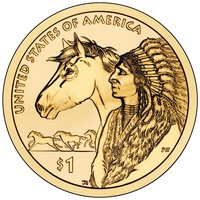
Reverse
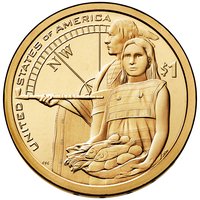
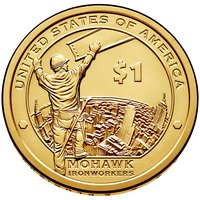
Description:
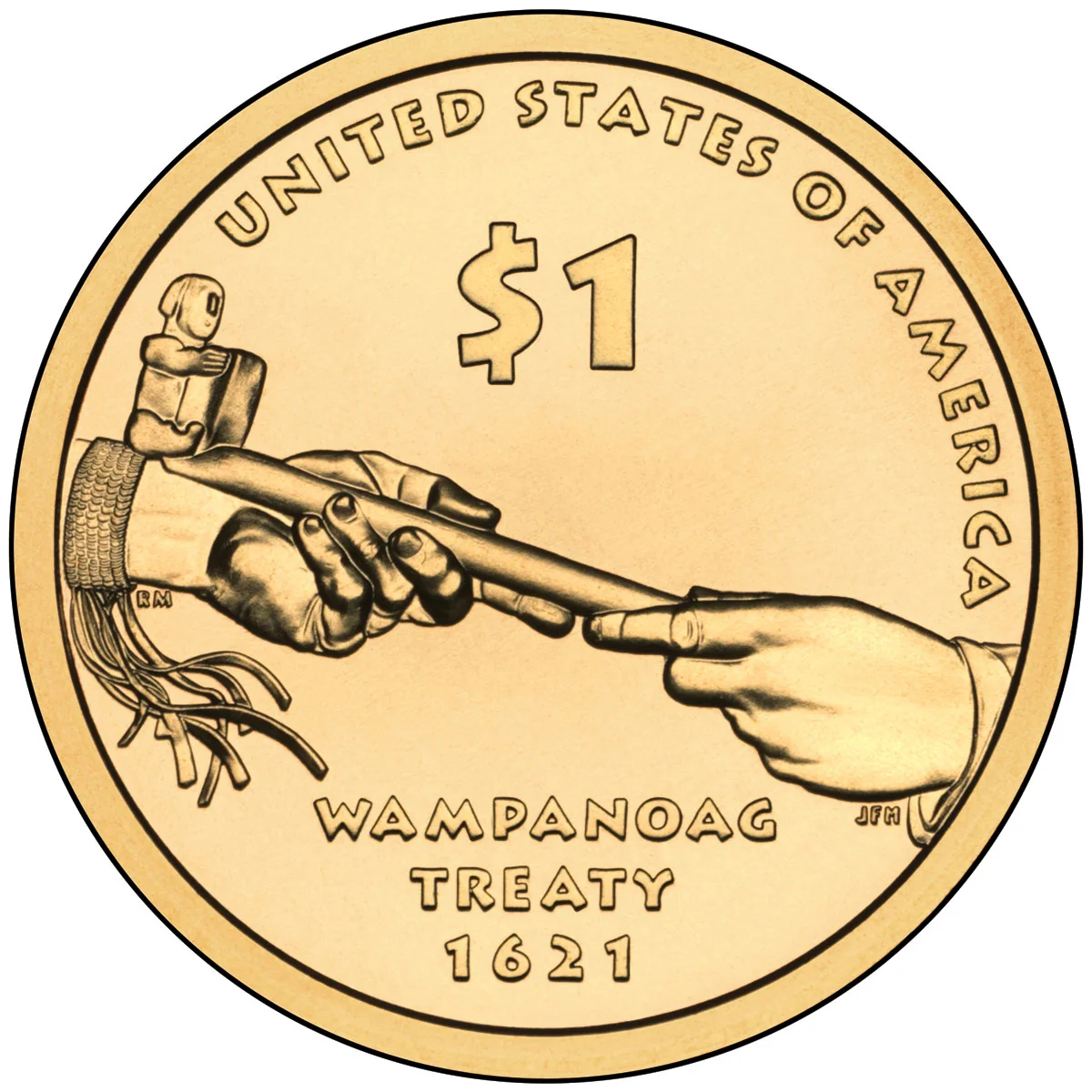
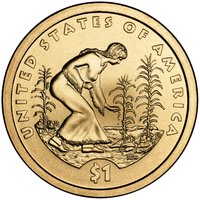
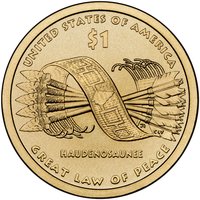
Native American and English settler passing a peace pipe.
Inscription:
UNITED STATES OF AMERICA
$1
RM
WAMPANOAG JFM
TREATY
1621
$1
RM
WAMPANOAG JFM
TREATY
1621
Script: Latin
Engraver: Joseph Menna
Designer: Richard Masters
Edge
Engraved with date and motto.
Legend:
2011 P *** E PLURIBUS UNUM **********
Mints
| Name | Mark |
|---|---|
| United States Mint of Denver | D |
| United States Mint of Philadelphia | P |
| United States Mint of San Francisco | S |
Historical background
In 2011, the United States faced a significant currency dilemma centered on the dual threats of a weakening dollar and rising political brinkmanship over the national debt. The Federal Reserve, under Chairman Ben Bernanke, was in the midst of its second round of quantitative easing (QE2), a program injecting $600 billion into the financial system by purchasing Treasury securities. While intended to stimulate a sluggish post-financial crisis economy by lowering long-term interest rates, QE2 had the major side effect of devaluing the dollar. This deliberate policy fueled concerns about long-term inflation and drew intense criticism from international trading partners, who accused the U.S. of engaging in a "currency war" to gain a trade advantage.
The currency situation became acutely politicized during the summer debt ceiling crisis. A standoff between the Obama administration and Congress over raising the statutory borrowing limit pushed the U.S. to the edge of a potential default. This unprecedented political risk severely undermined global confidence in the U.S. dollar's status as the world's premier reserve currency. In August, the credit rating agency Standard & Poor's downgraded the U.S. sovereign credit rating from AAA to AA+, citing the political gridlock and rising debt burden. This historic downgrade, while not causing an immediate market crash, was a profound symbolic blow and intensified debates about the dollar's long-term stability.
By year's end, the dollar had experienced volatility but ultimately strengthened against major currencies like the Euro, not due to U.S. economic strength but because of the escalating European sovereign debt crisis, which made the dollar a relative "safe haven." Nevertheless, the events of 2011 left a lasting impact by highlighting structural fiscal vulnerabilities and exposing the dollar to renewed skepticism. The year cemented a narrative of deliberate devaluation through unconventional monetary policy, combined with self-inflicted political risk, which continued to shape international perceptions of the U.S. currency in the following decade.
The currency situation became acutely politicized during the summer debt ceiling crisis. A standoff between the Obama administration and Congress over raising the statutory borrowing limit pushed the U.S. to the edge of a potential default. This unprecedented political risk severely undermined global confidence in the U.S. dollar's status as the world's premier reserve currency. In August, the credit rating agency Standard & Poor's downgraded the U.S. sovereign credit rating from AAA to AA+, citing the political gridlock and rising debt burden. This historic downgrade, while not causing an immediate market crash, was a profound symbolic blow and intensified debates about the dollar's long-term stability.
By year's end, the dollar had experienced volatility but ultimately strengthened against major currencies like the Euro, not due to U.S. economic strength but because of the escalating European sovereign debt crisis, which made the dollar a relative "safe haven." Nevertheless, the events of 2011 left a lasting impact by highlighting structural fiscal vulnerabilities and exposing the dollar to renewed skepticism. The year cemented a narrative of deliberate devaluation through unconventional monetary policy, combined with self-inflicted political risk, which continued to shape international perceptions of the U.S. currency in the following decade.
Series: Native American $1 Coin Act
🌱 Very Common