

1 krona (War between Russia and Sweden - Separation from Finland) – Sweden
Add to wishlist
Circulating commemorative coins
Commemoration: 200th Anniversary of War between Russia and Sweden - Separation from Finland
Sweden
Context
Year: 2009
Issuer: Sweden
Ruler: Carl XVI Gustaf
Currency:
(since 1873)
Demonetization: 30 June 2017
Total mintage: 40,007,570
Material
Diameter: 25 mm
Weight: 7 g
Thickness: 1.88 mm
Shape: Round
Composition: Copper-nickel
Technique: Milled
Alignment: Medal alignment
flip
References
KM: #
Numista: #9931
Value
Exchange value: 1 SEK
Inflation-adjusted value: 1.40 SEK
Obverse
Description:
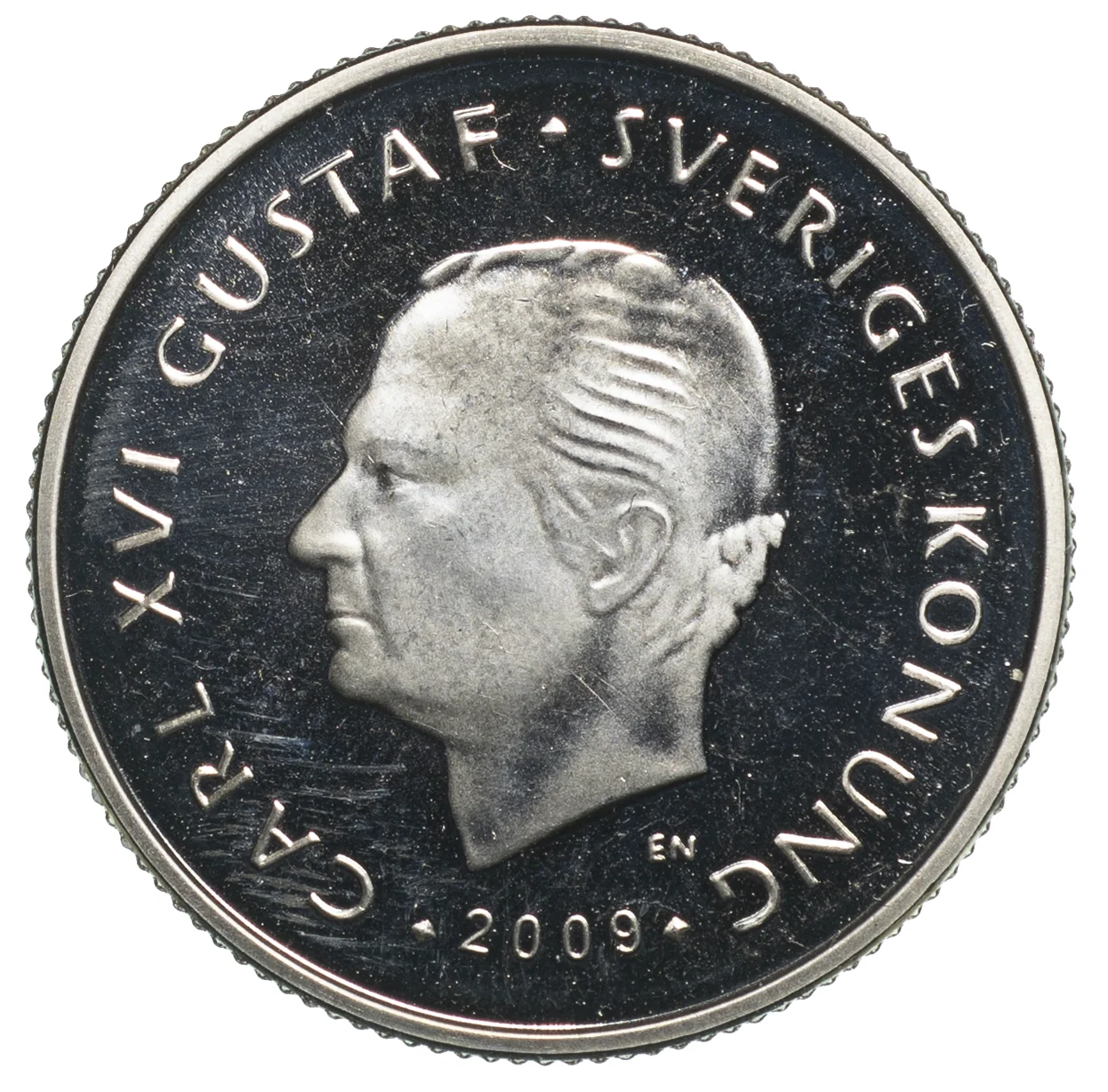
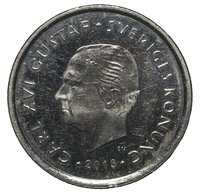
King Carl XVI Gustaf in profile, with the artist's initials below.
Inscription:
CARL XVI GUSTAF · SVERIGES KONUNG
EN
2009
EN
2009
Translation:
Carl XVI Gustaf, King of Sweden
2009
2009
Script: Latin
Engraver: Ernst Nordin
Reverse
Description:
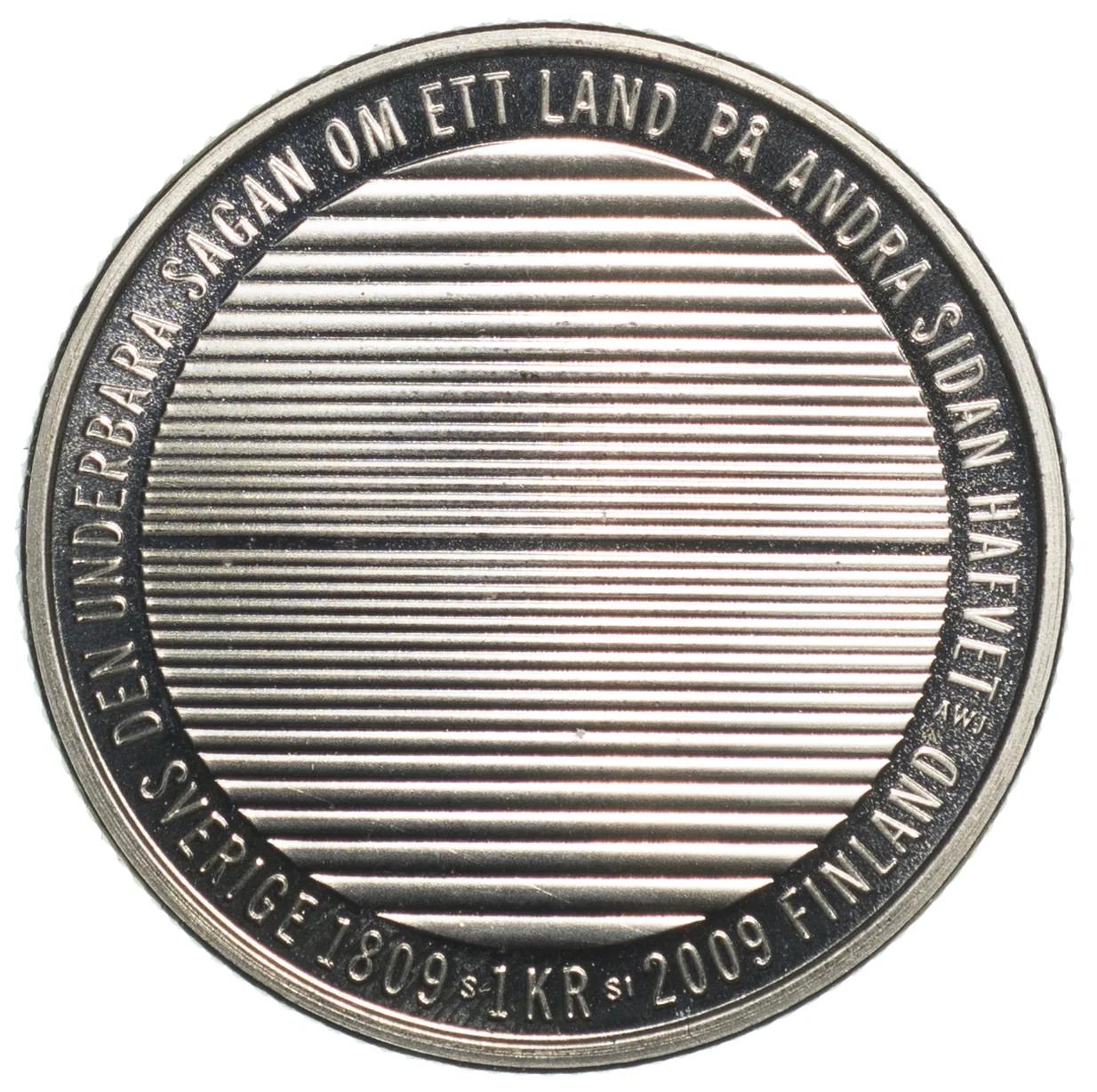
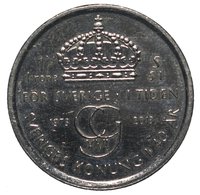
Horizontal lines symbolize the sea connecting Sweden and Finland. The rim bears anniversary dates, the value, and "S SI" (Stockholm and Governor Stefan Ingves).
Inscription:
DEN UNDERBARA SAGAN OM ETT LAND PÅ ANDRA SIDAN HAFVET
AWJ
SVERIGE 1809 s 1KR SI 2009 FINLAND
AWJ
SVERIGE 1809 s 1KR SI 2009 FINLAND
Translation:
The Wonderful Story of a Land on the Other Side of the Sea
AWJ
Sweden 1809 1 Crown SI 2009 Finland
AWJ
Sweden 1809 1 Crown SI 2009 Finland
Script: Latin
Language: Swedish
Engraver: Annie Winblad Jakubowski
Edge
Reeded
Mints
| Name | Mark |
|---|---|
| Mint of Finland | S |
Mintings
| Year | Mint Mark | Mintage | Quality | Collection |
|---|---|---|---|---|
| 2009 | S | 40,007,570 |
Historical background
In 2009, Sweden was navigating the severe global financial crisis, which had a profound impact on its currency, the Swedish krona (SEK). The crisis triggered a global "flight to safety," with investors moving capital away from smaller, open economies like Sweden's and into perceived safe-haven assets such as the US dollar, Japanese yen, and Swiss franc. Consequently, the krona experienced significant depreciation, losing roughly 15% of its value against the euro from mid-2008 to early 2009. This sharp decline was exacerbated by Sweden's heavy dependence on exports, particularly in the automotive and engineering sectors, which faced collapsing global demand.
Domestically, the Riksbank, Sweden's central bank, responded aggressively to the economic downturn. In a historic move, it cut its main policy interest rate from 1.75% in December 2008 to just 0.25% by July 2009. While these drastic cuts were aimed at stimulating the domestic economy and preventing deflation, they also had the side effect of reducing the yield appeal of the krona, contributing to its weakness. This period highlighted a critical debate: a weaker krona helped Swedish exporters by making their goods cheaper abroad, but it also increased the cost of imports and foreign debt, presenting a complex policy challenge.
By late 2009, the situation began to stabilize. As global financial markets tentatively recovered and risk appetite slowly returned, the krona regained some strength. Sweden's relatively strong public finances and banking system, which had avoided the massive bailouts seen elsewhere, eventually bolstered confidence in the currency. The events of 2009 underscored the krona's vulnerability to global risk sentiment and set the stage for the Riksbank's subsequent focus on financial stability and its later pioneering role in experimenting with negative interest rates in the following decade.
Domestically, the Riksbank, Sweden's central bank, responded aggressively to the economic downturn. In a historic move, it cut its main policy interest rate from 1.75% in December 2008 to just 0.25% by July 2009. While these drastic cuts were aimed at stimulating the domestic economy and preventing deflation, they also had the side effect of reducing the yield appeal of the krona, contributing to its weakness. This period highlighted a critical debate: a weaker krona helped Swedish exporters by making their goods cheaper abroad, but it also increased the cost of imports and foreign debt, presenting a complex policy challenge.
By late 2009, the situation began to stabilize. As global financial markets tentatively recovered and risk appetite slowly returned, the krona regained some strength. Sweden's relatively strong public finances and banking system, which had avoided the massive bailouts seen elsewhere, eventually bolstered confidence in the currency. The events of 2009 underscored the krona's vulnerability to global risk sentiment and set the stage for the Riksbank's subsequent focus on financial stability and its later pioneering role in experimenting with negative interest rates in the following decade.
🌱 Very Common