

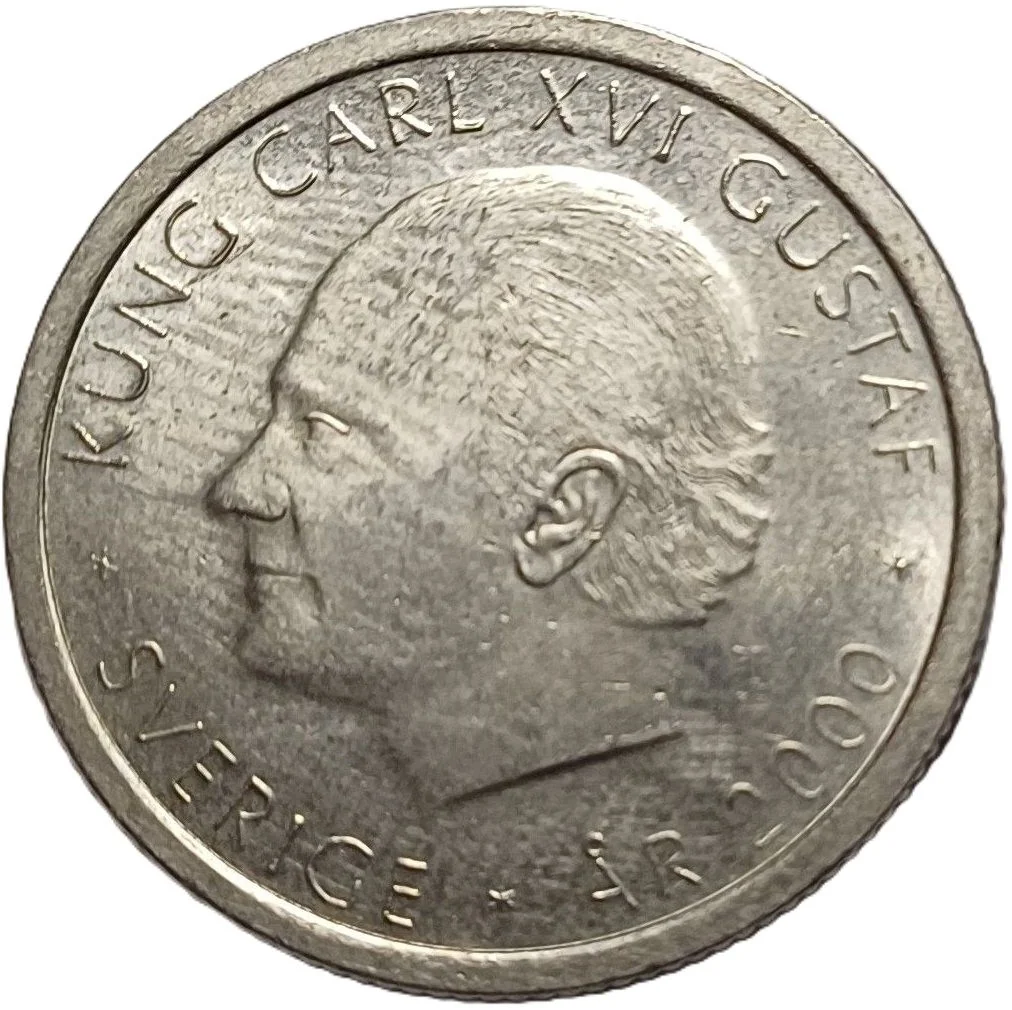
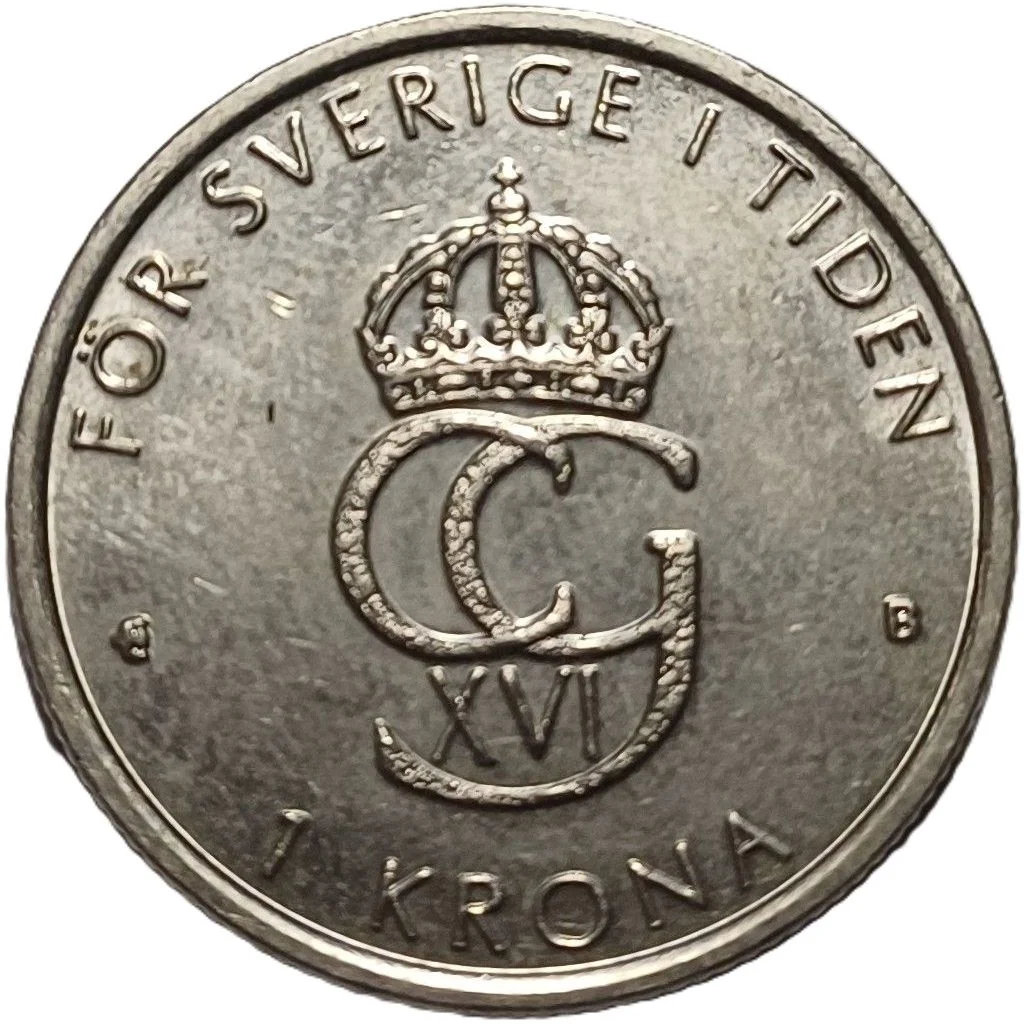
1 Krona – Sweden
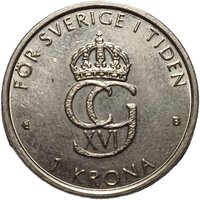
Circulating commemorative coins
Commemoration: New Millennium - Year 2000
Sweden
Context
Year: 2000
Issuer: Sweden 
Ruler: Carl XVI Gustaf
Currency:
(since 1873)
Demonetization: 30 June 2017
Total mintage: 2,963,813
Material
References
KM: #Click to copy to clipboard897
Numista: #12988
Value
Exchange value: 1 SEK = $0.11
Inflation-adjusted value: 1.63 SEK
Obverse
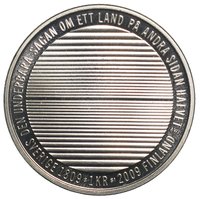
Reverse
Edge
Milled
Categories
| Event> Millennium |
Mints
| Name | Mark |
|---|---|
| Myntverket | — |
Mintings
| Year | Mint Mark | Mintage | Quality | Collection |
|---|---|---|---|---|
| 2000 | — | 2,963,813 |
Historical background
By the year 2000, Sweden's currency situation was defined by its deliberate choice to remain outside the European Economic and Monetary Union (EMU). Following a referendum in 1994, Sweden had joined the European Union in 1995 but had opted out of adopting the euro. This meant the Swedish krona (SEK) remained the national currency, operating under a floating exchange rate regime since November 1992, when a severe financial crisis forced the abandonment of its fixed exchange rate peg.
The period around 2000 was one of robust economic growth and low inflation for Sweden, which bolstered confidence in the krona. The Riksbank, Sweden's central bank, had established an inflation-targeting framework in 1993, successfully stabilizing prices and providing a clear monetary policy anchor. This independent monetary policy was widely seen as a key advantage of retaining the krona, allowing Sweden to tailor interest rates to its specific economic conditions rather than being bound by the European Central Bank's one-size-fits-all approach for the eurozone.
However, the question of euro adoption remained a live and divisive political issue. The government, led by Prime Minister Göran Persson, was formally in favor of joining the euro and was laying the groundwork for a future referendum, which would eventually be held in 2003. Proponents argued that adoption would reduce transaction costs and exchange rate uncertainty for Sweden's heavily trade-dependent economy. Opponents, meanwhile, emphasized the benefits of monetary sovereignty and expressed skepticism about the eurozone's stability. Thus, in 2000, the krona was stable and well-managed, but its long-term future was an open and actively debated question.
The period around 2000 was one of robust economic growth and low inflation for Sweden, which bolstered confidence in the krona. The Riksbank, Sweden's central bank, had established an inflation-targeting framework in 1993, successfully stabilizing prices and providing a clear monetary policy anchor. This independent monetary policy was widely seen as a key advantage of retaining the krona, allowing Sweden to tailor interest rates to its specific economic conditions rather than being bound by the European Central Bank's one-size-fits-all approach for the eurozone.
However, the question of euro adoption remained a live and divisive political issue. The government, led by Prime Minister Göran Persson, was formally in favor of joining the euro and was laying the groundwork for a future referendum, which would eventually be held in 2003. Proponents argued that adoption would reduce transaction costs and exchange rate uncertainty for Sweden's heavily trade-dependent economy. Opponents, meanwhile, emphasized the benefits of monetary sovereignty and expressed skepticism about the eurozone's stability. Thus, in 2000, the krona was stable and well-managed, but its long-term future was an open and actively debated question.
🌱 Common