

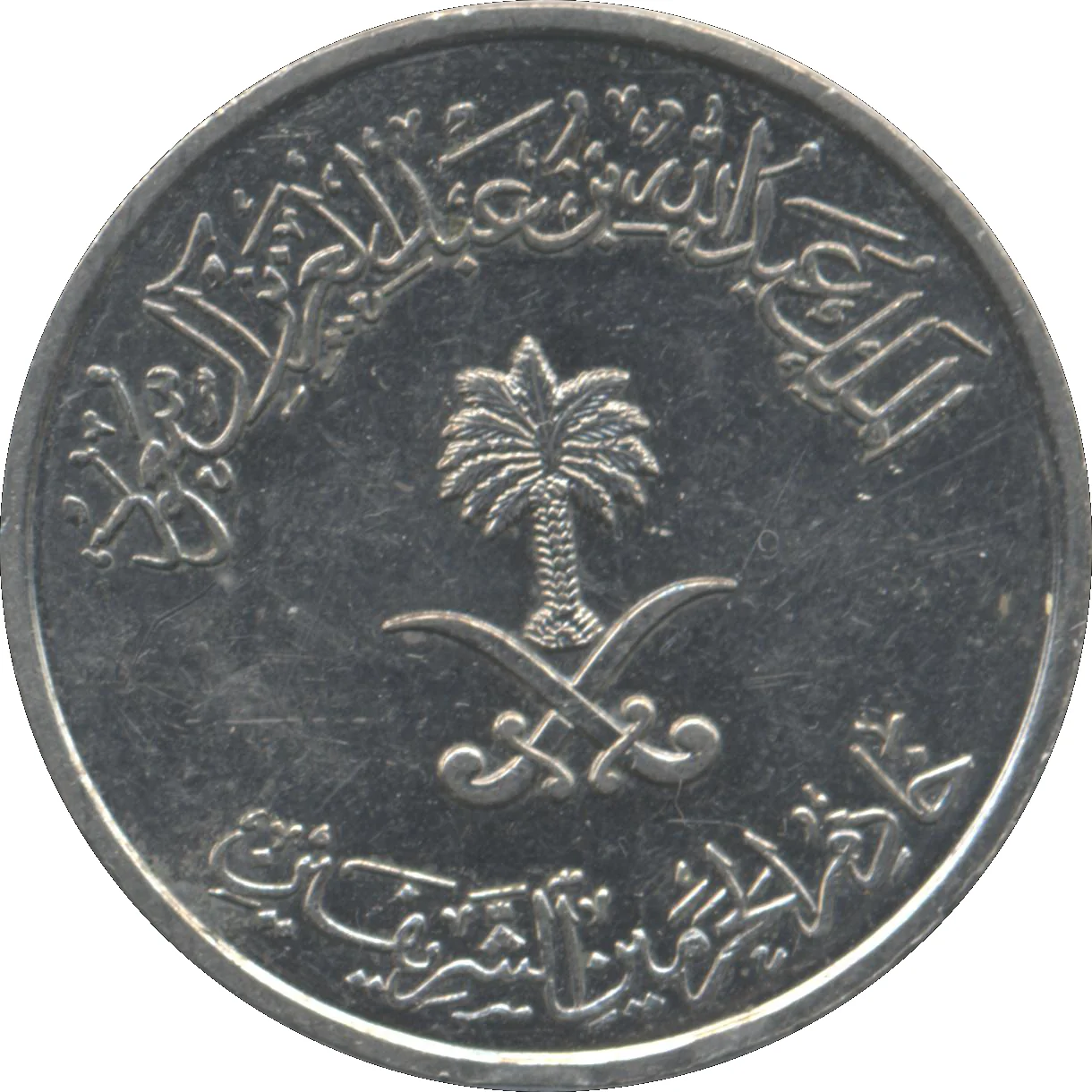
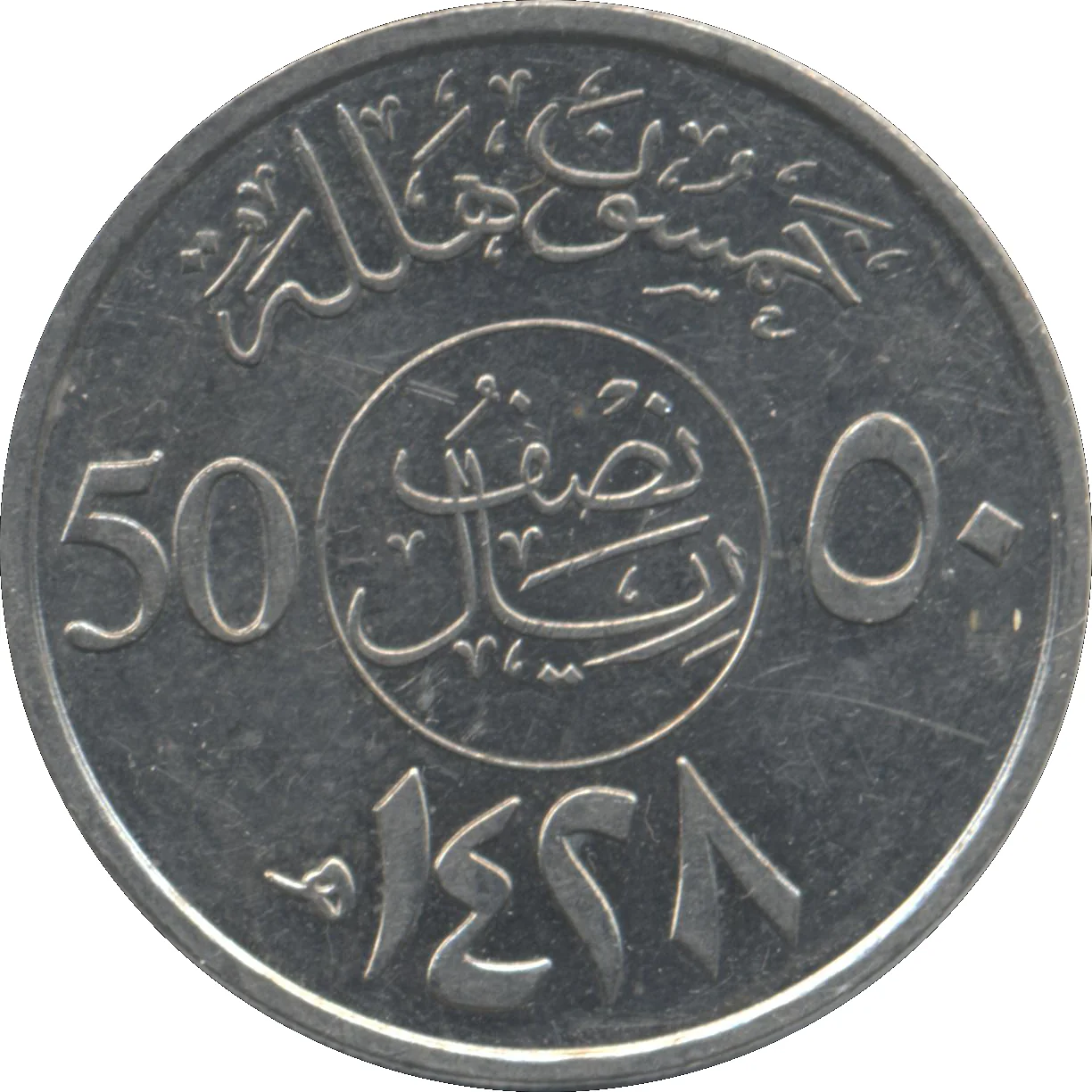
50 halalas – Saudi Arabia
Add to wishlist
Saudi Arabia
Context
Material
Diameter: 26 mm
Weight: 6.5 g
Thickness: 1.69 mm
Shape: Round
Composition: Copper-nickel
Technique: Milled
Alignment: Medal alignment
flip
References
KM: #
Numista: #9930
Value
Exchange value: 0.50 SAR
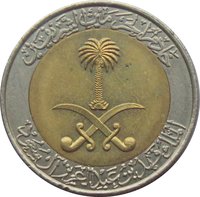
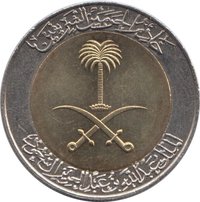
Obverse
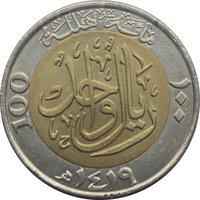
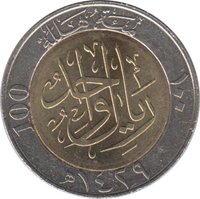
Reverse
Edge
Reeded
Categories
| Plant> Tree |
| Symbols> Coat of Arms |
| Object> Cold weapons |
Mints
| Name | Mark |
|---|---|
| Monnaie de Paris | — |
Mintings
| Year | Mint Mark | Mintage | Quality | Collection |
|---|---|---|---|---|
| 2007 | — | — | ||
| 2010 | — | — | ||
| 2012 | — | — | ||
| 2013 | — | — | ||
| 2015 | — | — |
Historical background
In 2007, Saudi Arabia's currency situation was defined by its long-standing and firm peg to the U.S. dollar, established in 1986. The Saudi Riyal (SAR) was fixed at a rate of 3.75 to the dollar, a policy managed by the Saudi Arabian Monetary Authority (SAMA). This peg provided crucial stability for the kingdom's oil-dependent economy, as global oil prices were predominantly quoted in dollars. It eliminated exchange rate risk for the government's primary revenue source and facilitated predictable import costs and foreign investment.
However, the year 2007 presented significant pressure on this regime due to diverging economic cycles between Saudi Arabia and the United States. While the U.S. Federal Reserve began cutting interest rates to address the emerging subprime mortgage crisis, Saudi Arabia and the broader Gulf region were experiencing an economic boom fueled by historically high oil prices, which would average over $70 per barrel that year. This created a dilemma: to maintain the dollar peg, SAMA was compelled to mirror U.S. interest rate cuts, even though the local booming economy arguably required tighter monetary policy to curb rising inflation, which was being further stoked by strong domestic demand and global commodity price increases.
Consequently, there was intense international speculation and domestic debate about a possible revaluation or even a break from the dollar peg. Other Gulf Cooperation Council (GCC) states, like Kuwait, had already abandoned their strict dollar peg earlier in the year. Despite this pressure, the Saudi government and SAMA remained unequivocally committed to the peg, viewing it as a cornerstone of economic and financial stability. The policy was upheld, prioritizing long-term predictability over short-term adjustments, a decision reinforced by the kingdom's central role in the planned GCC monetary union, which at the time also envisioned a common currency pegged to the dollar.
However, the year 2007 presented significant pressure on this regime due to diverging economic cycles between Saudi Arabia and the United States. While the U.S. Federal Reserve began cutting interest rates to address the emerging subprime mortgage crisis, Saudi Arabia and the broader Gulf region were experiencing an economic boom fueled by historically high oil prices, which would average over $70 per barrel that year. This created a dilemma: to maintain the dollar peg, SAMA was compelled to mirror U.S. interest rate cuts, even though the local booming economy arguably required tighter monetary policy to curb rising inflation, which was being further stoked by strong domestic demand and global commodity price increases.
Consequently, there was intense international speculation and domestic debate about a possible revaluation or even a break from the dollar peg. Other Gulf Cooperation Council (GCC) states, like Kuwait, had already abandoned their strict dollar peg earlier in the year. Despite this pressure, the Saudi government and SAMA remained unequivocally committed to the peg, viewing it as a cornerstone of economic and financial stability. The policy was upheld, prioritizing long-term predictability over short-term adjustments, a decision reinforced by the kingdom's central role in the planned GCC monetary union, which at the time also envisioned a common currency pegged to the dollar.
🌱 Very Common