

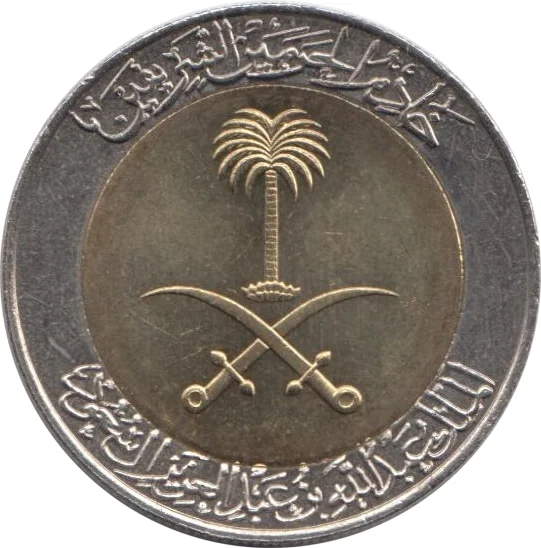
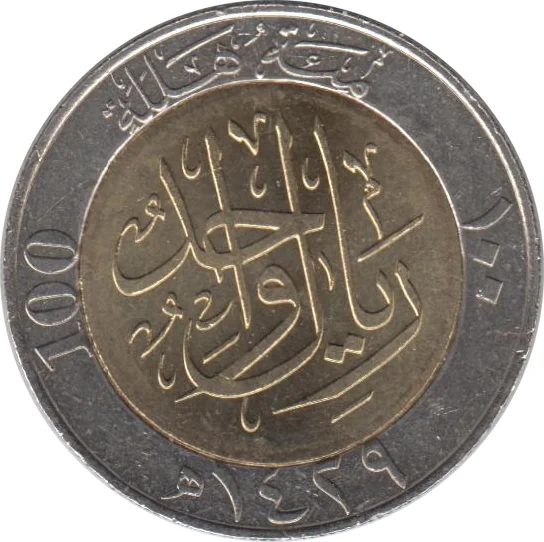
100 halalas – Saudi Arabia
Add to wishlist
Saudi Arabia
Context
Year: 2008
Islamic (Hijri) Year:: 1429
Issuer: Saudi Arabia
Ruler: Abdullah bin Abdulaziz
Currency:
(since 1960)
Material
References
KM: #
Numista: #18704
Value
Exchange value: 1 SAR
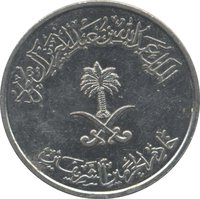
Obverse
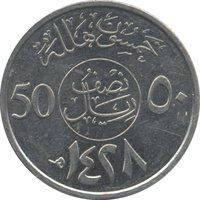
Reverse
Edge
Categories
| Plant> Tree |
| Symbols> Coat of Arms |
| Object> Cold weapons |
Mints
| Name | Mark |
|---|---|
| Royal Mint | — |
Mintings
| Year | Mint Mark | Mintage | Quality | Collection |
|---|---|---|---|---|
| 2008 | — | — |
Historical background
In 2008, Saudi Arabia's currency situation was defined by its long-standing peg to the U.S. dollar, a policy maintained since 1986. The Saudi riyal (SAR) was fixed at a rate of 3.75 to the dollar, a cornerstone of the kingdom's economic stability. This peg provided predictability for the world's largest oil exporter, as oil is priced in dollars, insulating government revenues and major import contracts from currency volatility. The system was underpinned by massive foreign exchange reserves, which exceeded $400 billion by mid-2008, giving the Saudi Arabian Monetary Authority (SAMA) immense firepower to defend the fixed rate.
The year presented a significant test for this regime due to diverging monetary policies. As the U.S. Federal Reserve aggressively cut interest rates to combat the unfolding global financial crisis, SAMA was compelled to follow suit to maintain the peg's credibility, despite soaring domestic inflation. Inflation in the Kingdom peaked at a 30-year high of over 11% in mid-2008, driven by a global food and commodity price boom and rampant domestic liquidity. This created a policy dilemma: lowering rates to match the Fed fueled inflation, but breaking the peg to pursue an independent tightening policy was considered too risky for the oil-dependent, import-reliant economy.
Consequently, despite intense market speculation and periodic pressure on the riyal in the forward markets, Saudi authorities reaffirmed their unwavering commitment to the dollar peg throughout 2008. The focus remained on using alternative tools, such as increasing reserve requirements for banks and issuing domestic debt to manage liquidity, rather than abandoning the anchor. The peg ultimately held firm, demonstrating its role as a non-negotiable pillar of Saudi financial policy, even amidst global turmoil and severe domestic inflationary pressures. The experience reinforced the view that the benefits of stability for the hydrocarbon economy and import sector outweighed the costs of imported monetary policy.
The year presented a significant test for this regime due to diverging monetary policies. As the U.S. Federal Reserve aggressively cut interest rates to combat the unfolding global financial crisis, SAMA was compelled to follow suit to maintain the peg's credibility, despite soaring domestic inflation. Inflation in the Kingdom peaked at a 30-year high of over 11% in mid-2008, driven by a global food and commodity price boom and rampant domestic liquidity. This created a policy dilemma: lowering rates to match the Fed fueled inflation, but breaking the peg to pursue an independent tightening policy was considered too risky for the oil-dependent, import-reliant economy.
Consequently, despite intense market speculation and periodic pressure on the riyal in the forward markets, Saudi authorities reaffirmed their unwavering commitment to the dollar peg throughout 2008. The focus remained on using alternative tools, such as increasing reserve requirements for banks and issuing domestic debt to manage liquidity, rather than abandoning the anchor. The peg ultimately held firm, demonstrating its role as a non-negotiable pillar of Saudi financial policy, even amidst global turmoil and severe domestic inflationary pressures. The experience reinforced the view that the benefits of stability for the hydrocarbon economy and import sector outweighed the costs of imported monetary policy.
🌱 Fairly Common