

25 halalas – Saudi Arabia
Add to wishlist
Circulating commemorative coins
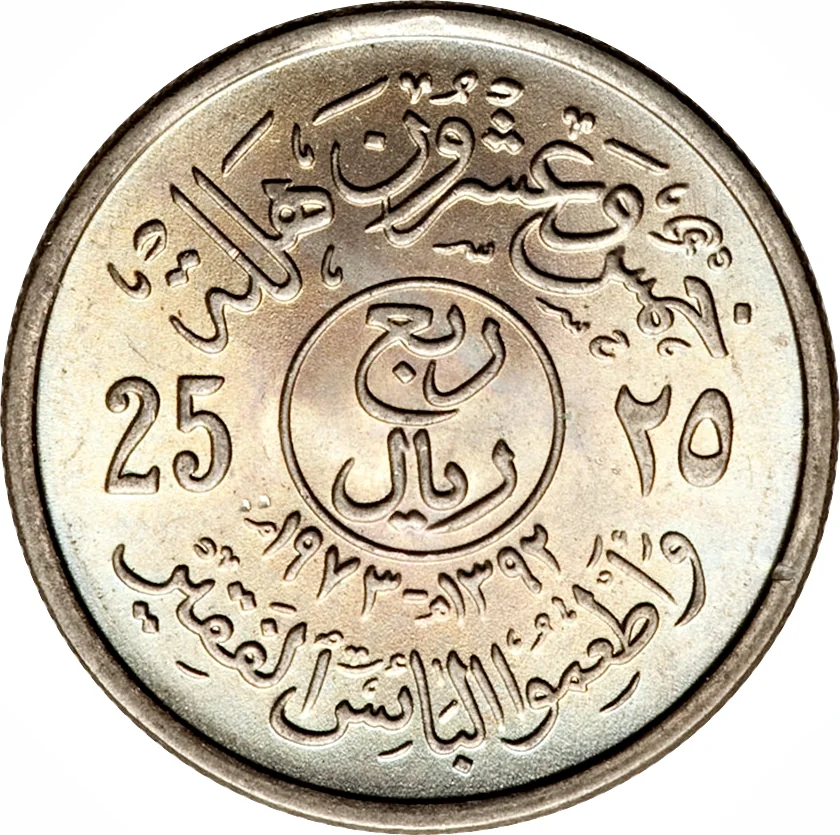
Commemoration: F.A.O.
Saudi Arabia
Context
Year: 1973
Islamic (Hijri) Year:: 1392
Issuer: Saudi Arabia
Ruler: Faisal bin Abdulaziz
Currency:
(since 1960)
Total mintage: 200,000
Material
References
KM: #
Numista: #9924
Value
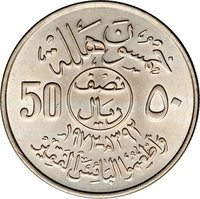
Exchange value: 0.25 SAR
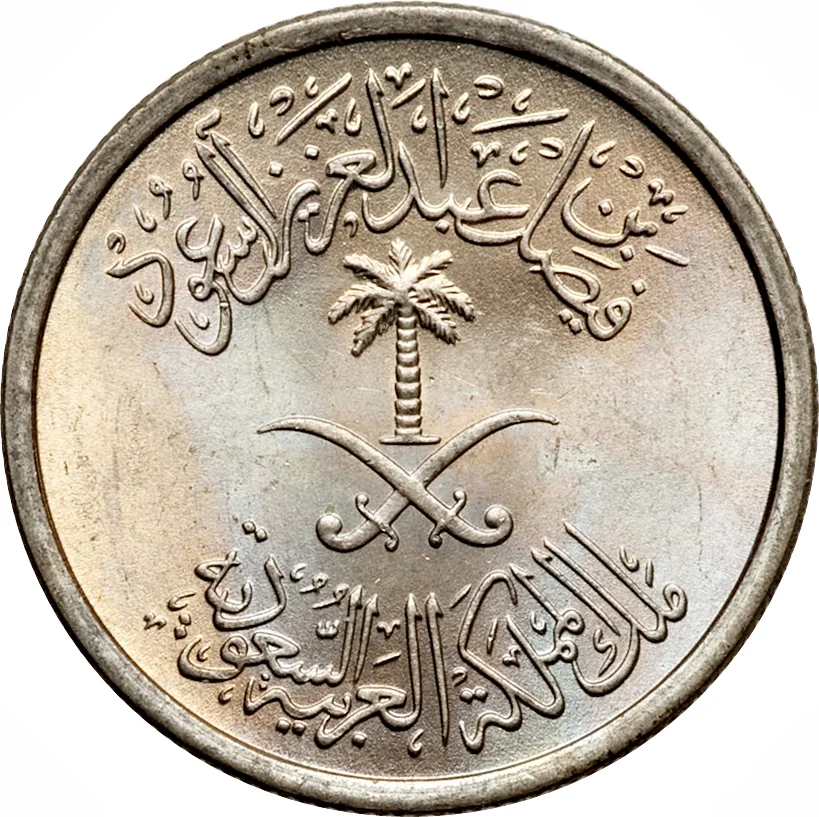
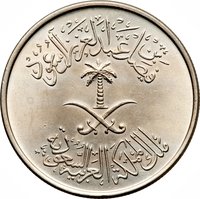
Obverse
Reverse
Edge
Reeded
Categories
| Object> Cold weapons |
| Symbols> Coat of Arms |
| Organization> FAO |
| Plant> Tree |
Mints
| Name | Mark |
|---|---|
| Lahore | — |
Mintings
| Year | Mint Mark | Mintage | Quality | Collection |
|---|---|---|---|---|
| 1973 | — | 200,000 |
Historical background
In 1973, Saudi Arabia's currency situation was intrinsically linked to its pivotal role in the global oil economy and the Bretton Woods system of fixed exchange rates. The Saudi riyal was pegged to the U.S. dollar at a fixed rate of SR 4.50/$1, a peg established in 1960. This arrangement provided stability and facilitated the kingdom's crucial oil exports, which were priced and traded in U.S. dollars. The system was underpinned by the U.S. commitment to convert dollars to gold, but this framework was already under severe strain, having effectively collapsed in 1971 with the Nixon Shock, which suspended gold convertibility.
The year 1973 was a watershed due to the October Arab-Israeli War and the subsequent Arab oil embargo led by the Organization of Arab Petroleum Exporting Countries (OAPEC). As Saudi Arabia spearheaded the embargo and coordinated massive production cuts, global oil prices quadrupled. This resulted in an unprecedented flood of petrodollars into the Saudi economy, dramatically increasing the kingdom's foreign reserves and monetary base. Managing this sudden wealth became an immediate challenge, as the influx of dollars risked inflationary pressure and complicated monetary policy under the fixed peg.
Consequently, by late 1973, the currency situation was one of a stable but heavily tested peg during a period of profound economic transformation. The fixed exchange rate was maintained as a cornerstone of financial policy, ensuring predictability for international oil transactions. However, the oil price shock fundamentally altered Saudi Arabia's financial weight in the world, setting the stage for its increased influence within international financial institutions and necessitating more sophisticated mechanisms in the coming years to recycle petrodollars and manage domestic liquidity. The events of 1973 cemented the dollar-riyal link as a critical feature of both the Saudi economy and the broader petrodollar recycling system that would define global finance in the decade to follow.
The year 1973 was a watershed due to the October Arab-Israeli War and the subsequent Arab oil embargo led by the Organization of Arab Petroleum Exporting Countries (OAPEC). As Saudi Arabia spearheaded the embargo and coordinated massive production cuts, global oil prices quadrupled. This resulted in an unprecedented flood of petrodollars into the Saudi economy, dramatically increasing the kingdom's foreign reserves and monetary base. Managing this sudden wealth became an immediate challenge, as the influx of dollars risked inflationary pressure and complicated monetary policy under the fixed peg.
Consequently, by late 1973, the currency situation was one of a stable but heavily tested peg during a period of profound economic transformation. The fixed exchange rate was maintained as a cornerstone of financial policy, ensuring predictability for international oil transactions. However, the oil price shock fundamentally altered Saudi Arabia's financial weight in the world, setting the stage for its increased influence within international financial institutions and necessitating more sophisticated mechanisms in the coming years to recycle petrodollars and manage domestic liquidity. The events of 1973 cemented the dollar-riyal link as a critical feature of both the Saudi economy and the broader petrodollar recycling system that would define global finance in the decade to follow.
🌱 Fairly Common