

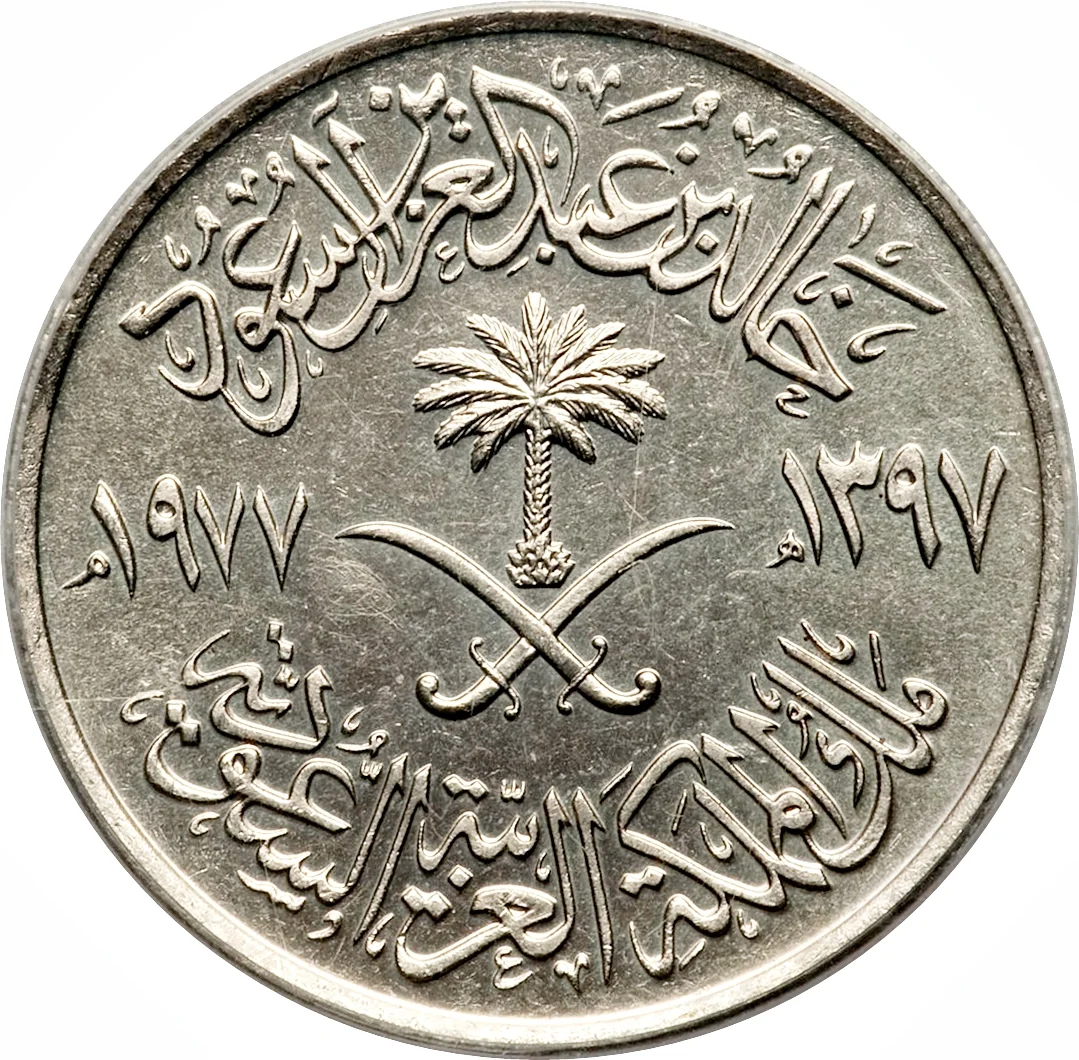
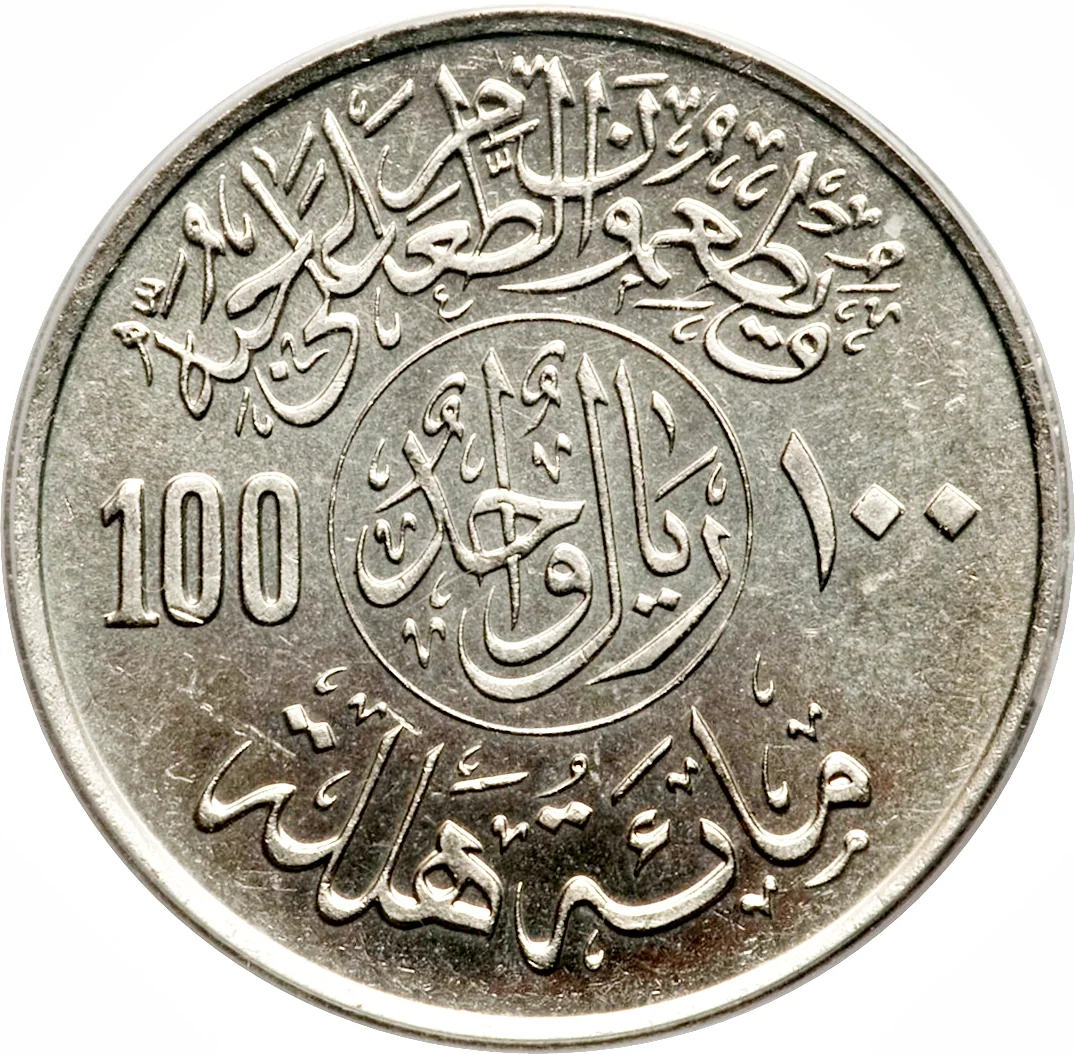
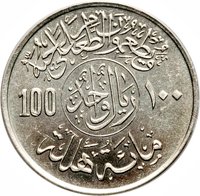
100 Halalas – Saudi Arabia
Circulating commemorative coins
Commemoration: FAO
Saudi Arabia
Context
Years: 1977–1978
Issuer: Saudi Arabia 
Ruler: Khalid bin Abdulaziz
Currency:
(since 1960)
Total mintage: 250,000
Material
Diameter: 30 mm
Weight: 10 g
Shape: Round
Composition: Copper-nickel
Technique: Milled
Alignment: Medal alignment
flip
References
KM: #Click to copy to clipboard59
Numista: #14757
Value
Exchange value: 1 SAR
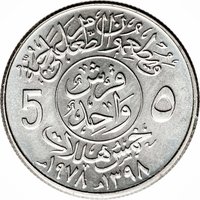
Obverse
Reverse
Edge
Categories
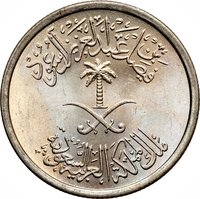
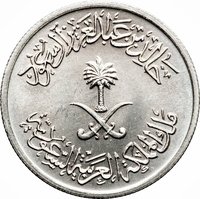
| Object> Cold weapons |
| Plant> Tree |
| Organization> FAO |
| Symbols> Coat of Arms |
Mints
| Name | Mark |
|---|---|
| Royal Mint | — |
Mintings
| Year | Mint Mark | Mintage | Quality | Collection |
|---|---|---|---|---|
| 1977 | — | — | ||
| 1978 | — | 250,000 |
Historical background
In 1977, Saudi Arabia's currency situation was fundamentally defined by its role as the world's largest oil exporter and a key pillar of the global petrodollar system. The Saudi Riyal (SAR) was, and remains, pegged to the U.S. Dollar, a policy established in the early 1950s and later formalized in the mid-1970s. This fixed exchange rate provided crucial stability for the kingdom's oil-dominated economy, as all oil sales were (and are) denominated in dollars. The massive influx of dollar revenues from the 1973 oil price shocks was still being absorbed, leading to rapid economic expansion and the accumulation of substantial foreign reserves, primarily held in U.S. Treasury securities and dollar-denominated assets.
Domestically, the currency peg helped anchor prices during a period of breakneck development and high inflation, which was a regional concern following the oil boom. The Saudi Arabian Monetary Agency (SAMA), acting as the central bank, managed the peg by buying and selling dollars to maintain the fixed rate. Its primary monetary policy challenge was not exchange rate management but sterilizing the large capital inflows to prevent excessive domestic liquidity and further inflationary pressure. The stability of the Riyal was symbolic of the kingdom's growing financial power and its strategic economic alliance with the United States.
Internationally, Saudi Arabia's currency policy was a cornerstone of the recycling of petrodollars. By pricing oil in dollars and investing its surplus back into U.S. assets, Saudi Arabia helped balance global capital flows, supported the dollar's status as the world's reserve currency, and financed U.S. deficits. Therefore, the 1977 Saudi currency situation was not one of crisis or volatility, but of deliberate stability and immense global influence, underpinning both its own transformative development and the broader architecture of the post-Bretton Woods international financial system.
Domestically, the currency peg helped anchor prices during a period of breakneck development and high inflation, which was a regional concern following the oil boom. The Saudi Arabian Monetary Agency (SAMA), acting as the central bank, managed the peg by buying and selling dollars to maintain the fixed rate. Its primary monetary policy challenge was not exchange rate management but sterilizing the large capital inflows to prevent excessive domestic liquidity and further inflationary pressure. The stability of the Riyal was symbolic of the kingdom's growing financial power and its strategic economic alliance with the United States.
Internationally, Saudi Arabia's currency policy was a cornerstone of the recycling of petrodollars. By pricing oil in dollars and investing its surplus back into U.S. assets, Saudi Arabia helped balance global capital flows, supported the dollar's status as the world's reserve currency, and financed U.S. deficits. Therefore, the 1977 Saudi currency situation was not one of crisis or volatility, but of deliberate stability and immense global influence, underpinning both its own transformative development and the broader architecture of the post-Bretton Woods international financial system.
🌱 Fairly Common