

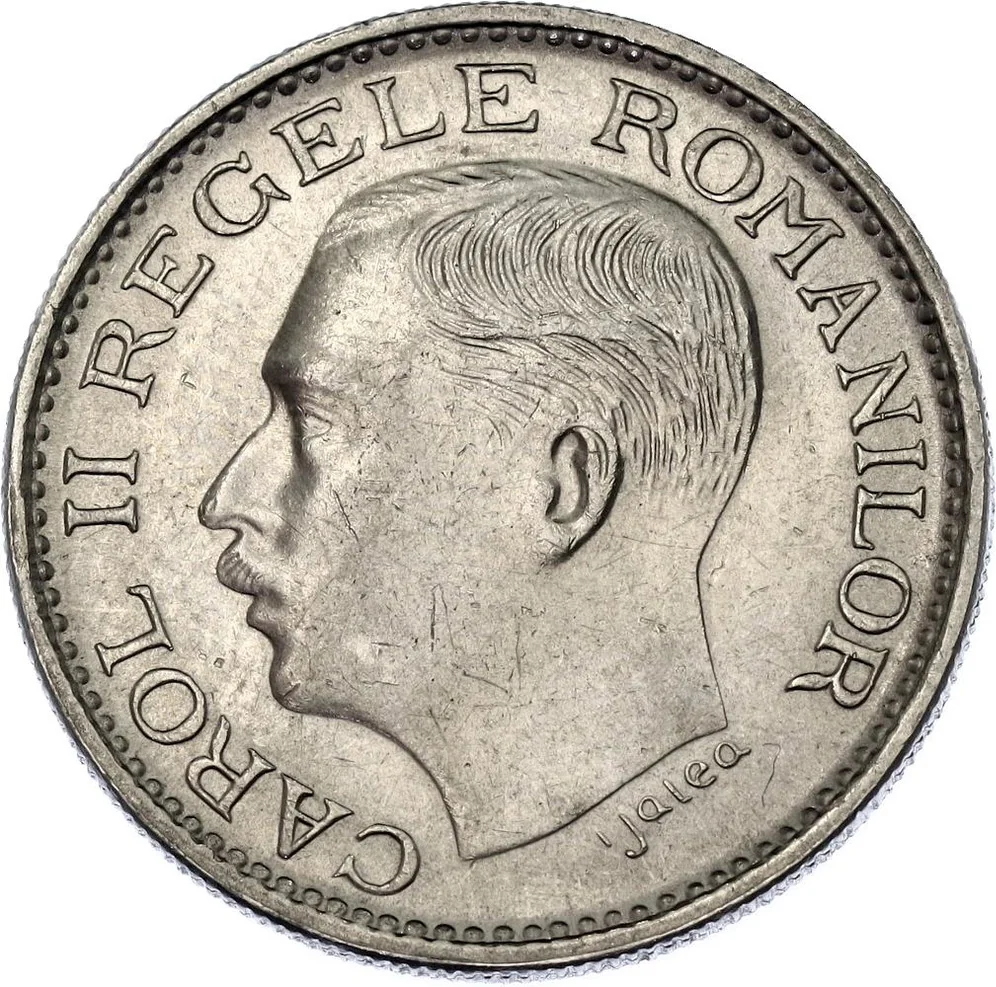
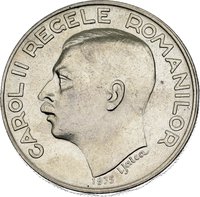
Obverse
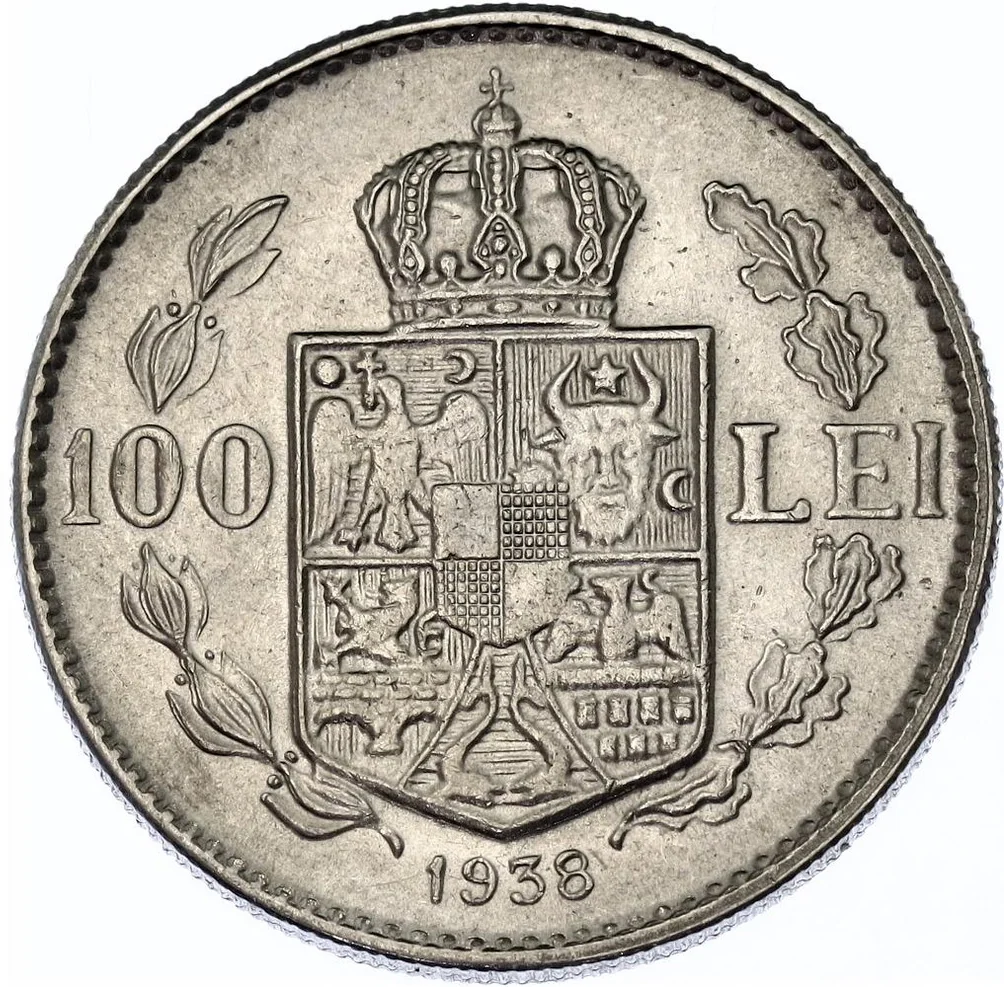
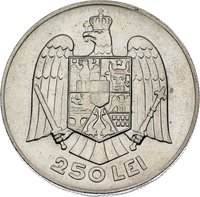
Reverse
Edge
Reeded with a single wavy line through the centre.
Categories
| Person> Monarch |
| Symbols> Coat of Arms |
Mints
| Name | Mark |
|---|---|
| State Mint | — |
Mintings
| Year | Mint Mark | Mintage | Quality | Collection |
|---|---|---|---|---|
| 1936 | — | 20,230,446 | ||
| 1938 | — | 3,250,000 |
Historical background
In 1936, Romania's currency, the leu, operated under the constraints of the global Great Depression and the nation's specific economic structure. The country had officially left the gold standard in 1932, but in practice, it maintained a managed exchange rate system with significant controls. The National Bank of Romania held a monopoly on foreign exchange transactions, rationing hard currency to prioritize essential imports like industrial equipment and to service the substantial external debt accumulated in the more prosperous 1920s. This created a persistent shortage of foreign currency, leading to a divergence between the official exchange rate and a higher, unofficial black-market rate.
The economy was heavily dependent on agricultural exports, particularly wheat and oil. However, the 1930s saw volatile and often depressed global commodity prices, which limited Romania's ability to earn the foreign exchange needed for industrial modernization. Consequently, the government, led by Prime Minister Gheorghe Tătărescu, increasingly turned to economic nationalism and bilateral trade agreements, notably with Nazi Germany. These clearing agreements allowed Romania to exchange its raw materials for German manufactured goods without using scarce hard currency, further integrating its economy into the German sphere of influence.
Overall, the 1936 currency situation was one of fragile stability, maintained through strict administrative controls rather than market confidence. While preventing a catastrophic collapse, these measures stifled free trade, encouraged corruption through black-market dealings, and reflected Romania's vulnerable position as a raw materials exporter in a depressed and politically tense Europe. The managed leu was a symbol of the country's struggle to balance sovereignty, debt obligations, and the pressing need for economic development on the eve of a second world war.
The economy was heavily dependent on agricultural exports, particularly wheat and oil. However, the 1930s saw volatile and often depressed global commodity prices, which limited Romania's ability to earn the foreign exchange needed for industrial modernization. Consequently, the government, led by Prime Minister Gheorghe Tătărescu, increasingly turned to economic nationalism and bilateral trade agreements, notably with Nazi Germany. These clearing agreements allowed Romania to exchange its raw materials for German manufactured goods without using scarce hard currency, further integrating its economy into the German sphere of influence.
Overall, the 1936 currency situation was one of fragile stability, maintained through strict administrative controls rather than market confidence. While preventing a catastrophic collapse, these measures stifled free trade, encouraged corruption through black-market dealings, and reflected Romania's vulnerable position as a raw materials exporter in a depressed and politically tense Europe. The managed leu was a symbol of the country's struggle to balance sovereignty, debt obligations, and the pressing need for economic development on the eve of a second world war.
🌱 Common