

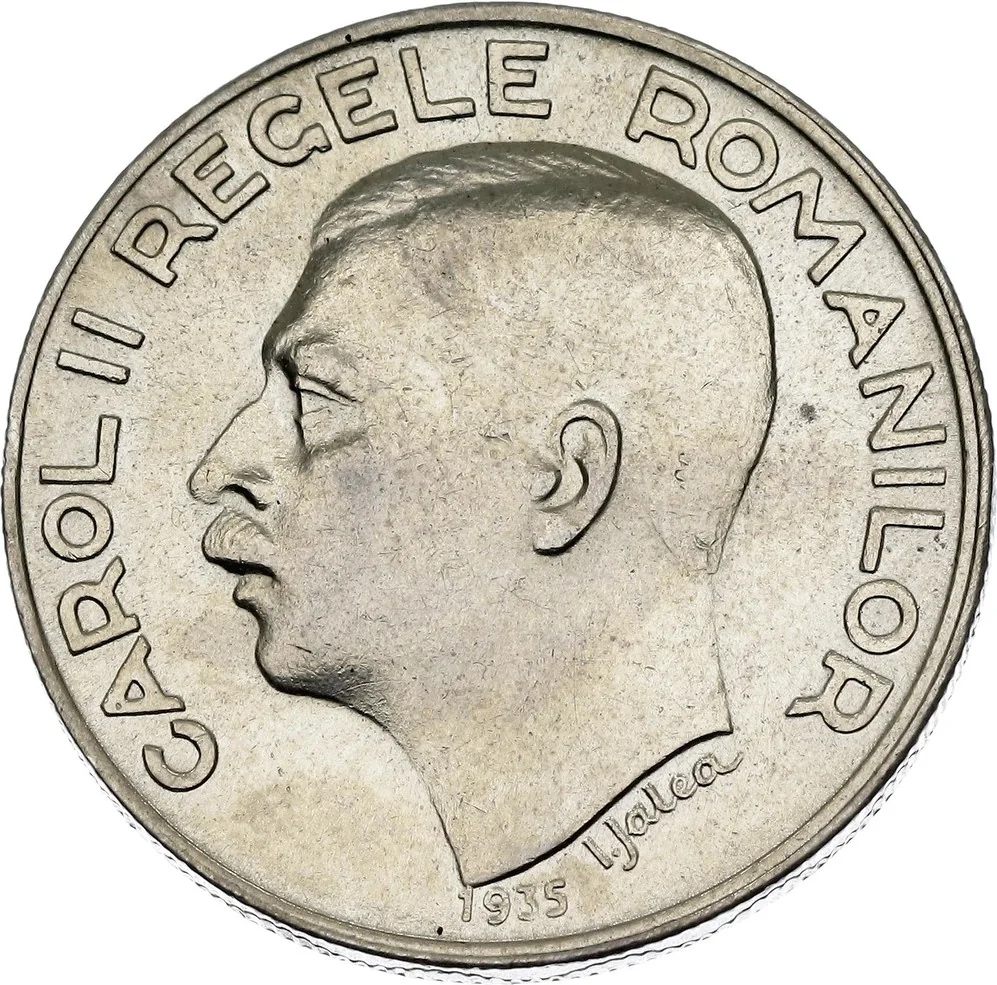
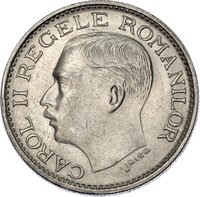
Obverse
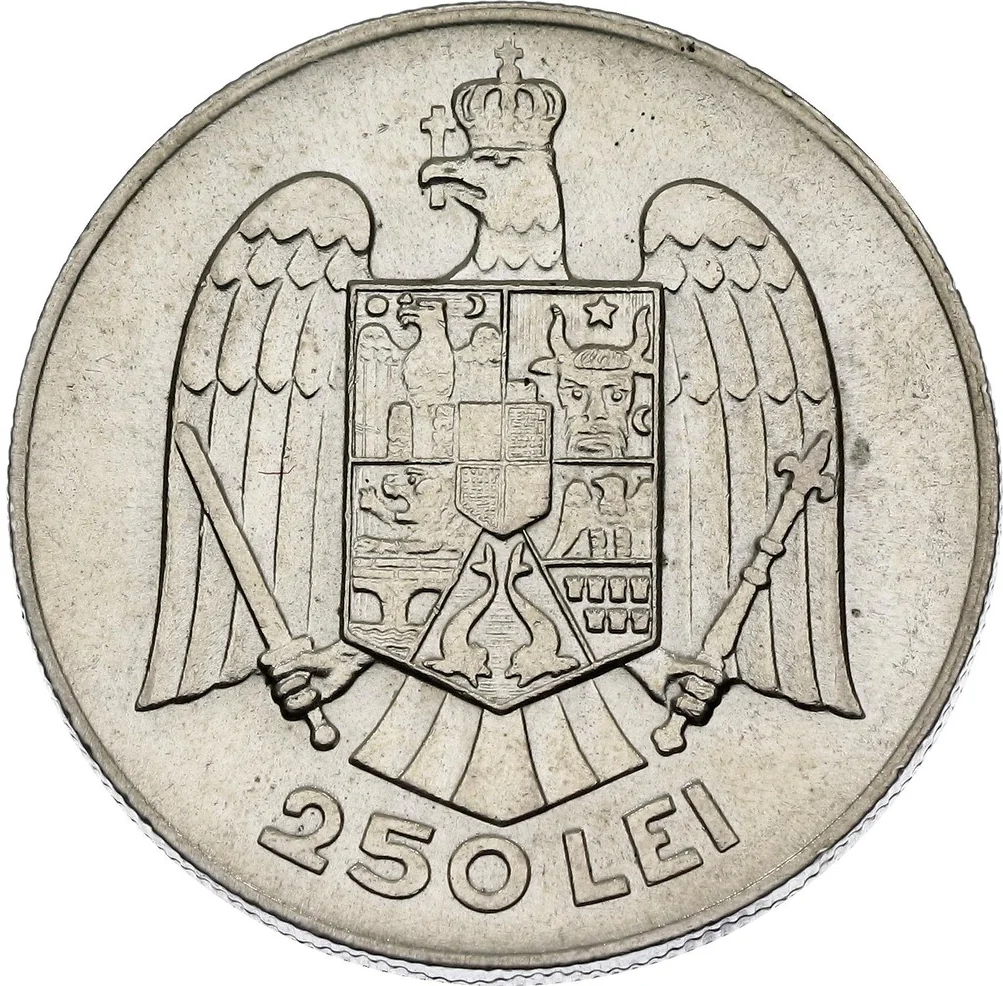
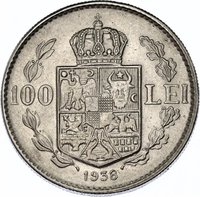
Reverse
Edge
Striated, the edge is decorated with two wavy lines, separated by a diamond.
Categories
| Symbols> Coat of Arms |
| Person> Monarch |
Mints
| Name | Mark |
|---|---|
| State Mint | — |
Mintings
| Year | Mint Mark | Mintage | Quality | Collection |
|---|---|---|---|---|
| 1935 | — | 4,500,000 |
Historical background
In 1935, Romania’s currency situation was defined by the persistent struggle to maintain the stability of the leu amidst the global Great Depression. The country operated under a gold exchange standard, but this was largely theoretical; a strict regime of exchange controls and import restrictions had been in place since the financial crisis of 1929. The National Bank of Romania held the official parity, but the leu’s value on the free foreign markets was consistently lower, creating a gap between the official and real exchange rates. This reflected underlying economic pressures, including a significant trade deficit and the burden of large external debts.
The government, led by the National Liberal Party, pursued a policy of economic nationalism and autarky, aiming to reduce dependence on foreign capital and boost domestic industry. While this protected certain sectors, it did not resolve fundamental currency weaknesses. The leu’s stability was artificially propped up by the exchange controls rather than by strong reserves or a healthy balance of payments. Consequently, access to foreign currency for businesses and individuals was heavily rationed and administered by the state, which stifled international trade and investment.
Looking ahead, the situation in 1935 was a precarious calm before a deeper crisis. The temporary recovery of agricultural prices provided slight relief, but the structural problems remained unsolved. Within a few years, the immense costs of rearmament and the looming threat of war would completely overwhelm Romania’s fragile financial system, leading to the devaluation of the leu and the eventual collapse of its managed currency regime by the end of the decade.
The government, led by the National Liberal Party, pursued a policy of economic nationalism and autarky, aiming to reduce dependence on foreign capital and boost domestic industry. While this protected certain sectors, it did not resolve fundamental currency weaknesses. The leu’s stability was artificially propped up by the exchange controls rather than by strong reserves or a healthy balance of payments. Consequently, access to foreign currency for businesses and individuals was heavily rationed and administered by the state, which stifled international trade and investment.
Looking ahead, the situation in 1935 was a precarious calm before a deeper crisis. The temporary recovery of agricultural prices provided slight relief, but the structural problems remained unsolved. Within a few years, the immense costs of rearmament and the looming threat of war would completely overwhelm Romania’s fragile financial system, leading to the devaluation of the leu and the eventual collapse of its managed currency regime by the end of the decade.
🌟 Limited