

2 Pence – Isle of Man
Context
Years: 1980–1983
Country: British Crown dependencies
Issuer: Isle of Man 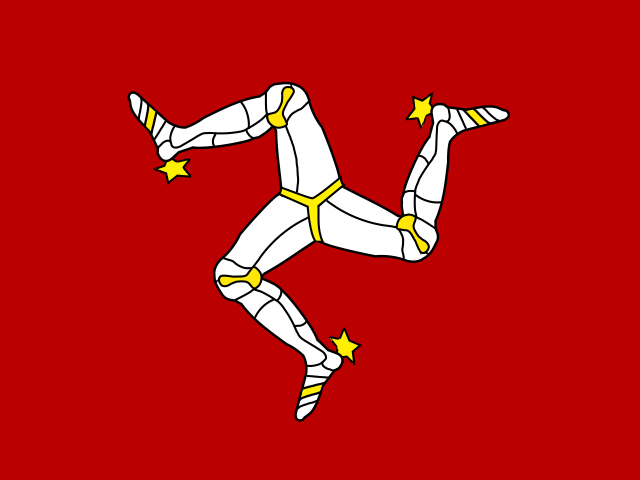
Ruler: Elizabeth II
Currency:
(since 1971)
Total mintage: 25,000
Material
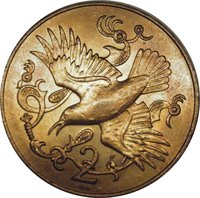
References
KM: #Click to copy to clipboard60
Numista: #9856
Value
Exchange value: 0.02 IMP
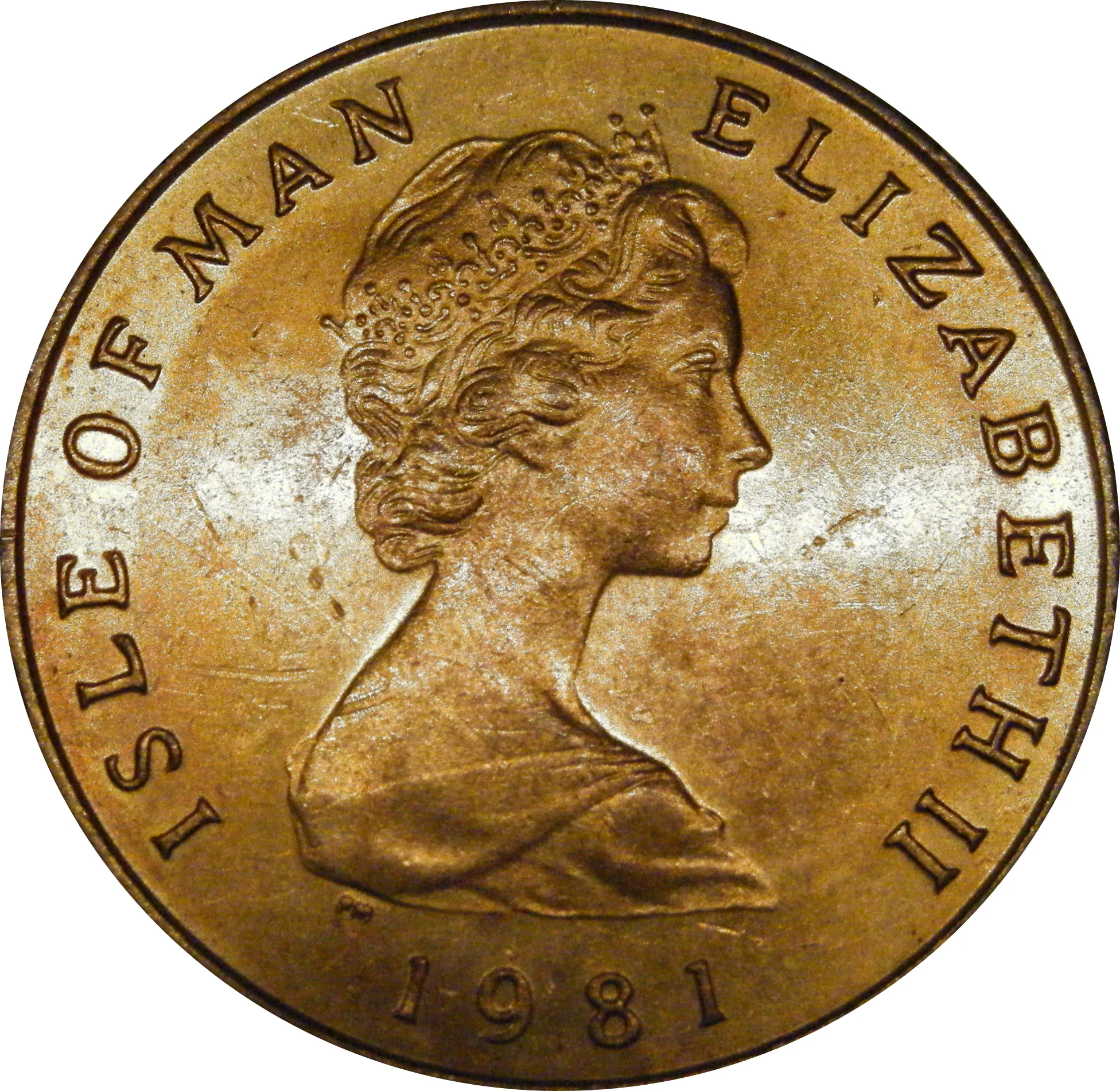
Obverse
Description:
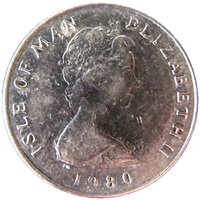
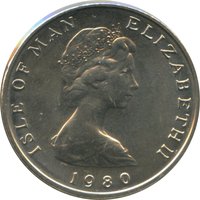
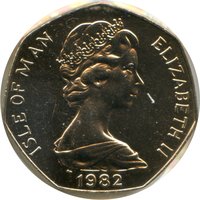
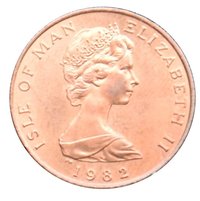
Queen Elizabeth II facing right, wearing the Girls of Great Britain and Ireland Tiara, with legend surrounding and date beneath.
Inscription:
ISLE OF MAN ELIZABETH II
PM
1981
PM
1981
Translation:
ISLE OF MAN ELIZABETH II
PM
1981
PM
1981
Script: Latin
Language: English
Engraver: Arnold Machin
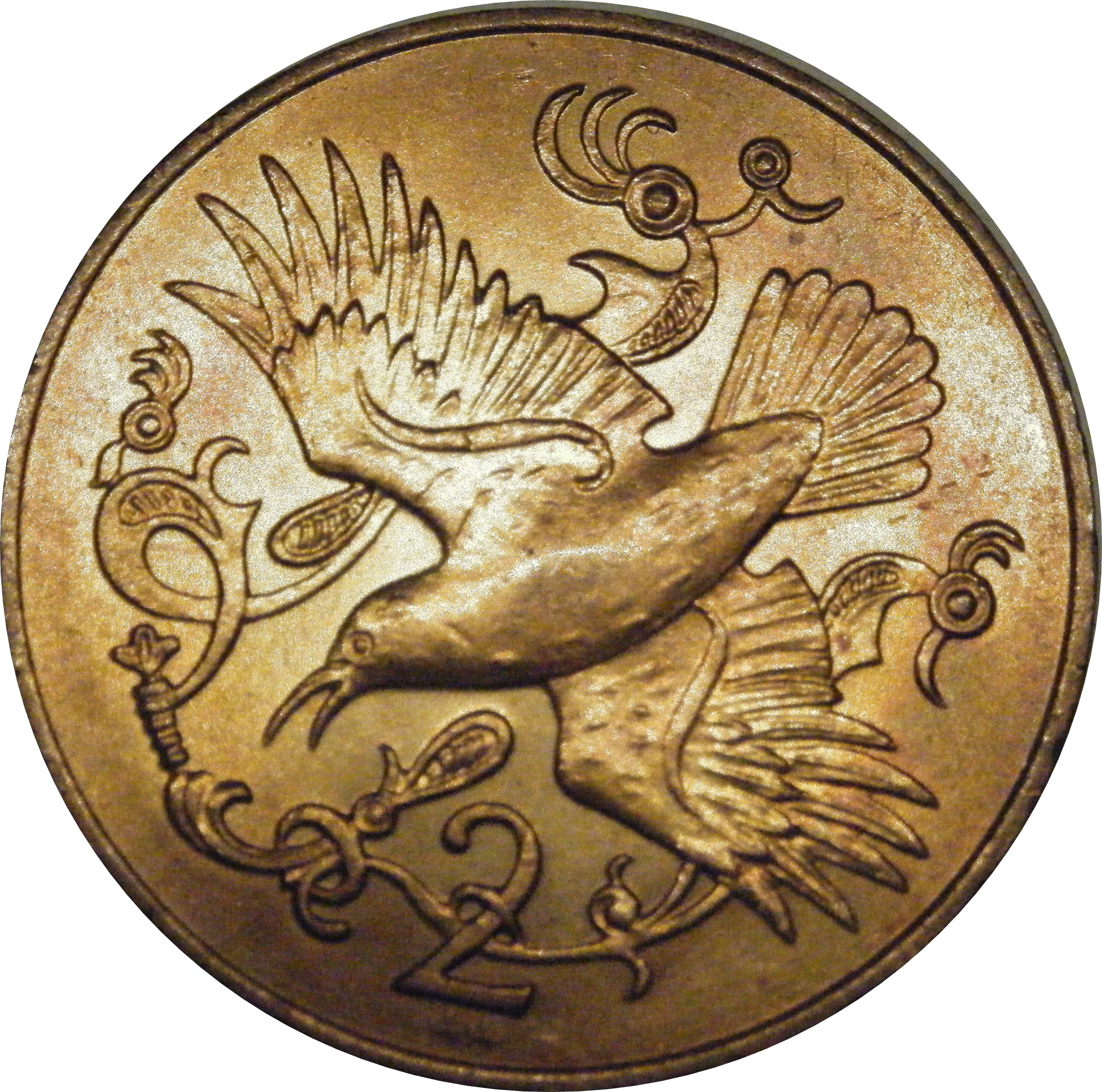
Reverse
Edge
Plain
Mints
| Name | Mark |
|---|---|
| Pobjoy Mint | (PM) |
Mintings
| Year | Mint Mark | Mintage | Quality | Collection |
|---|---|---|---|---|
| 1980 | PM | — | ||
| 1980 | PM | — | Proof | |
| 1981 | PM | — | Proof | |
| 1981 | PM | — | ||
| 1982 | PM | 25,000 | Proof | |
| 1982 | PM | — | ||
| 1983 | PM | — | ||
| 1983 | PM | — | Proof |
Historical background
In 1980, the Isle of Man's currency situation was defined by its unique political status as a British Crown Dependency. Unlike part of the United Kingdom, the Isle of Man issued its own distinct currency, the Manx pound, which was pegged at par with sterling. This meant the two currencies were accepted interchangeably on the island, though Manx notes and coins, adorned with local symbols, often faced limited acceptance in mainland Britain. The island's government, the Tynwald, exercised its right to issue currency through the Isle of Man Government Treasury, not a central bank, underscoring its fiscal autonomy.
The period was one of economic transition and caution. The 1970s had seen the establishment of the island as a growing offshore financial centre, a sector that would become crucial to its economy. However, the early 1980s global recession, characterised by high inflation and interest rates, posed challenges. The Manx economy remained closely tied to the UK's performance, and the fixed parity with sterling meant it imported the Bank of England's monetary policy, including its high interest rates aimed at curbing inflation. This linkage provided stability but limited independent monetary tools.
Consequently, the currency landscape of 1980 reflected a balance between autonomy and dependency. The ability to issue its own notes was a key symbol of self-government and a minor source of revenue (seigniorage). Yet, the fixed peg to sterling was an essential anchor, ensuring confidence for both residents and the burgeoning finance sector by eliminating exchange rate risk with its largest economic partner. This arrangement firmly positioned the Manx pound as a local variant of sterling, rather than a fully independent currency, a pragmatic solution that supported the island's developing economic identity.
The period was one of economic transition and caution. The 1970s had seen the establishment of the island as a growing offshore financial centre, a sector that would become crucial to its economy. However, the early 1980s global recession, characterised by high inflation and interest rates, posed challenges. The Manx economy remained closely tied to the UK's performance, and the fixed parity with sterling meant it imported the Bank of England's monetary policy, including its high interest rates aimed at curbing inflation. This linkage provided stability but limited independent monetary tools.
Consequently, the currency landscape of 1980 reflected a balance between autonomy and dependency. The ability to issue its own notes was a key symbol of self-government and a minor source of revenue (seigniorage). Yet, the fixed peg to sterling was an essential anchor, ensuring confidence for both residents and the burgeoning finance sector by eliminating exchange rate risk with its largest economic partner. This arrangement firmly positioned the Manx pound as a local variant of sterling, rather than a fully independent currency, a pragmatic solution that supported the island's developing economic identity.
Series: 1980 series
🌱 Common