

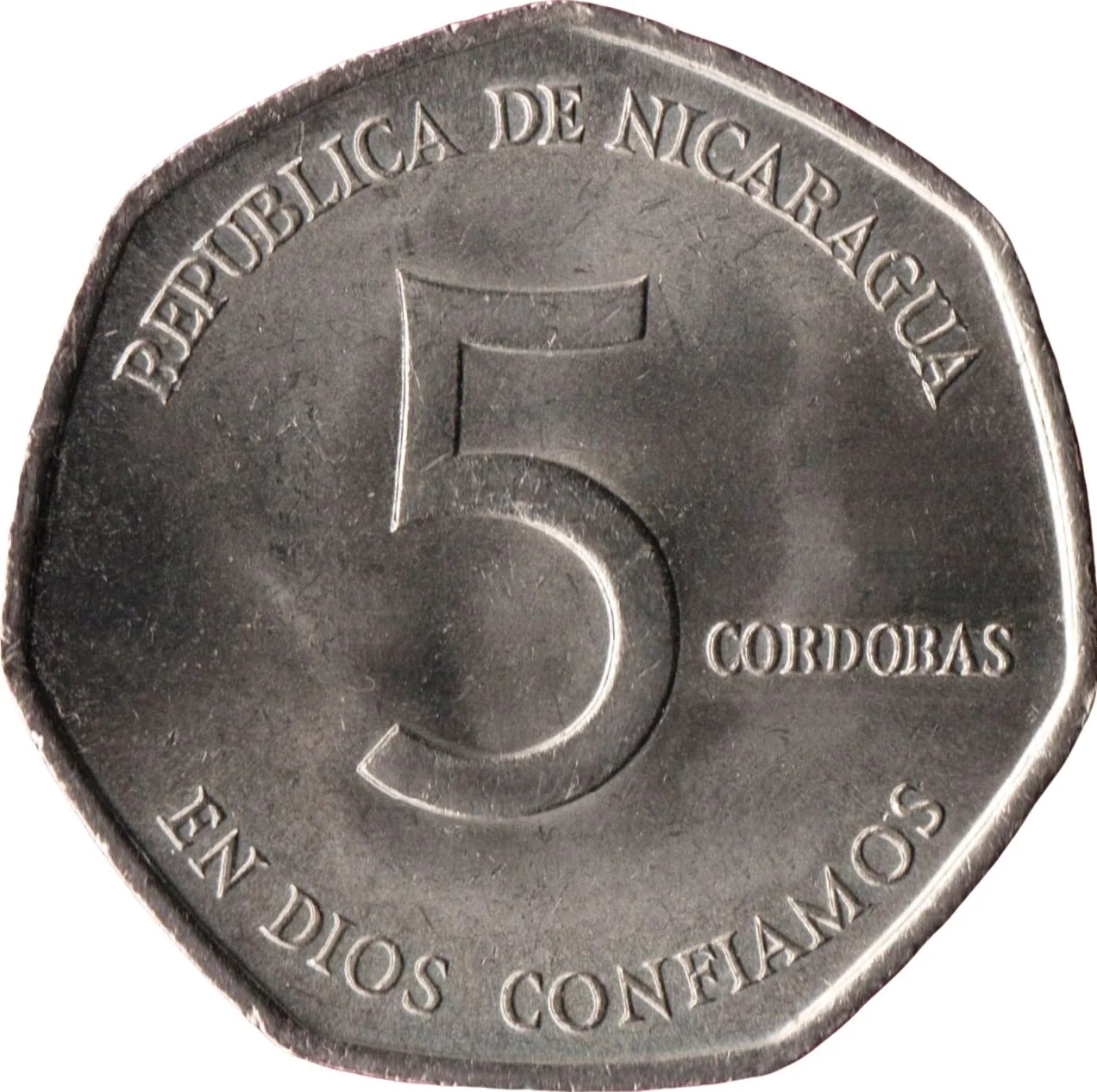
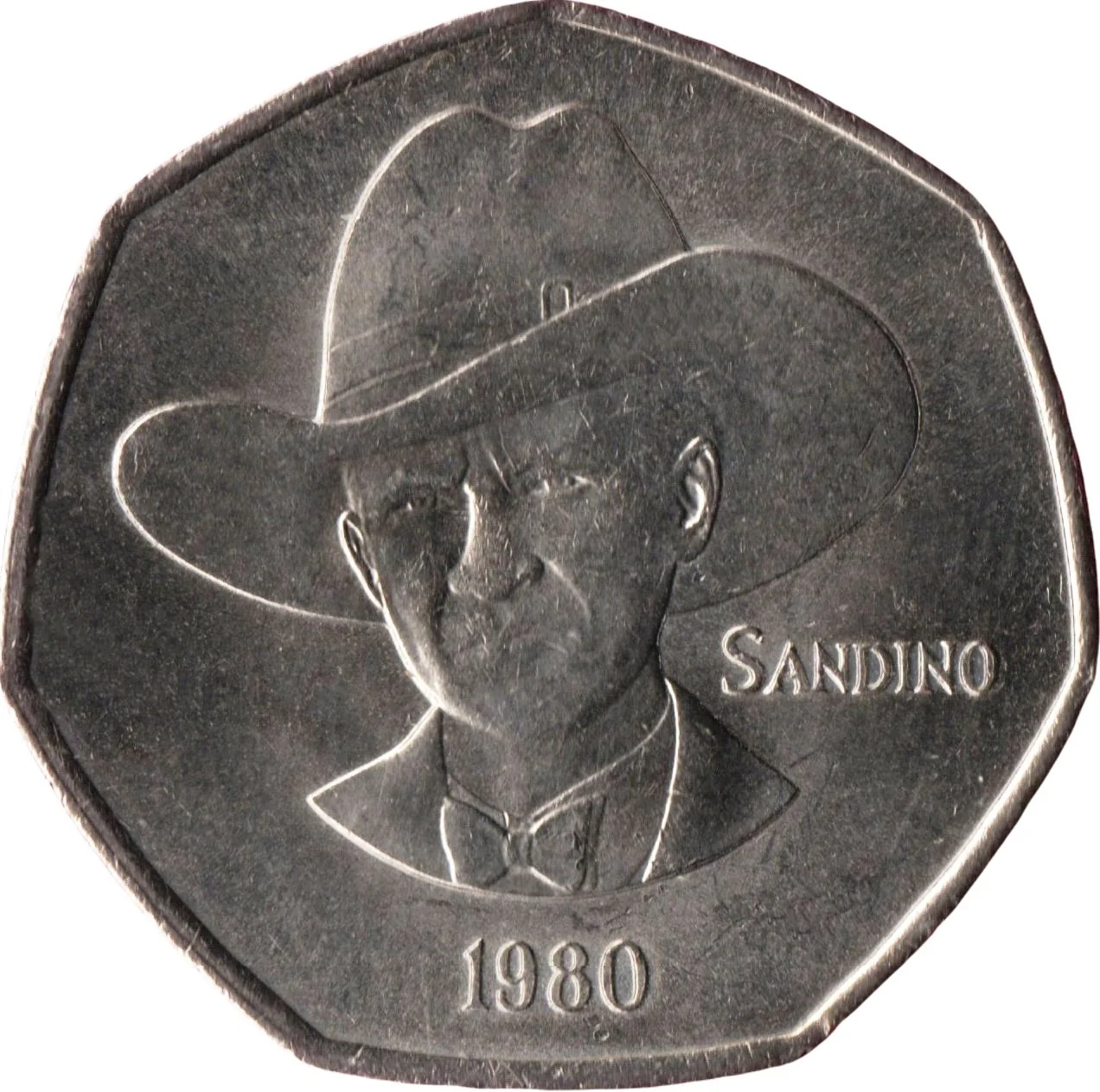
5 córdobas – Nicaragua
Add to wishlist
Nicaragua
Context
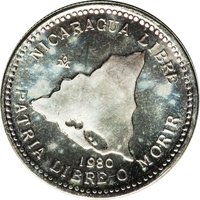
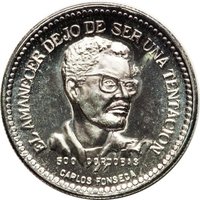
Year: 1980
Issuer: Nicaragua
Issuing organization: Central Bank of Nicaragua
Period:
(since 1854)
Currency:
(1912—1987)
Demonetization: 15 February 1988
Total mintage: 10,000,000
Material
Diameter: 27 mm
Weight: 7 g
Thickness: 1.5 mm
Shape: Heptagonal
Technique: Milled
Alignment: Medal alignment
flip
References
KM: #
Numista: #4462
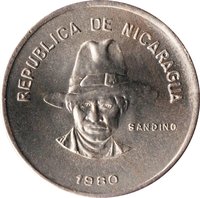
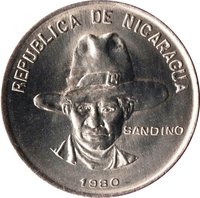
Obverse
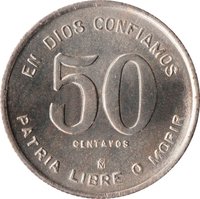
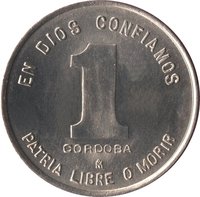
Reverse
Edge
Plain
Categories
| Person> Military leader |
| Object> Hat |
Mints
| Name | Mark |
|---|---|
| Royal Mint | — |
Mintings
| Year | Mint Mark | Mintage | Quality | Collection |
|---|---|---|---|---|
| 1980 | — | 10,000,000 |
Historical background
In 1980, Nicaragua was in the early stages of the Sandinista revolutionary government, which had taken power in July 1979 after overthrowing the Somoza dictatorship. The country's economy and currency, the córdoba, were in a state of severe crisis. The revolution and the preceding civil war had devastated infrastructure, crippled production, and led to massive capital flight, leaving the new government with depleted foreign reserves and a heavy burden of external debt. Inflation was soaring, and the economy was characterized by widespread shortages of basic goods.
The Sandinista government responded with a policy of strict currency controls and a fixed, overvalued exchange rate in an attempt to stabilize the economy and control inflation. They established a multi-tiered exchange rate system, with an official preferential rate for essential imports like medicine and food, and a less favorable rate for other transactions. This was part of a broader strategy of a state-directed, mixed economy. However, the overvaluation of the córdoba made Nicaraguan exports uncompetitive on the world market, further straining foreign currency earnings, while simultaneously encouraging a growing black market for U.S. dollars where the exchange rate was far worse.
Thus, the 1980 currency situation was a precarious balancing act. The government's controls were intended to manage the crisis and fund social programs, but they also planted the seeds for future economic distortions. The gap between the official and black-market rates began to widen, reflecting underlying inflationary pressures and a lack of confidence. This dual economy with the U.S. dollar would become a persistent and deepening problem throughout the decade, exacerbated by the contra war and U.S. economic sanctions, leading to hyperinflation by the late 1980s.
The Sandinista government responded with a policy of strict currency controls and a fixed, overvalued exchange rate in an attempt to stabilize the economy and control inflation. They established a multi-tiered exchange rate system, with an official preferential rate for essential imports like medicine and food, and a less favorable rate for other transactions. This was part of a broader strategy of a state-directed, mixed economy. However, the overvaluation of the córdoba made Nicaraguan exports uncompetitive on the world market, further straining foreign currency earnings, while simultaneously encouraging a growing black market for U.S. dollars where the exchange rate was far worse.
Thus, the 1980 currency situation was a precarious balancing act. The government's controls were intended to manage the crisis and fund social programs, but they also planted the seeds for future economic distortions. The gap between the official and black-market rates began to widen, reflecting underlying inflationary pressures and a lack of confidence. This dual economy with the U.S. dollar would become a persistent and deepening problem throughout the decade, exacerbated by the contra war and U.S. economic sanctions, leading to hyperinflation by the late 1980s.
Series: 1980 series
🌱 Common