

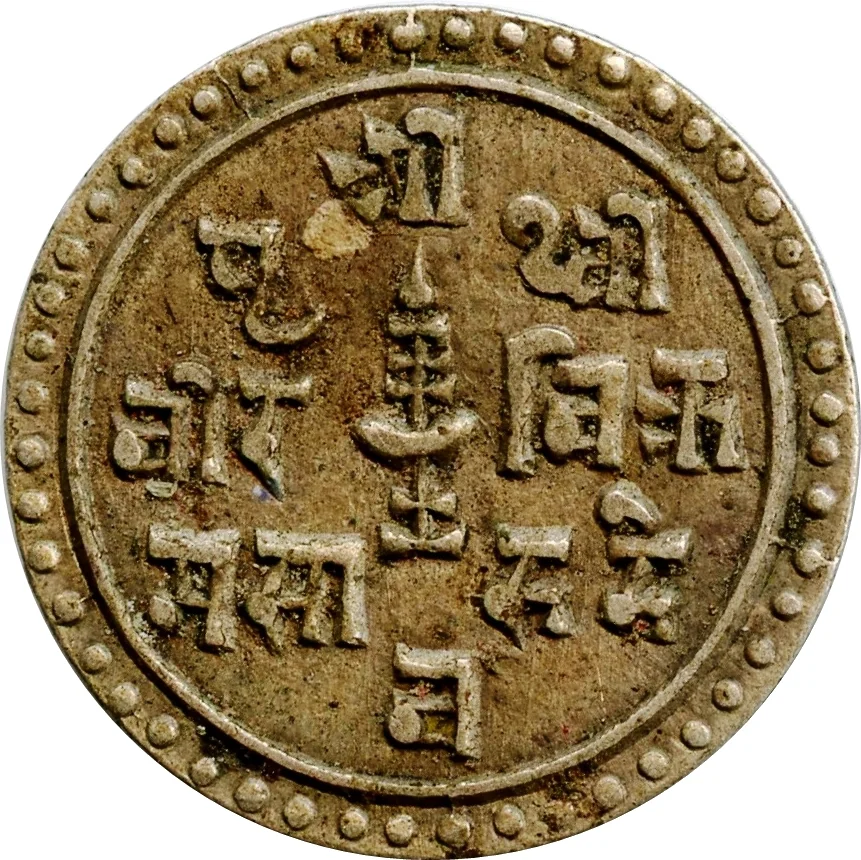
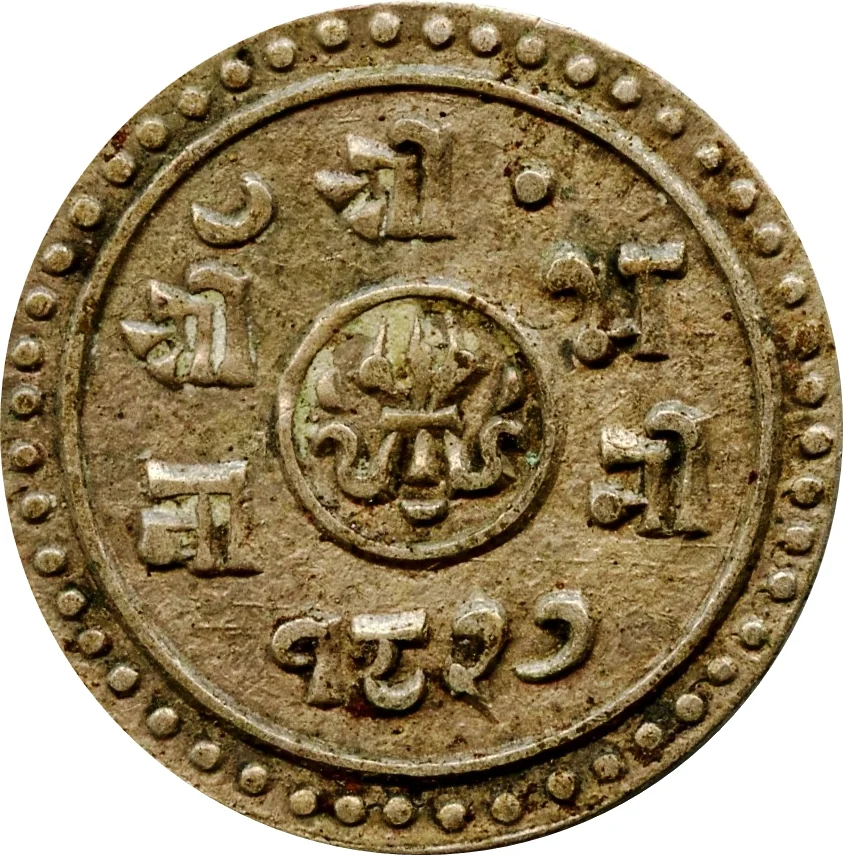
¼ Mohar – Nepal
Nepal
Context
Years: 1905–1982
Issuer: Nepal 
Ruler: Prithvi Bir Bikram Shah
Currency:
(1546—1932)
Demonetized: Yes
Material
References
KM: #Click to copy to clipboard643
Numista: #98521
Value
Bullion value: $3.89
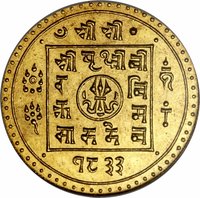
Obverse
Description:
Date vs. Date
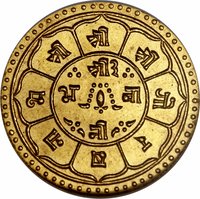
Reverse
Edge
Mintings
| Year | Mint Mark | Mintage | Quality | Collection |
|---|---|---|---|---|
| 1905 | — | — | ||
| 1906 | — | — | ||
| 1982 | — | — |
Historical background
In 1905, Nepal's currency system was a complex and transitional one, deeply rooted in its historical autonomy but increasingly pressured by the economic gravity of British India. The primary circulating medium was the Mohar, a silver coin minted by the state since the 18th century. However, the system was not decimalized; accounts were often kept in the older Rupee unit (1 Rupee = 2 Mohars), and a plethora of smaller copper and billon coins like Dams and Paisa facilitated daily trade. Crucially, the Nepalese Rupee was not on a gold standard but on a silver standard, and its value fluctuated independently of the Indian Rupee, which by 1893 had been placed on a gold-exchange standard. This created recurring exchange rate issues along the open border.
The period was marked by significant monetary instability. A major factor was the global depreciation of silver throughout the late 19th century, which caused the value of the silver-based Nepalese Rupee to fall sharply against the gold-based Indian Rupee. This led to a chronic shortage of coinage within Nepal, as older, higher-silver-content coins were often hoarded or melted down, while lower-quality coins flooded circulation. Furthermore, the state's own fiscal practices, including periodic recalls and re-minting of coins for seigniorage profit, created confusion and eroded public trust in the currency.
Recognizing the economic disruption, the Rana regime under Prime Minister Chandra Shumsher Jang Bahadur Rana was actively seeking reform. The situation in 1905 was on the cusp of major change, as plans were being finalized for a comprehensive currency overhaul. This would culminate just two years later, in 1907, with the introduction of the modern Nepali Rupee (divided into 100 Paisa), the establishment of the Morang Mint, and the firm pegging of the Nepali Rupee to the Indian Rupee at a fixed rate of 1:1.5. Thus, 1905 represents the final years of an archaic, unstable system soon to be replaced by a modernized one aligned with British India's monetary sphere.
The period was marked by significant monetary instability. A major factor was the global depreciation of silver throughout the late 19th century, which caused the value of the silver-based Nepalese Rupee to fall sharply against the gold-based Indian Rupee. This led to a chronic shortage of coinage within Nepal, as older, higher-silver-content coins were often hoarded or melted down, while lower-quality coins flooded circulation. Furthermore, the state's own fiscal practices, including periodic recalls and re-minting of coins for seigniorage profit, created confusion and eroded public trust in the currency.
Recognizing the economic disruption, the Rana regime under Prime Minister Chandra Shumsher Jang Bahadur Rana was actively seeking reform. The situation in 1905 was on the cusp of major change, as plans were being finalized for a comprehensive currency overhaul. This would culminate just two years later, in 1907, with the introduction of the modern Nepali Rupee (divided into 100 Paisa), the establishment of the Morang Mint, and the firm pegging of the Nepali Rupee to the Indian Rupee at a fixed rate of 1:1.5. Thus, 1905 represents the final years of an archaic, unstable system soon to be replaced by a modernized one aligned with British India's monetary sphere.
💎 Very Rare