

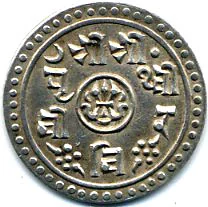
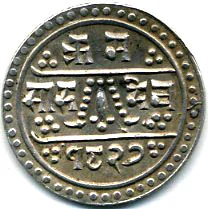
½ Mohar – Nepal
Nepal
Context
Years: 1904–1907
Issuer: Nepal 
Ruler: Prithvi Bir Bikram Shah
Currency:
(1546—1932)
Demonetized: Yes
Material
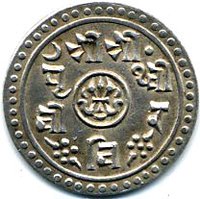
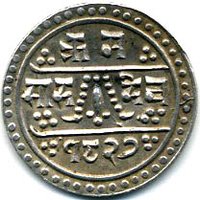
References
KM: #Click to copy to clipboard648
Numista: #33022
Value
Bullion value: $7.56
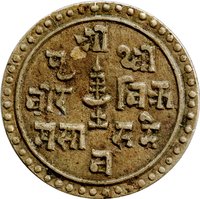
Obverse
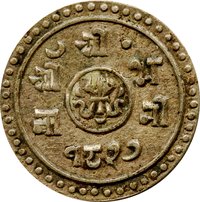
Reverse
Edge
Plain
Mintings
| Year | Mint Mark | Mintage | Quality | Collection |
|---|---|---|---|---|
| 1904 | — | — | ||
| 1905 | — | — | ||
| 1907 | — | — |
Historical background
In 1904, Nepal’s currency system was a complex and transitional one, operating under the dual pressures of domestic tradition and British Indian economic dominance. Officially, the silver Mohar remained the principal coin of the realm, minted by the state under the authority of the Rana dynasty. However, the reality of cross-border trade and political subservience meant that the Indian Rupee circulated widely, especially in the Tarai region and for larger transactions. This created a de facto bimetallic system, but one where the external rupee, backed by the powerful British colonial economy, often held more practical weight and stability than the local coinage.
The period was marked by chronic debasement and inconsistency in the Nepalese mint. The government, frequently in need of revenue, would periodically reduce the silver content in the Mohar, leading to multiple series of coins with varying intrinsic values in circulation simultaneously. This practice eroded public confidence and complicated trade. Furthermore, the state maintained a strict monopoly on minting, and the use of foreign coins elsewhere in the country was technically illegal, though enforcement was inconsistent. The economic relationship with British India, formalized by treaties, essentially pegged the Nepalese currency's value to the rupee, but the fluctuating purity of the Mohar meant this exchange rate was not always stable.
Thus, the monetary situation in 1904 reflected Nepal’s broader geopolitical position: a sovereign kingdom fiercely protective of its internal autonomy, yet unavoidably entangled in the economic orbit of the British Empire. The currency landscape was fragmented, with older debased Mohars, newer issues, and Indian rupees all vying for acceptance. This instability would eventually lead to significant reform, culminating in the introduction of the modern Rupee (replacing the Mohar) and the establishment of the Nepal Rastra Bank decades later, but in 1904, the system remained a cumbersome and unreliable relic of pre-modern finance.
The period was marked by chronic debasement and inconsistency in the Nepalese mint. The government, frequently in need of revenue, would periodically reduce the silver content in the Mohar, leading to multiple series of coins with varying intrinsic values in circulation simultaneously. This practice eroded public confidence and complicated trade. Furthermore, the state maintained a strict monopoly on minting, and the use of foreign coins elsewhere in the country was technically illegal, though enforcement was inconsistent. The economic relationship with British India, formalized by treaties, essentially pegged the Nepalese currency's value to the rupee, but the fluctuating purity of the Mohar meant this exchange rate was not always stable.
Thus, the monetary situation in 1904 reflected Nepal’s broader geopolitical position: a sovereign kingdom fiercely protective of its internal autonomy, yet unavoidably entangled in the economic orbit of the British Empire. The currency landscape was fragmented, with older debased Mohars, newer issues, and Indian rupees all vying for acceptance. This instability would eventually lead to significant reform, culminating in the introduction of the modern Rupee (replacing the Mohar) and the establishment of the Nepal Rastra Bank decades later, but in 1904, the system remained a cumbersome and unreliable relic of pre-modern finance.

⭐ Rare