

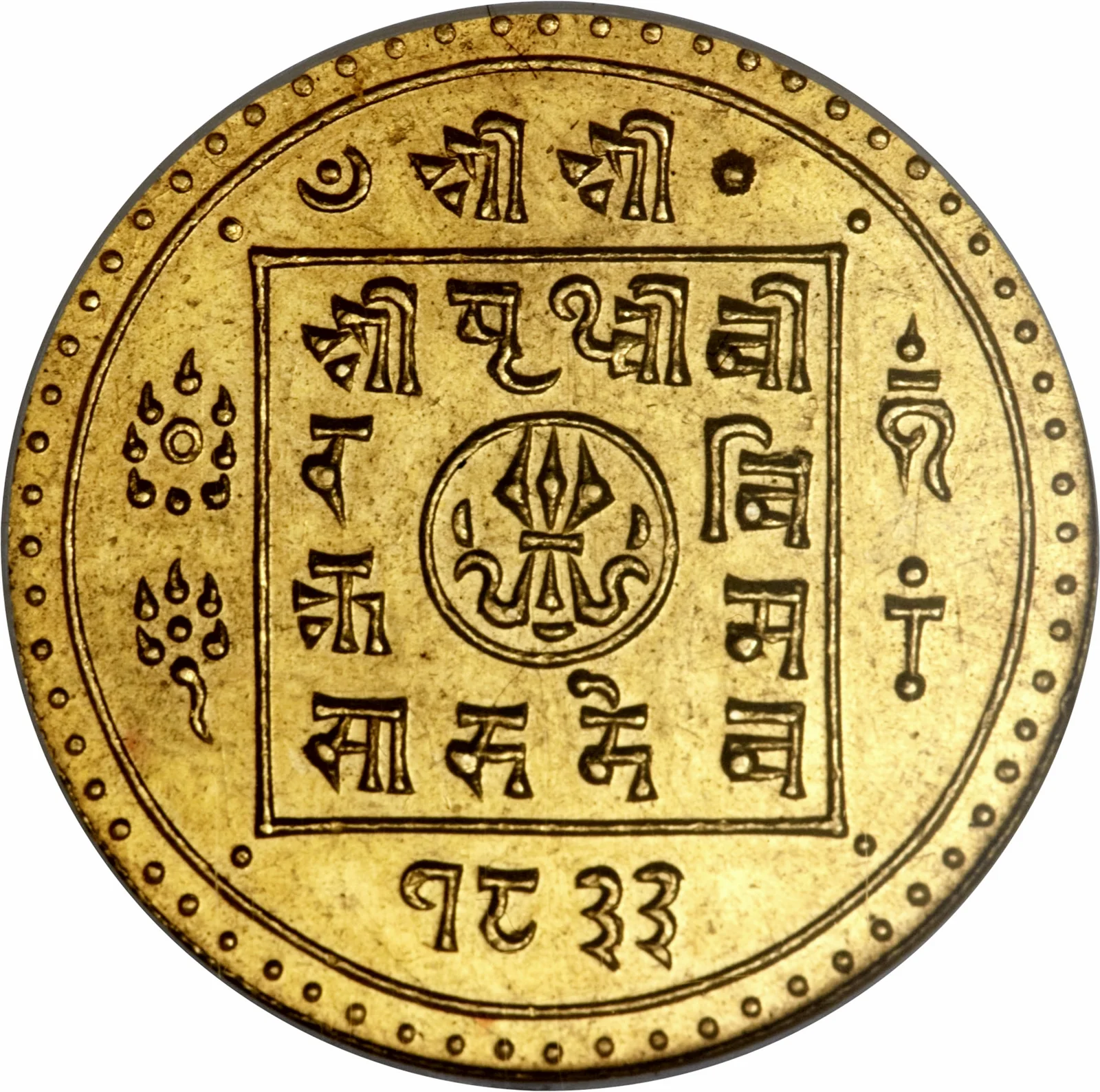
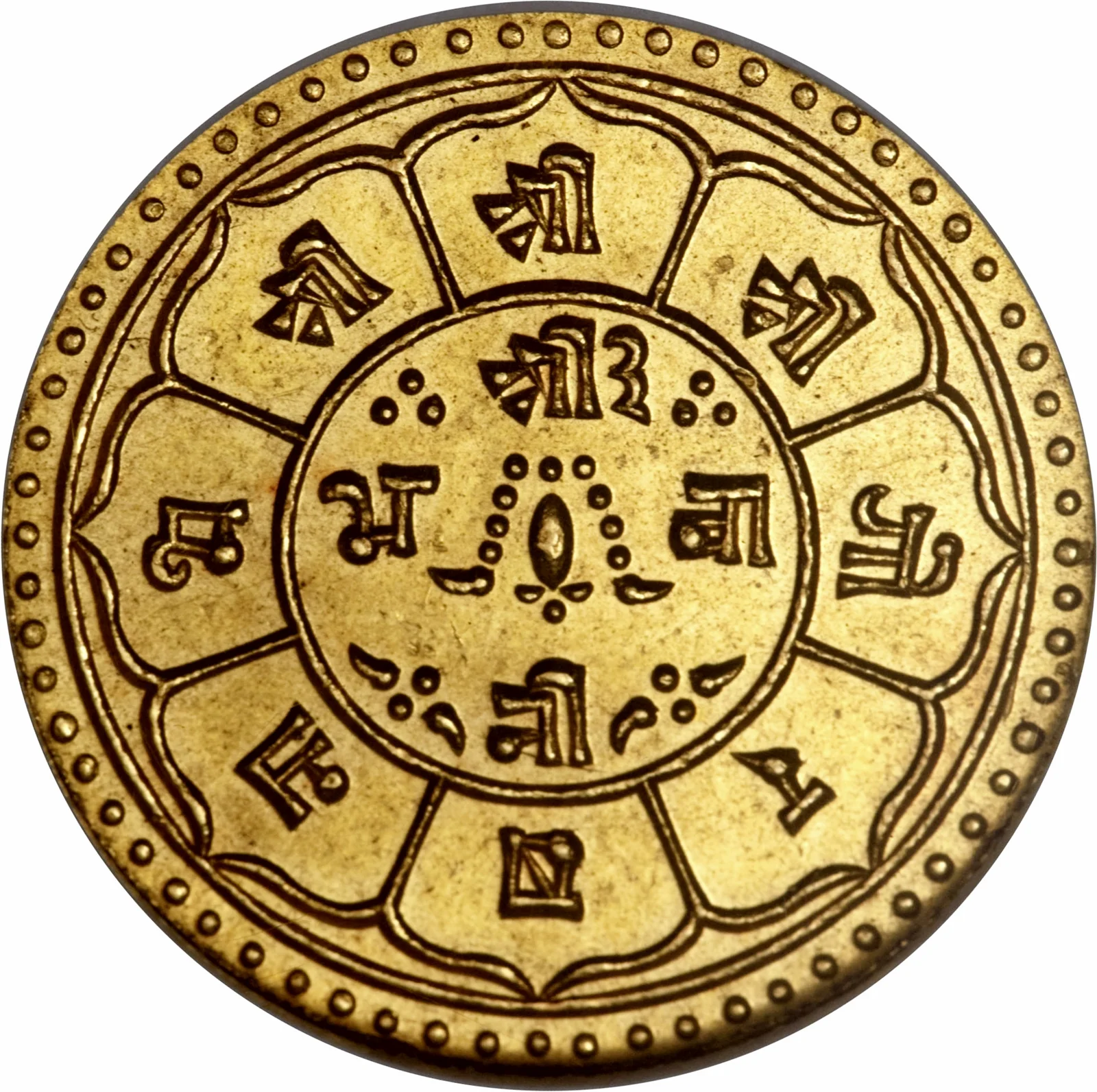
1 Tola – Nepal
Nepal
Context
Years: 1906–1911
Issuer: Nepal 
Ruler: Prithvi Bir Bikram Shah
Currency:
(1546—1932)
Demonetized: Yes
Material
References
KM: #Click to copy to clipboard675.1
Numista: #66161
Value
Bullion value: $2077.67
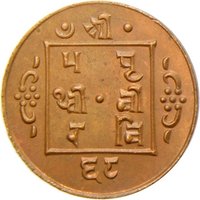
Obverse
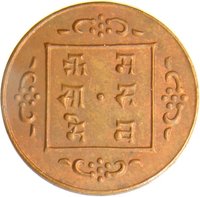
Reverse
Edge
Mintings
| Year | Mint Mark | Mintage | Quality | Collection |
|---|---|---|---|---|
| 1906 | — | — | ||
| 1907 | — | — | ||
| 1909 | — | — | ||
| 1910 | — | — | ||
| 1911 | — | — | ||
| 1911 | — | — | Proof |
Historical background
In 1906, Nepal's currency system was a complex and transitional one, deeply rooted in its historical autonomy but increasingly influenced by British India. The primary circulating medium was the silver Mohar, a coin minted by the Shah dynasty since the 18th century. However, the economy was effectively on a dual-currency standard. Alongside the Mohar, the Indian Rupee (a British imperial currency) circulated widely, especially for larger transactions and trade with the southern neighbour. This was a result of the deeply integrated economic relationship established by the 1816 Sugauli Treaty and subsequent agreements, which tied Nepal's economy to British India.
The currency situation was marked by significant instability and confusion. The value of the Nepali Mohar fluctuated against the Indian Rupee, and various older coins from different reigns remained in circulation, leading to a lack of uniformity. Furthermore, the government of Prime Minister Chandra Shumsher Rana faced fiscal pressures, including the costs of modernizing the state and maintaining the lavish Rana lifestyle. This often led to debasement—reducing the silver content in newly minted Mohars to generate seigniorage profit, which further eroded public confidence in the domestic coinage.
Recognizing these problems, the Rana administration was already contemplating major monetary reform. The year 1906 fell within a period of study and planning that would culminate in the landmark Nepal Coinage Act of 1911. This act would demonetize the old Mohar and introduce a new, decimalized currency system with the Rupee and Paisa, aligning Nepal's currency much more closely with the Indian Rupee in both name and silver standard. Therefore, 1906 represents the final years of an archaic system, poised on the brink of a standardized reform driven by economic pragmatism and the overwhelming influence of the British Indian monetary sphere.
The currency situation was marked by significant instability and confusion. The value of the Nepali Mohar fluctuated against the Indian Rupee, and various older coins from different reigns remained in circulation, leading to a lack of uniformity. Furthermore, the government of Prime Minister Chandra Shumsher Rana faced fiscal pressures, including the costs of modernizing the state and maintaining the lavish Rana lifestyle. This often led to debasement—reducing the silver content in newly minted Mohars to generate seigniorage profit, which further eroded public confidence in the domestic coinage.
Recognizing these problems, the Rana administration was already contemplating major monetary reform. The year 1906 fell within a period of study and planning that would culminate in the landmark Nepal Coinage Act of 1911. This act would demonetize the old Mohar and introduce a new, decimalized currency system with the Rupee and Paisa, aligning Nepal's currency much more closely with the Indian Rupee in both name and silver standard. Therefore, 1906 represents the final years of an archaic system, poised on the brink of a standardized reform driven by economic pragmatism and the overwhelming influence of the British Indian monetary sphere.
✨ Legendary