

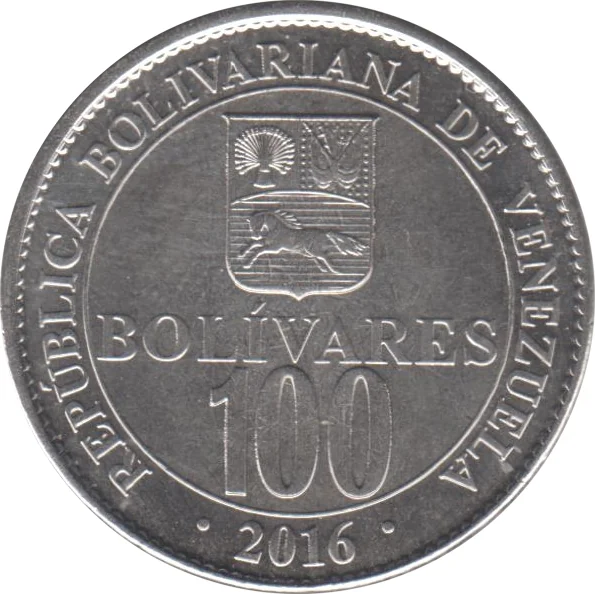
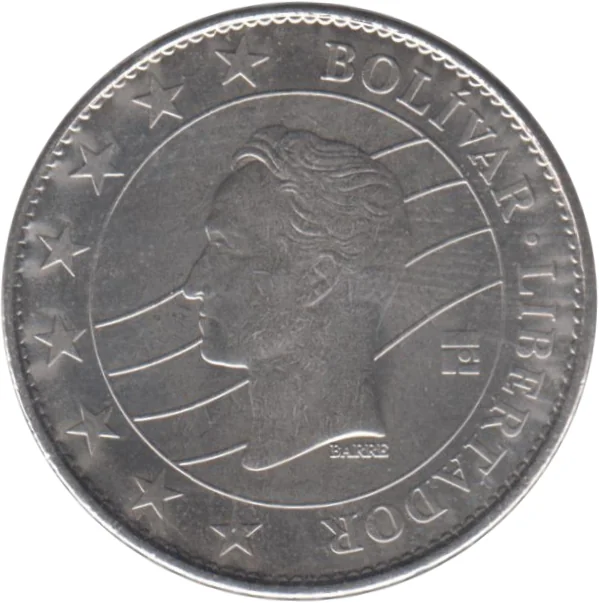
100 bolivars – Venezuela
Add to wishlist
Venezuela
Context
Year: 2016
Issuer: Venezuela
Period:
(since 1999)
Currency:
(2008—2018)
Demonetization: 3 December 2018
Material
Diameter: 25.5 mm
Weight: 6.5 g
Thickness: 1.8 mm
Shape: Round
Composition: Stainless steel
Technique: Milled
Alignment: Coin alignment
flip
References
Y: #
Numista: #98180
Value
Exchange value: 100 VEF
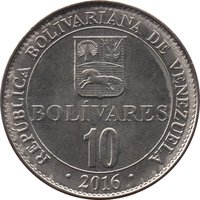
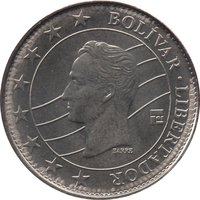
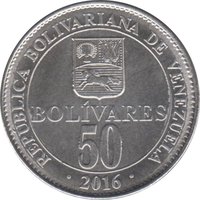
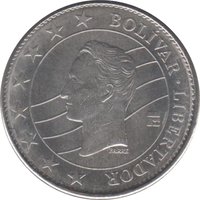
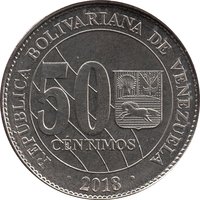
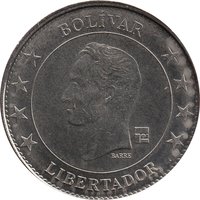
Obverse
Reverse
Edge
Discontinuous grooving
Categories
| Animal> Horse |
| Person> Military leader |
| Person> Politician |
| Symbols> Coat of Arms |
Mints
| Name | Mark |
|---|---|
| Caracas | — |
Mintings
| Year | Mint Mark | Mintage | Quality | Collection |
|---|---|---|---|---|
| 2016 | — | — |
Historical background
By 2016, Venezuela was in the throes of a profound currency crisis, a direct consequence of years of economic mismanagement, plummeting oil prices, and hyperinflation. The official exchange rate, rigidly controlled by the government, had become wildly disconnected from reality. While the official rate was set at 10 bolívars to the U.S. dollar for priority imports, a thriving black market, known as the "dólar paralelo," saw rates soar above 1,000 bolívars per dollar. This created a devastating dual economy: a privileged few with access to cheap dollars prospered, while the vast majority faced soaring prices for basic goods, which were priced at the black-market rate.
The government's response was a complex system of currency controls and multiple exchange rates, established in 2003, which by 2016 had utterly failed. Shortages of dollars led to a collapse in imports, resulting in severe scarcities of food, medicine, and consumer goods. To finance spending, the government resorted to printing massive amounts of money without economic backing, fueling an inflation spiral that would soon become hyperinflation. The bolívar's purchasing power evaporated, with citizens needing bags of cash for simple transactions, and the currency effectively becoming worthless outside the country's borders.
This monetary collapse had catastrophic human consequences. Wages became meaningless, savings were obliterated, and poverty rates skyrocketed. The crisis forced a mass exodus of Venezuelans and pushed the informal dollarization of the economy, as people desperately sought any stable store of value. The situation in 6 set the stage for even more extreme measures in the following years, including the introduction of new currency denominations and a failed attempt at a sovereign cryptocurrency, as the bolívar continued its terminal decline.
The government's response was a complex system of currency controls and multiple exchange rates, established in 2003, which by 2016 had utterly failed. Shortages of dollars led to a collapse in imports, resulting in severe scarcities of food, medicine, and consumer goods. To finance spending, the government resorted to printing massive amounts of money without economic backing, fueling an inflation spiral that would soon become hyperinflation. The bolívar's purchasing power evaporated, with citizens needing bags of cash for simple transactions, and the currency effectively becoming worthless outside the country's borders.
This monetary collapse had catastrophic human consequences. Wages became meaningless, savings were obliterated, and poverty rates skyrocketed. The crisis forced a mass exodus of Venezuelans and pushed the informal dollarization of the economy, as people desperately sought any stable store of value. The situation in 6 set the stage for even more extreme measures in the following years, including the introduction of new currency denominations and a failed attempt at a sovereign cryptocurrency, as the bolívar continued its terminal decline.
🌱 Common