

50 centimos – Venezuela
Add to wishlist
Venezuela
Obverse
Description:
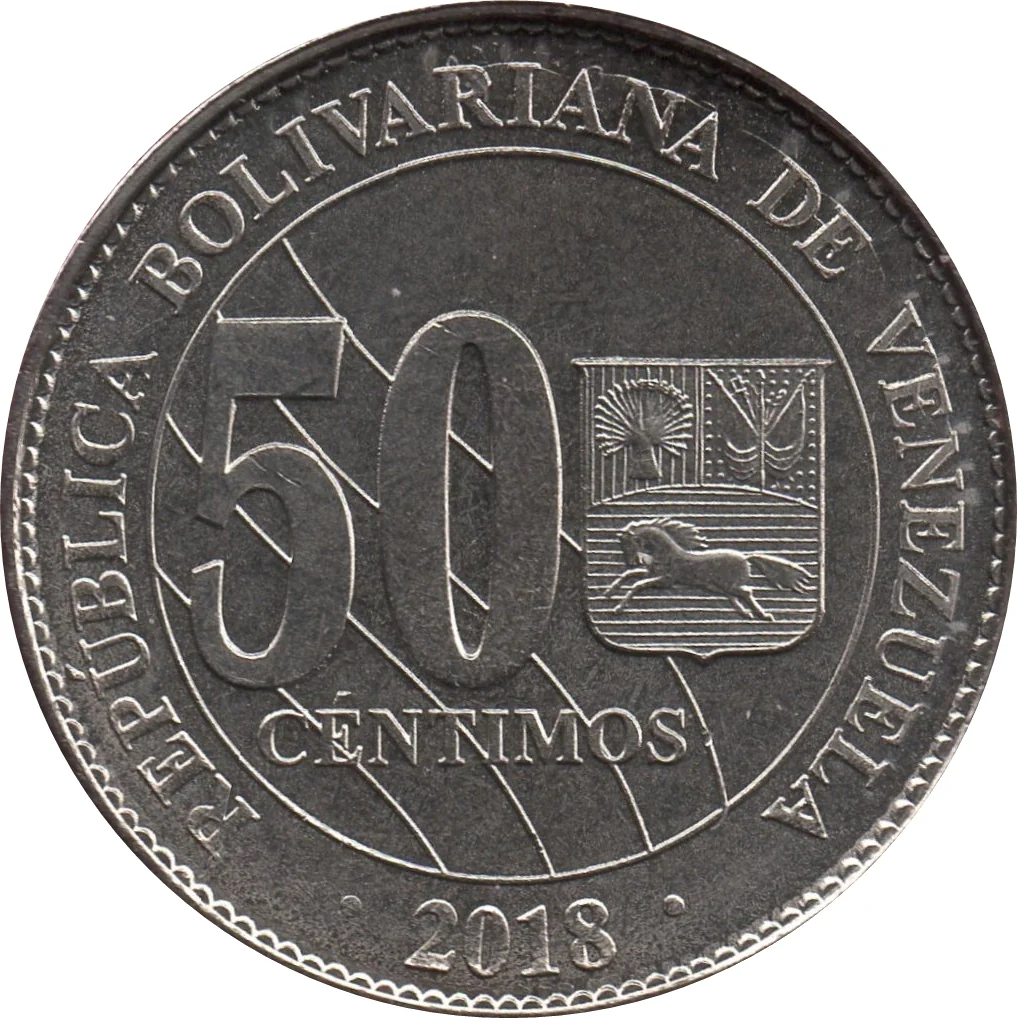
Left center: numeric value. Right: coat of arms, below: "CENTIMOS". Surrounded by legend and date.
Inscription:
REPÚBLICA BOLIVARIANA DE VENEZUELA - 50 CÉNTIMOS - 2018
Translation:
Bolivarian Republic of Venezuela - 50 Cents - 2018
Script: Latin
Language: Spanish
Engraver: Désiré-Albert Barre
Reverse
Description:
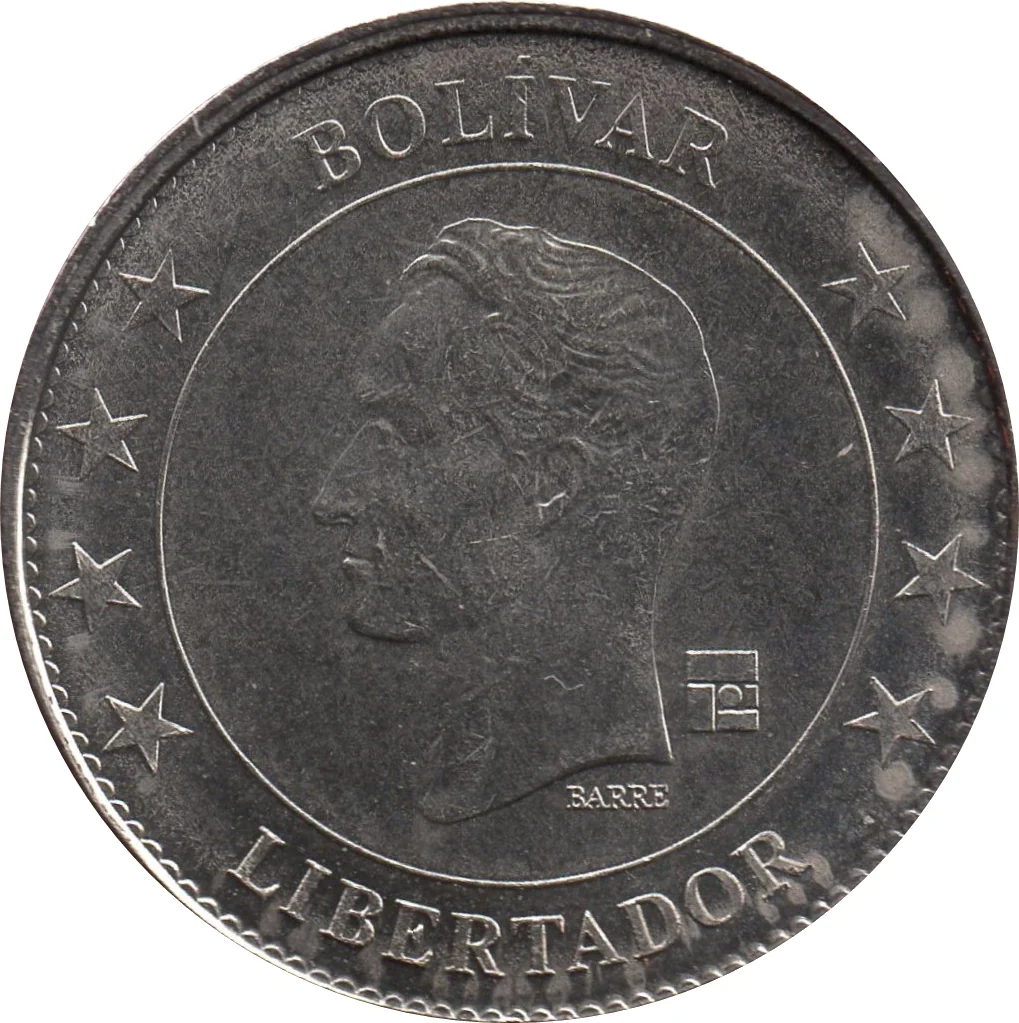
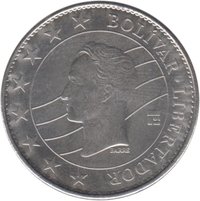
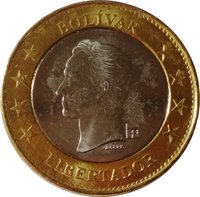
Bust of Simon Bolivar in the center. Legend: "BOLIVAR" above and "LIBERATOR" below, flanked by four stars on each side. Exergue bears engraver "Barre" and logo.
Inscription:
BOLÌVAR - LIBERTADOR
Translation:
BOLÍVAR - LIBERATOR
Script: Latin
Language: Spanish
Engraver: Désiré-Albert Barre
Edge
Striated discontinuous
Categories
| Animal> Horse |
| Person> Military leader |
| Symbols> Coat of Arms |
| Person> Politician |
Mints
| Name | Mark |
|---|---|
| Casa de la Moneda de Venezuela | — |
Mintings
| Year | Mint Mark | Mintage | Quality | Collection |
|---|---|---|---|---|
| 2018 | — | — |
Historical background
In 2018, Venezuela's currency crisis reached a catastrophic peak, marking the culmination of years of hyperinflation driven by excessive money printing, collapsing oil production, and severe economic mismanagement. The national currency, the bolívar, became virtually worthless, with the International Monetary Fund estimating an annual inflation rate of a staggering 1.7 million percent by year's end. The government's response, a sweeping currency reconversion in August, lopped five zeros off the old "bolívar fuerte" to create a new "bolívar soberano," but this did nothing to address the root causes of inflation, rendering the move largely symbolic and ineffective.
The situation was characterized by a chaotic multi-tiered exchange system. While the official government rate was fixed at an unrealistic level, the vast majority of citizens and businesses relied on the illegal black market rate or the government's own thinly traded DICOM platform, where the bolívar's value was a fraction of the official figure. This disparity fueled rampant corruption and made basic price calculations impossible. Crucially, the bolívar's collapse led to the effective "dollarization" of the economy, with many businesses and individuals turning to the US dollar for transactions and savings to preserve value, despite its use being technically illegal at the time.
This monetary collapse had devastating human consequences. Wages paid in bolívares became insufficient to cover even the most basic necessities, pushing poverty rates to extreme levels and triggering a massive exodus of Venezuelans seeking survival abroad. The government, facing a profound loss of monetary sovereignty, struggled to import essential goods like food and medicine. Thus, in 2018, Venezuela's currency was not just an economic problem but a primary driver of a full-scale humanitarian crisis, with the bolívar ceasing to function as a reliable store of value, unit of account, or medium of exchange for its population.
The situation was characterized by a chaotic multi-tiered exchange system. While the official government rate was fixed at an unrealistic level, the vast majority of citizens and businesses relied on the illegal black market rate or the government's own thinly traded DICOM platform, where the bolívar's value was a fraction of the official figure. This disparity fueled rampant corruption and made basic price calculations impossible. Crucially, the bolívar's collapse led to the effective "dollarization" of the economy, with many businesses and individuals turning to the US dollar for transactions and savings to preserve value, despite its use being technically illegal at the time.
This monetary collapse had devastating human consequences. Wages paid in bolívares became insufficient to cover even the most basic necessities, pushing poverty rates to extreme levels and triggering a massive exodus of Venezuelans seeking survival abroad. The government, facing a profound loss of monetary sovereignty, struggled to import essential goods like food and medicine. Thus, in 2018, Venezuela's currency was not just an economic problem but a primary driver of a full-scale humanitarian crisis, with the bolívar ceasing to function as a reliable store of value, unit of account, or medium of exchange for its population.
🌱 Fairly Common