

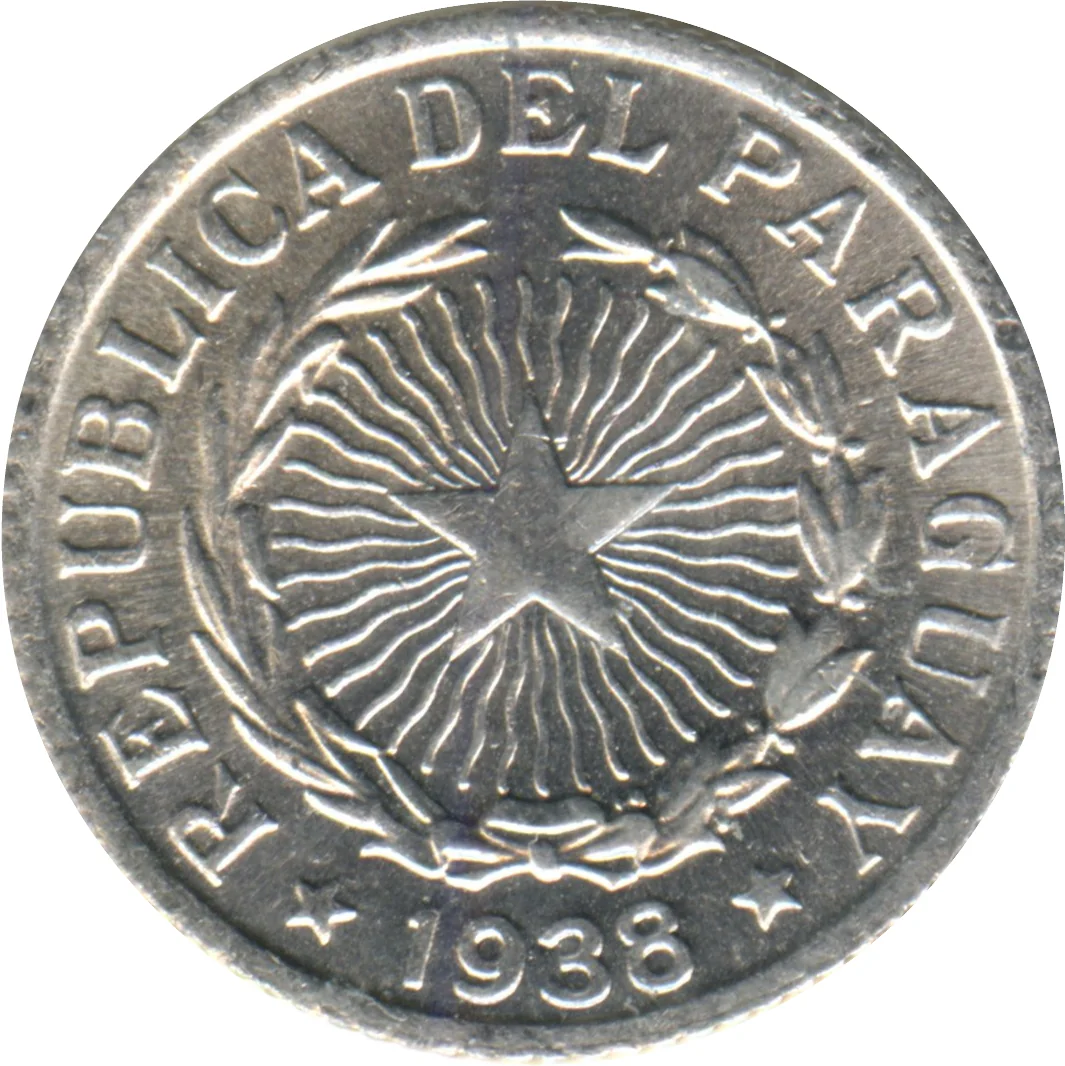
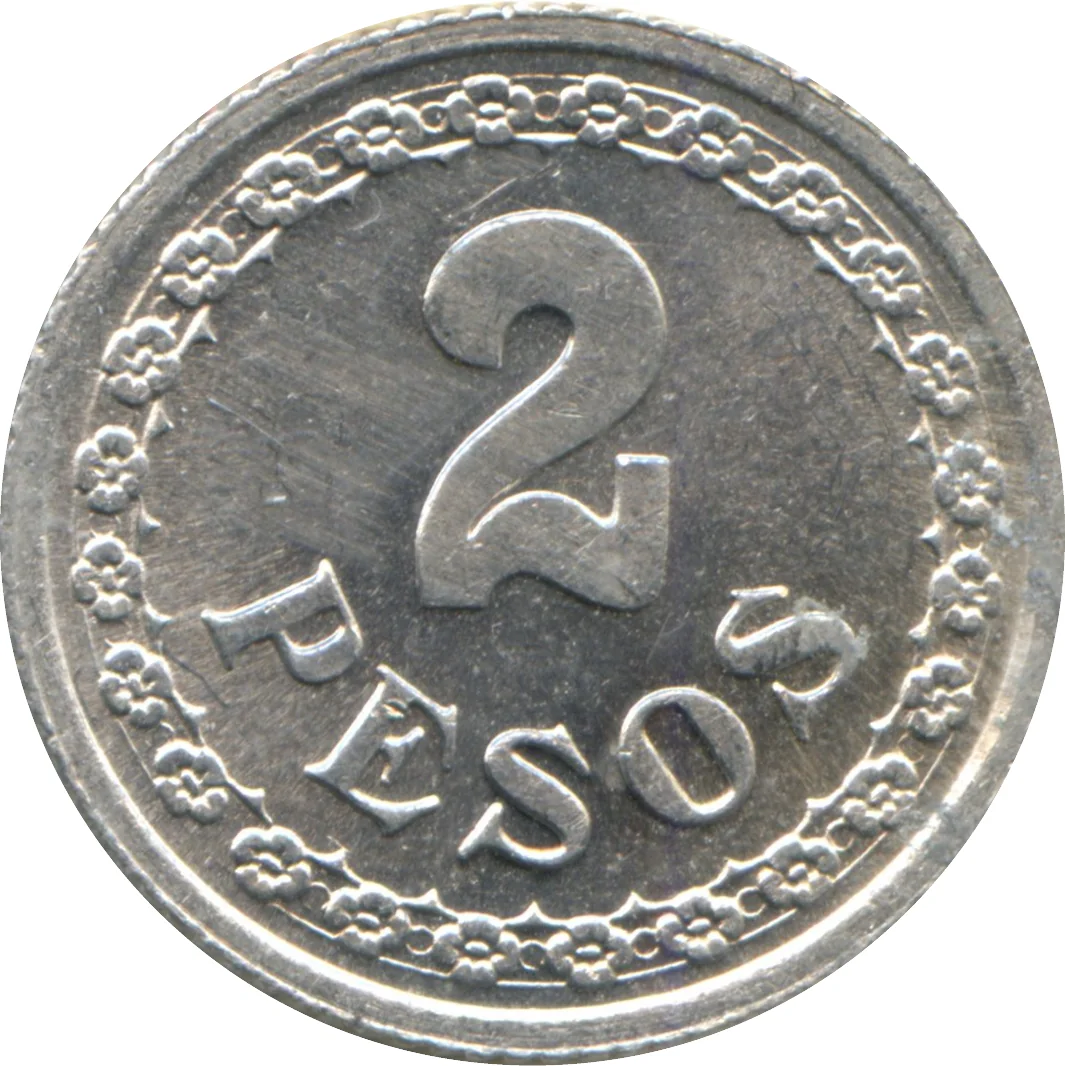
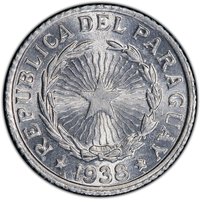
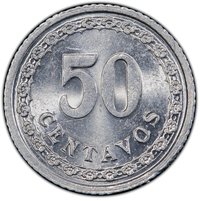
2 pesos – Paraguay
Add to wishlist
Paraguay
Context
Year: 1938
Issuer: Paraguay
Issuing organization: Bank of the Republic of Paraguay
Period:
(since 1811)
Currency:
(1856—1944)
Demonetization: 31 December 1944
Material
References
KM: #
Numista: #9804
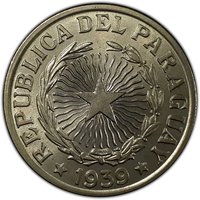
Obverse
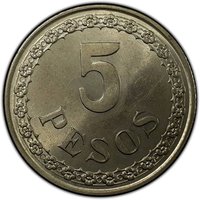
Reverse
Edge
Reeded
Categories
| Symbols> Coat of Arms |
Mints
| Name | Mark |
|---|---|
| Huguenin | — |
Mintings
| Year | Mint Mark | Mintage | Quality | Collection |
|---|---|---|---|---|
| 1938 | — | — |
Historical background
In 1938, Paraguay's currency situation was characterized by instability and inflationary pressures, largely stemming from the devastating aftermath of the Chaco War (1932–1935). The conflict, while a military victory, had exhausted the national treasury, destroyed infrastructure, and crippled the export-oriented agricultural economy. To finance the war, the government had heavily relied on issuing unbacked paper money, leading to a significant devaluation of the national currency, the peso fuerte. By the late 1930s, Paraguay faced a mounting public debt, a shortage of foreign exchange reserves, and a sharp decline in the peso's purchasing power, which severely impacted the cost of living.
The government of President Félix Paiva, and later José Félix Estigarribia, grappled with these challenges under a period of political transition that saw the end of the Liberal Party's long dominance. Economic policy was focused on stabilization, but options were limited. Paraguay remained heavily dependent on a few primary exports, like cotton and quebracho timber, whose prices on the global market were volatile. Efforts to secure foreign loans for reconstruction were complicated by the country's poor creditworthiness and the looming shadows of the Great Depression, which continued to affect international trade and investment.
Consequently, the currency system in 1938 was in a fragile state, operating without the discipline of a gold standard and with limited central bank authority (the Banco del Paraguay had been established only in 1936). Inflationary financing of deficits remained a persistent temptation. This precarious monetary environment set the stage for more formal reforms in the early 1940s, including the creation of a new currency, the guaraní, in 1943, which aimed to restore confidence and stabilize the nation's finances after years of turmoil.
The government of President Félix Paiva, and later José Félix Estigarribia, grappled with these challenges under a period of political transition that saw the end of the Liberal Party's long dominance. Economic policy was focused on stabilization, but options were limited. Paraguay remained heavily dependent on a few primary exports, like cotton and quebracho timber, whose prices on the global market were volatile. Efforts to secure foreign loans for reconstruction were complicated by the country's poor creditworthiness and the looming shadows of the Great Depression, which continued to affect international trade and investment.
Consequently, the currency system in 1938 was in a fragile state, operating without the discipline of a gold standard and with limited central bank authority (the Banco del Paraguay had been established only in 1936). Inflationary financing of deficits remained a persistent temptation. This precarious monetary environment set the stage for more formal reforms in the early 1940s, including the creation of a new currency, the guaraní, in 1943, which aimed to restore confidence and stabilize the nation's finances after years of turmoil.
🌱 Common