

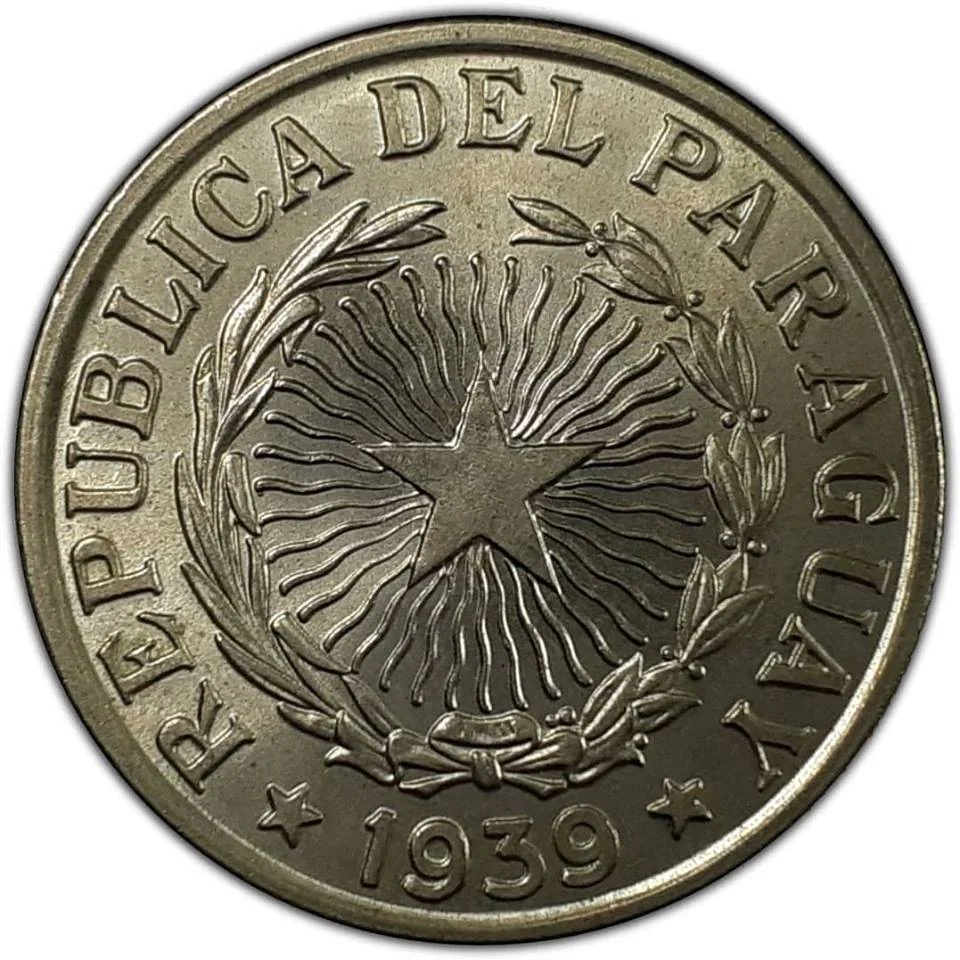
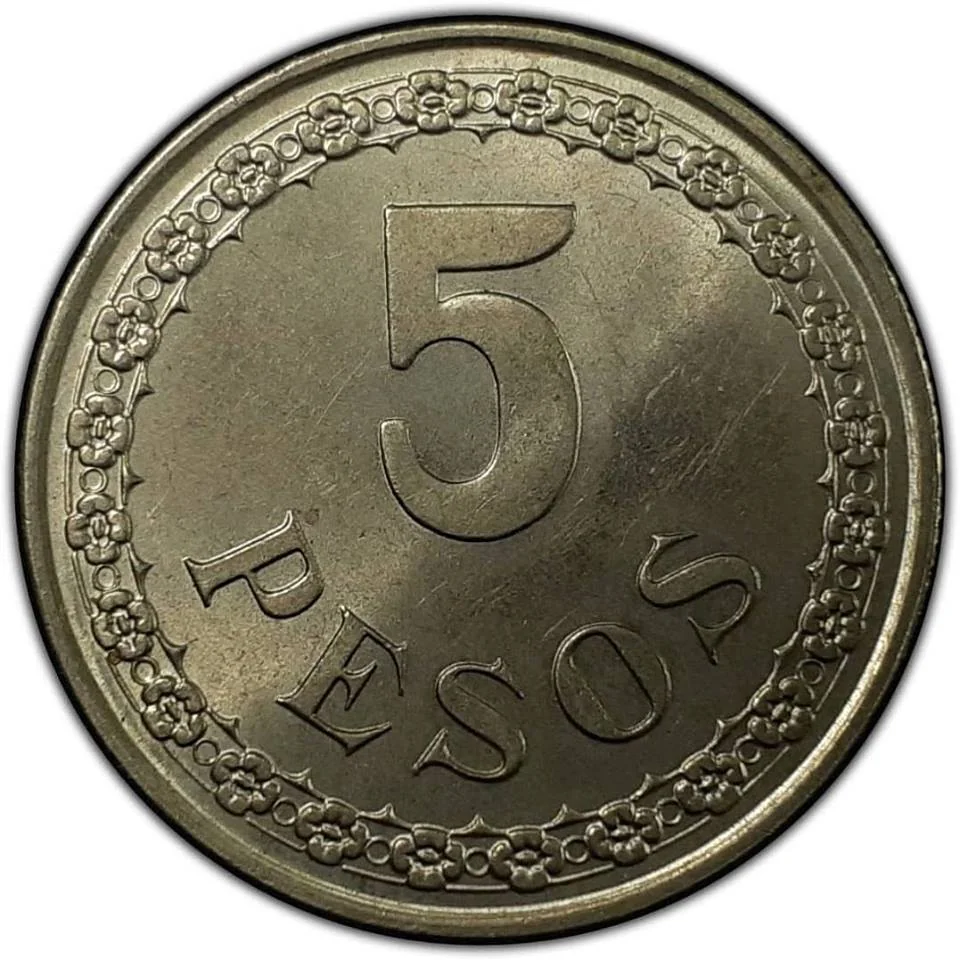
5 pesos – Paraguay
Add to wishlist
Paraguay
Context
Year: 1939
Issuer: Paraguay
Issuing organization: Bank of the Republic of Paraguay
Period:
(since 1811)
Currency:
(1856—1944)
Demonetization: 31 December 1944
Total mintage: 4,000,000
Material
Diameter: 25.35 mm
Weight: 6 g
Thickness: 1.65 mm
Shape: Round
Composition: Copper-nickel
Technique: Milled
Alignment: Coin alignment
flip
References
KM: #
Numista: #9805
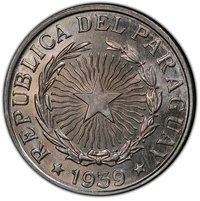
Obverse
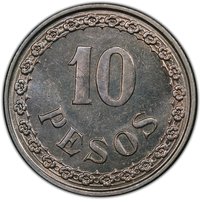
Reverse
Edge
Reeded
Categories
| Symbols> Coat of Arms |
Mints
| Name | Mark |
|---|---|
| Huguenin | — |
Mintings
| Year | Mint Mark | Mintage | Quality | Collection |
|---|---|---|---|---|
| 1939 | — | 4,000,000 |
Historical background
In 1939, Paraguay's currency situation was defined by the aftermath of the devastating Chaco War (1932-1935) and the global economic pressures preceding World War II. The national currency, the Paraguayan peso, was severely weakened by the massive debt incurred to finance the conflict and a chronic trade deficit. The country's economy, heavily reliant on agricultural exports like yerba mate, tobacco, and timber, was vulnerable to fluctuating commodity prices, and the government's fiscal position was precarious, relying heavily on customs revenues.
Monetary policy was under the authority of the Banco de la República del Paraguay, which acted as both a central and commercial bank. Despite a legal gold standard, the system was effectively fiduciary, with the peso's value not backed by substantial gold reserves. The bank attempted to stabilize the currency through exchange controls and managed devaluations, but inflation was a persistent problem, eroding purchasing power. A dual exchange rate system often existed, with an official rate for essential imports and a less favorable free market rate, reflecting the scarcity of foreign currency, particularly Argentine pesos and British pounds sterling which were crucial for trade.
The geopolitical landscape further complicated matters. Paraguay was economically dependent on its larger neighbors, Argentina and, to a lesser extent, Brazil. Argentina, through commercial treaties and credit lines, exerted significant influence over Paraguay's monetary and trade policies. As war loomed in Europe, disruptions in international finance and trade began to be felt, threatening the already fragile balance. Thus, in 1939, Paraguay's currency was not an instrument of economic strength but a reflection of a post-war nation struggling with debt, dependency, and the gathering storms of a global conflict.
Monetary policy was under the authority of the Banco de la República del Paraguay, which acted as both a central and commercial bank. Despite a legal gold standard, the system was effectively fiduciary, with the peso's value not backed by substantial gold reserves. The bank attempted to stabilize the currency through exchange controls and managed devaluations, but inflation was a persistent problem, eroding purchasing power. A dual exchange rate system often existed, with an official rate for essential imports and a less favorable free market rate, reflecting the scarcity of foreign currency, particularly Argentine pesos and British pounds sterling which were crucial for trade.
The geopolitical landscape further complicated matters. Paraguay was economically dependent on its larger neighbors, Argentina and, to a lesser extent, Brazil. Argentina, through commercial treaties and credit lines, exerted significant influence over Paraguay's monetary and trade policies. As war loomed in Europe, disruptions in international finance and trade began to be felt, threatening the already fragile balance. Thus, in 1939, Paraguay's currency was not an instrument of economic strength but a reflection of a post-war nation struggling with debt, dependency, and the gathering storms of a global conflict.
🌱 Common