

25 Cents – Cayman Islands
United Kingdom
Context
Years: 1987–1990
Country: United Kingdom 
Issuer: Cayman Islands 
Issuing organization: Cayman Islands Currency Board
Ruler: Elizabeth II
Currency:
(since 1972)
Total mintage: 635
Material
Diameter: 24.26 mm
Weight: 5.67 g
Thickness: 1.7 mm
Shape: Round
Composition: Copper-nickel
Technique: Milled
Alignment: Medal alignment
flip
References
KM: #Click to copy to clipboard90
Numista: #2608
Value
Exchange value: 0.25 KYD
Inflation-adjusted value: 0.94 KYD
Obverse
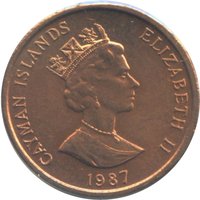
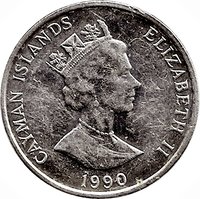
Description:
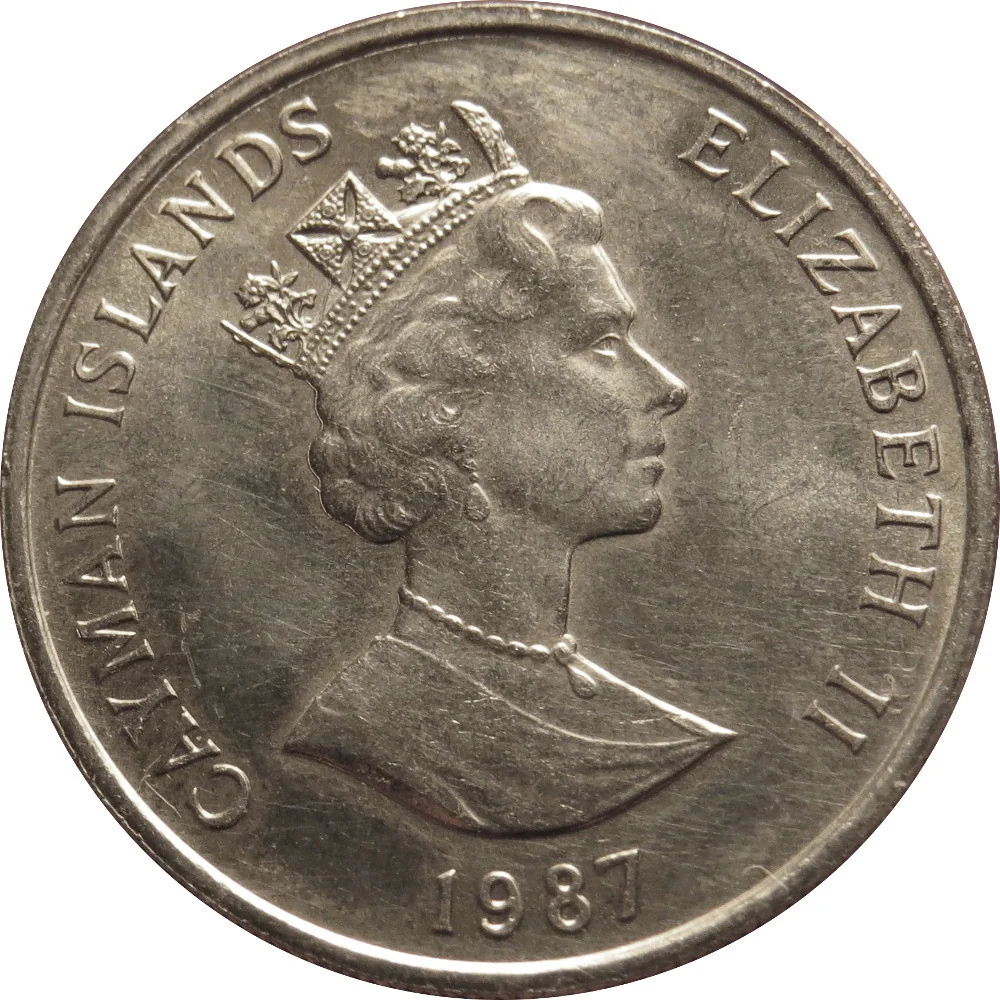
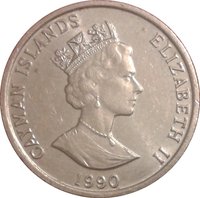
Queen Elizabeth III crowned right, wearing George IV State Diadem, legend around, date below.
Inscription:
CAYMAN ISLANDS ELIZABETH II
1987
1987
Script: Latin
Engraver: Raphael David Maklouf
Reverse
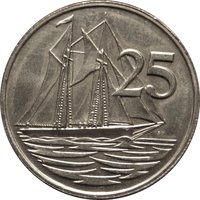
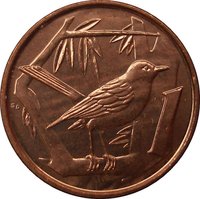
Description:
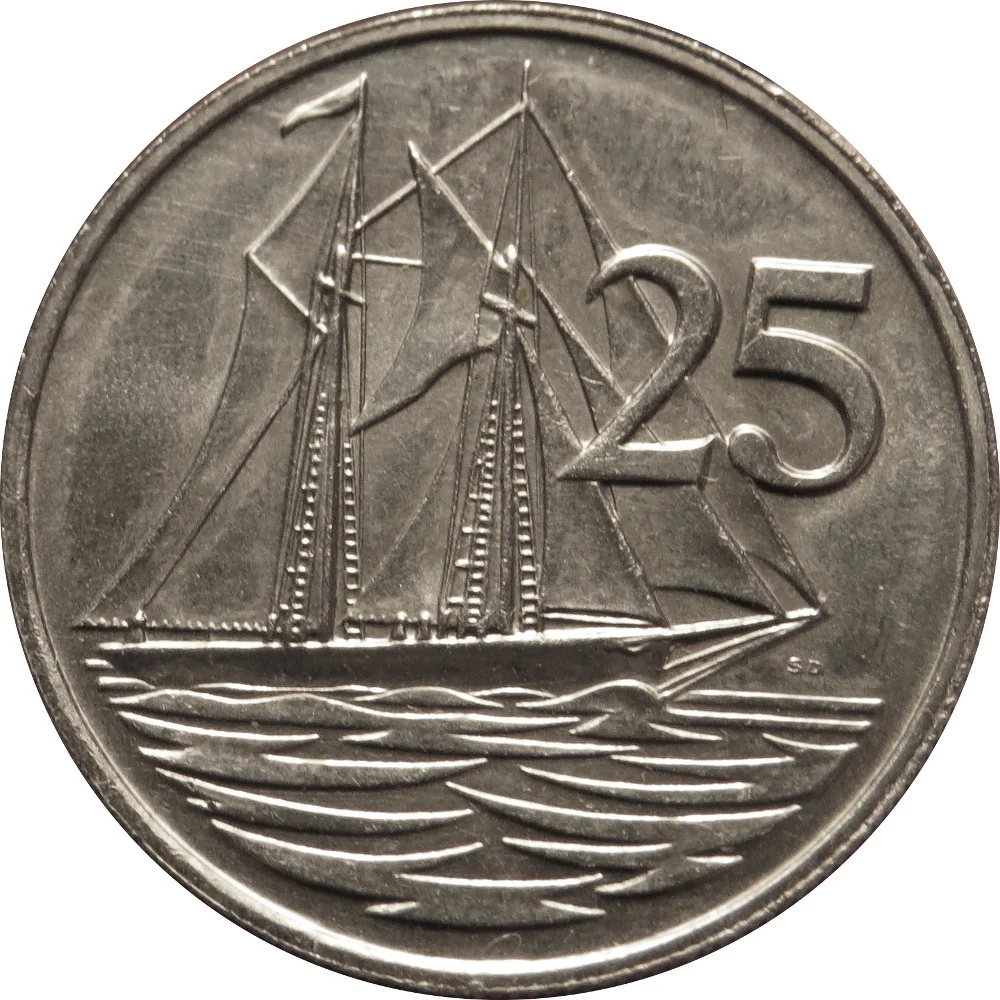
Schooner "Kirk B" sailing right.
Inscription:
25
SD
SD
Script: Latin
Engraver: Stuart Devlin
Edge
Reeded
Categories
| Transportation> Watercraft |
Mints
| Name | Mark |
|---|---|
| Royal Mint | — |
Mintings
| Year | Mint Mark | Mintage | Quality | Collection |
|---|---|---|---|---|
| 1987 | — | — | ||
| 1987 | — | 317 | Proof | |
| 1988 | — | 318 | Proof | |
| 1990 | — | — |
Historical background
In 1987, the Cayman Islands operated under a unique and stable currency system, directly pegged to the United States dollar. This arrangement, established in 1972, fixed the value of the Cayman Islands dollar (KYD) at CI$1.00 = US$1.20, a rate that has remained remarkably consistent for decades. The currency was issued by the Cayman Islands Currency Board, a conservative institution whose primary mandate was to maintain full foreign exchange backing for the local currency in circulation. This meant for every Cayman dollar printed, an equivalent value in US dollar reserves was held, ensuring high confidence and convertibility.
The economic context of 1987 was one of robust growth, heavily fueled by the territory's burgeoning status as a leading offshore financial centre. The stability of the currency peg was fundamental to this success, providing international banks, trust companies, and investors with a predictable and secure monetary environment free from exchange rate risk against the US dollar. Tourism, the other pillar of the economy, also benefited as the fixed rate simplified transactions for the predominantly American visitor base. There was little to no domestic pressure to alter the exchange rate, as the system effectively imported the monetary policy and anti-inflation credibility of the United States.
Consequently, the currency situation in 1987 was characterized by notable tranquility and institutional certainty. Unlike many nations that faced volatile forex markets or devaluation pressures during that era, the Cayman Islands' commitment to its currency board model and its substantial reserves insulated it from such turbulence. The discussions of the time were not about exchange rate adjustments but about managing the successes of a booming financial sector, all underpinned by a monetary system designed for absolute stability and international credibility. This solid foundation paved the way for the eventual transition to the Cayman Islands Monetary Authority in 1997.
The economic context of 1987 was one of robust growth, heavily fueled by the territory's burgeoning status as a leading offshore financial centre. The stability of the currency peg was fundamental to this success, providing international banks, trust companies, and investors with a predictable and secure monetary environment free from exchange rate risk against the US dollar. Tourism, the other pillar of the economy, also benefited as the fixed rate simplified transactions for the predominantly American visitor base. There was little to no domestic pressure to alter the exchange rate, as the system effectively imported the monetary policy and anti-inflation credibility of the United States.
Consequently, the currency situation in 1987 was characterized by notable tranquility and institutional certainty. Unlike many nations that faced volatile forex markets or devaluation pressures during that era, the Cayman Islands' commitment to its currency board model and its substantial reserves insulated it from such turbulence. The discussions of the time were not about exchange rate adjustments but about managing the successes of a booming financial sector, all underpinned by a monetary system designed for absolute stability and international credibility. This solid foundation paved the way for the eventual transition to the Cayman Islands Monetary Authority in 1997.
🌱 Very Common