

5 lepta – Greece
Add to wishlist
Greece
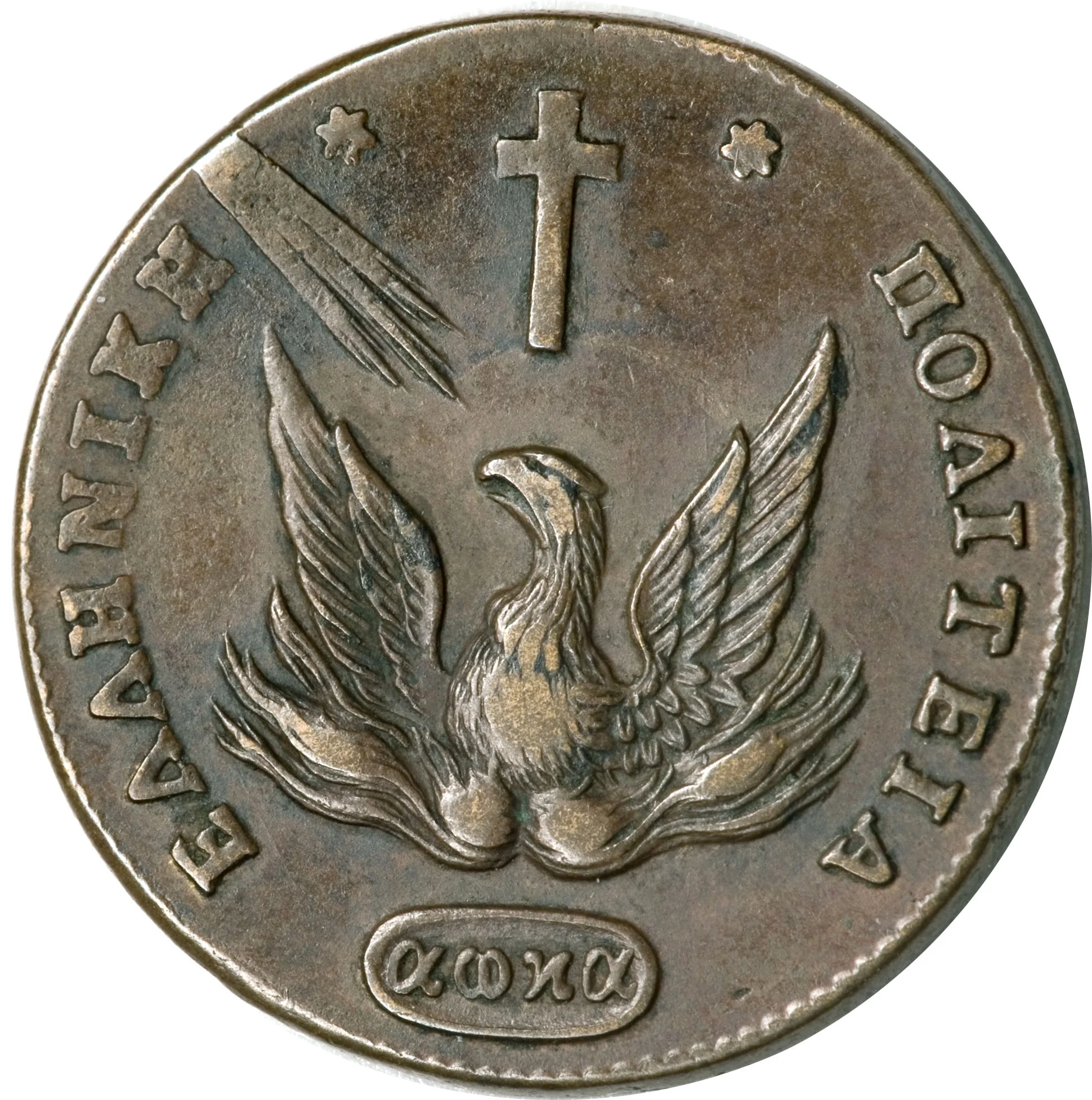
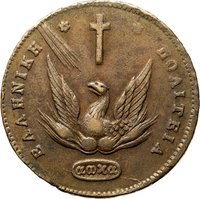
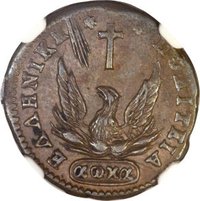
Obverse
Description:
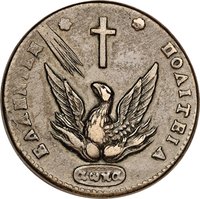
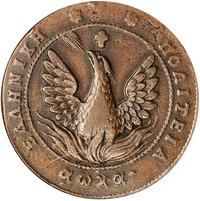
Phoenix with a cross above and sun rays to the left.
Inscription:
ΕΛΛΗΝΙΚΗ ΠΟΛΙΤΕΙΑ
αωκα΄
αωκα΄
Translation:
HELLENIC REPUBLIC
1971
1971
Script: Greek
Language: Greek
Engravers: Georgios Papakonstantopoulos, Dimitrios Kontos
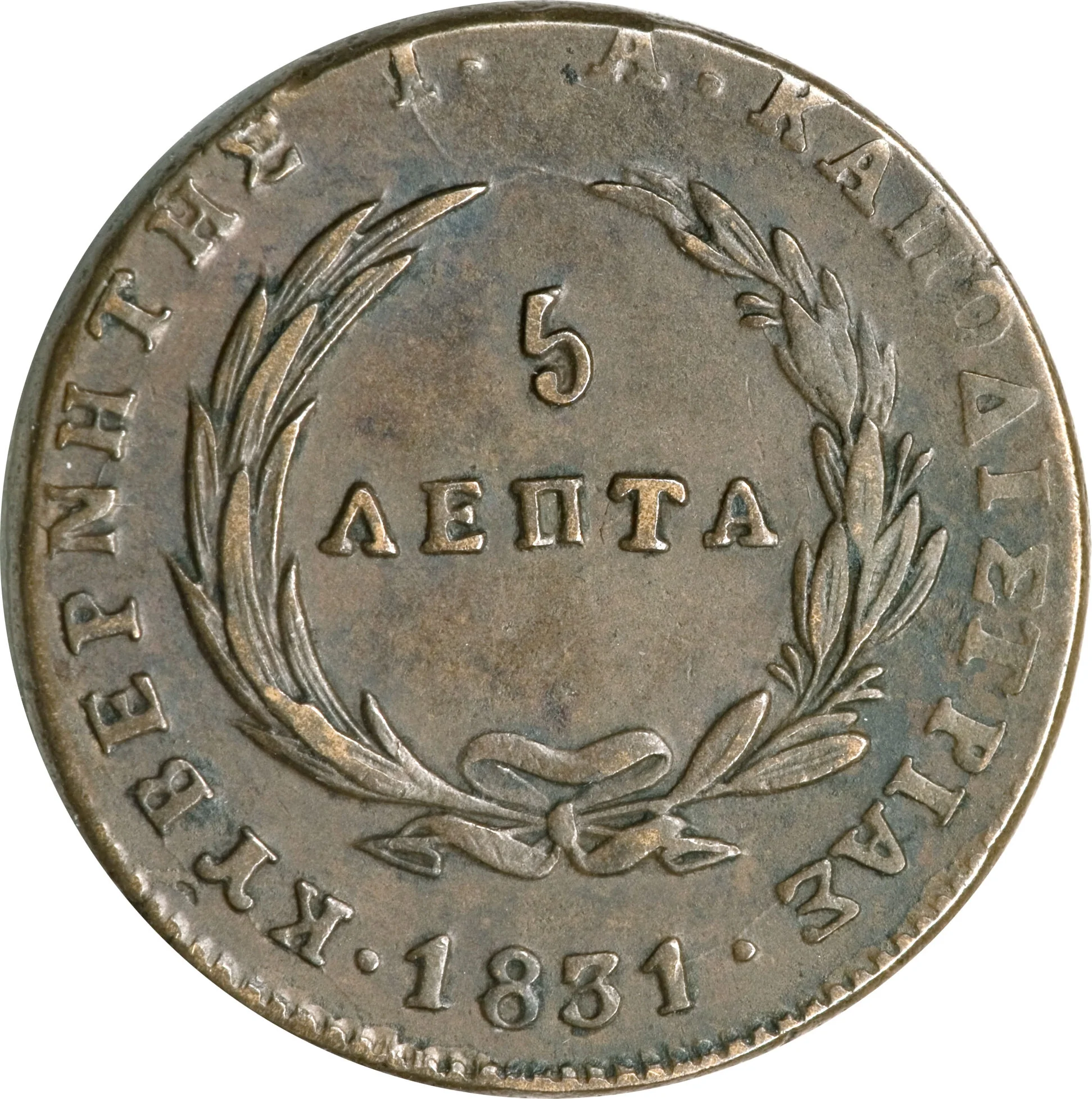
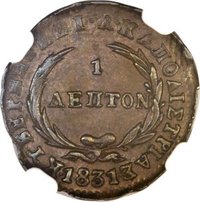
Reverse
Description:
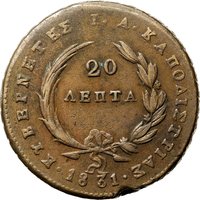
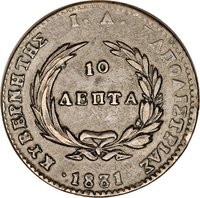
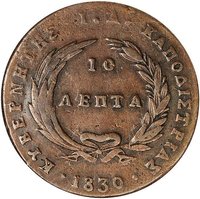
Laurel and olive branches encircling the denomination.
Inscription:
• ΚΥΒΕΡΝΗΤΗΣ Ι• Α• ΚΑΠΟΔΙΣΤΡΙΑΣ •
5
ΛΕΠΤΑ
1831
5
ΛΕΠΤΑ
1831
Translation:
Governor I. A. Kapodistrias
5
Lepta
1831
5
Lepta
1831
Script: Greek
Language: Greek
Engravers: Georgios Papakonstantopoulos, Dimitrios Kontos
Edge
Plain
Mints
| Name | Mark |
|---|---|
| National mint of Aegina Mint | — |
Mintings
| Year | Mint Mark | Mintage | Quality | Collection |
|---|---|---|---|---|
| 1831 | — | 229,856 |
Historical background
Following its War of Independence (1821-1829), Greece in 1831 was a nascent kingdom mired in severe monetary chaos. The territory lacked a unified national currency, resulting in a fragmented and inefficient system. A bewildering array of coins circulated simultaneously: Ottoman kuruş and piastres, various European currencies like the Spanish dollar and the French franc, and even the Russian ruble, reflecting the influence of the Great Powers that had intervened in the conflict. This monetary bazaar stifled trade, complicated taxation, and symbolized the absence of a cohesive state authority.
The economic devastation of the long war exacerbated this confusion. The new state, under Governor Ioannis Kapodistrias, was bankrupt, with an empty treasury and massive debts owed to its foreign supporters. To finance immediate governance, Kapodistrias’s administration was forced to issue a primitive form of paper money, the so-called "Phoenix" notes, named after the mythical bird on the national seal. However, these notes were not backed by silver or gold reserves and quickly depreciated, causing inflation and further eroding public trust in the fledgling government’s financial credibility.
This unstable currency situation was a critical problem awaiting Greece’s first king, Otto of Bavaria, who arrived in 1833. The monetary anarchy highlighted the urgent need for centralization and modernization as foundational steps for the new kingdom. Consequently, one of the earliest and most significant acts of Otto’s reign would be the creation of a national currency, leading to the 1833 introduction of the silver drachma, which aimed to replace the chaotic mix of currencies with a single, stable monetary system under state control.
The economic devastation of the long war exacerbated this confusion. The new state, under Governor Ioannis Kapodistrias, was bankrupt, with an empty treasury and massive debts owed to its foreign supporters. To finance immediate governance, Kapodistrias’s administration was forced to issue a primitive form of paper money, the so-called "Phoenix" notes, named after the mythical bird on the national seal. However, these notes were not backed by silver or gold reserves and quickly depreciated, causing inflation and further eroding public trust in the fledgling government’s financial credibility.
This unstable currency situation was a critical problem awaiting Greece’s first king, Otto of Bavaria, who arrived in 1833. The monetary anarchy highlighted the urgent need for centralization and modernization as foundational steps for the new kingdom. Consequently, one of the earliest and most significant acts of Otto’s reign would be the creation of a national currency, leading to the 1833 introduction of the silver drachma, which aimed to replace the chaotic mix of currencies with a single, stable monetary system under state control.
💎 Extremely Rare