

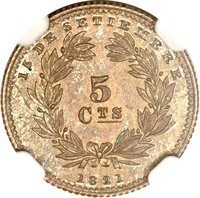
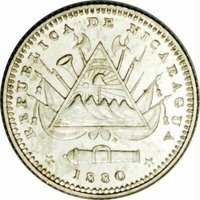
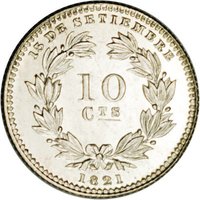
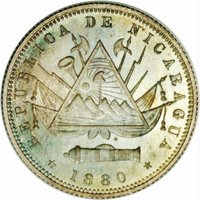
20 Centavos – Nicaragua
Nicaragua
Context
Material
References
KM: #Click to copy to clipboard4
Numista: #25967
Value
Bullion value: $11.62
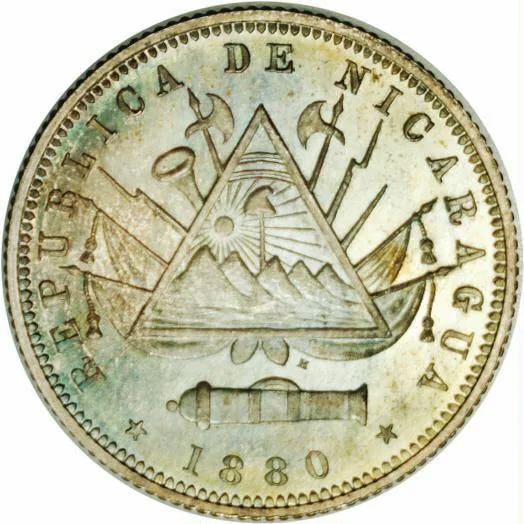
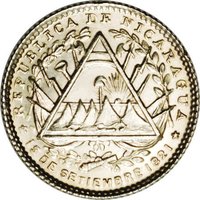
Obverse
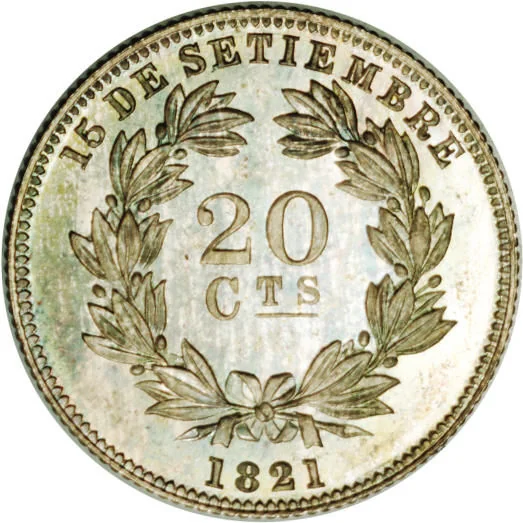
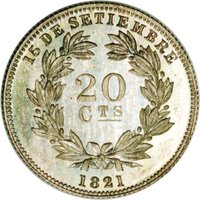
Reverse
Edge
Reeded
Categories
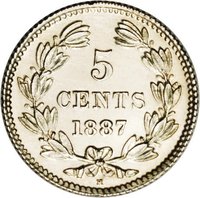
| Symbol> Wreath |
| Symbols> Coat of Arms |
Mints
| Name | Mark |
|---|---|
| Heaton and Sons / The Mint Birmingham | H |
Historical background
In 1880, Nicaragua’s currency system was characterized by significant disorder and fragmentation, a legacy of political instability and economic underdevelopment. The country lacked a unified national currency, leading to a chaotic circulation of diverse foreign and domestic coins. Spanish colonial reales, Peruvian pesos, Chilean condors, and coins from other Latin American nations all circulated alongside locally minted Nicaraguan coins, creating a complex and inefficient medium of exchange. This monetary anarchy complicated commerce, as merchants and citizens had to constantly assess the weight, purity, and fluctuating acceptance rates of various coins.
The primary unit of account was the peso, divided into 8 reales, but its value was unstable. Much of the coinage in circulation was physically worn or debased, leading to widespread discounting and distrust. Furthermore, the government's chronic fiscal deficits and limited minting capacity meant it could not control the money supply effectively. This period also saw the increasing influence of British economic interests, particularly through loans and the potential for a gold standard, which would later culminate in the establishment of the National Bank of Nicaragua in 1912 under American supervision.
Economically, Nicaragua was heavily reliant on agricultural exports, primarily coffee, which was becoming a major cash crop. The instability of the currency posed a direct obstacle to this growing export sector, as it introduced exchange rate risks and complicated international transactions. The monetary confusion of 1880 thus reflected the broader challenges of a nation struggling to integrate into the global economy while grappling with internal weakness. This situation would persist for decades, only finding resolution with more forceful external intervention and monetary reforms in the early 20th century.
The primary unit of account was the peso, divided into 8 reales, but its value was unstable. Much of the coinage in circulation was physically worn or debased, leading to widespread discounting and distrust. Furthermore, the government's chronic fiscal deficits and limited minting capacity meant it could not control the money supply effectively. This period also saw the increasing influence of British economic interests, particularly through loans and the potential for a gold standard, which would later culminate in the establishment of the National Bank of Nicaragua in 1912 under American supervision.
Economically, Nicaragua was heavily reliant on agricultural exports, primarily coffee, which was becoming a major cash crop. The instability of the currency posed a direct obstacle to this growing export sector, as it introduced exchange rate risks and complicated international transactions. The monetary confusion of 1880 thus reflected the broader challenges of a nation struggling to integrate into the global economy while grappling with internal weakness. This situation would persist for decades, only finding resolution with more forceful external intervention and monetary reforms in the early 20th century.
⭐ Rare