

Obverse
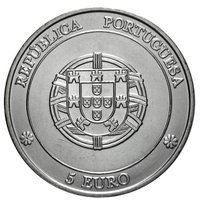
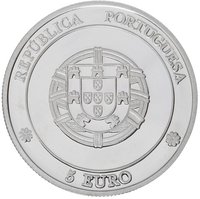
Description:
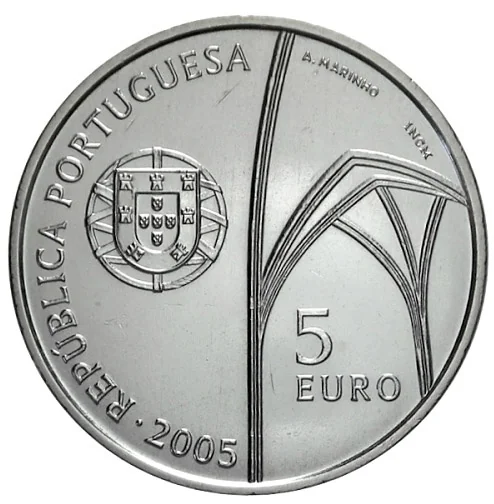
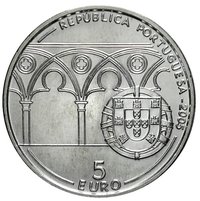
Batalha Monastery vault with the Portuguese coat of arms.
Inscription:
REPÚBLICA PORTUGUESA A.MARINHO INCM
5
EURO
·2005
5
EURO
·2005
Translation:
PORTUGUESE REPUBLIC A.MARINHO INCM
5
EURO
·2005
5
EURO
·2005
Script: Latin
Language: Portuguese
Engraver: A. Marinho
Reverse
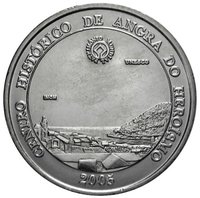
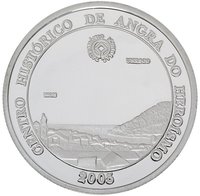
Description:
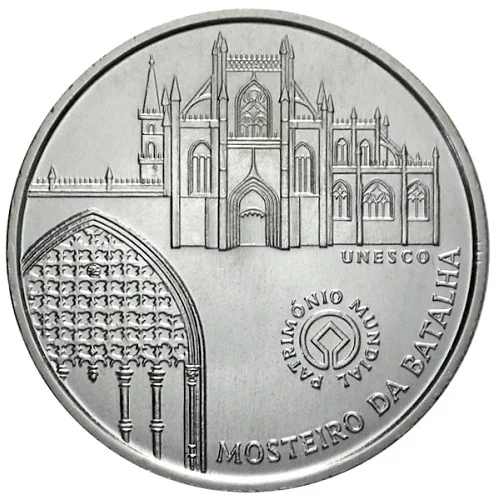
Monastery overview.
Inscription:
UNESCO
PATRIMÓNIO MUNDIAL
MOSTEIRO DA BATALHA
PATRIMÓNIO MUNDIAL
MOSTEIRO DA BATALHA
Translation:
UNESCO
World Heritage
Batalha Monastery
World Heritage
Batalha Monastery
Script: Latin
Language: Portuguese
Engraver: A. Marinho
Edge
Reeded
Categories
| Organization> UNESCO |
Mintings
| Year | Mint Mark | Mintage | Quality | Collection |
|---|---|---|---|---|
| 2005 | INCM | 116,337 |
Historical background
In 2005, Portugal's currency situation was defined by its full and established participation in the Eurozone. Having adopted the euro as its physical currency in 2002, the escudo was a thing of the past, and the country was operating under the monetary policy set by the European Central Bank (ECB). This meant Portugal had relinquished control over its national interest rates and currency valuation, which were now managed by the ECB to suit the broader Eurozone economy rather than Portugal's specific conditions.
This European framework existed against a troubling domestic economic backdrop. Portugal was grappling with the consequences of the early 2000s recession and was experiencing a period of profound economic stagnation, low growth, and rising public debt. A key concern was a pronounced loss of competitiveness, as unit labor costs had risen faster than in its major trading partners within the Eurozone. Without the ability to devalue a national currency to boost exports, Portugal found itself in a "straitjacket," forced to pursue difficult internal devaluation through structural reforms and wage restraint to regain competitiveness—a slow and politically painful process.
Therefore, the currency situation in 2005 was one of stability in exchange rates but underlying economic strain. The euro provided transactional ease and eliminated exchange rate risk within Europe, but it also removed a key traditional tool for adjusting economic imbalances. The Socialist government, elected in early 2005 under Prime Minister José Sócrates, therefore faced the significant challenge of addressing Portugal's low growth and high deficits strictly within the constraints of the single currency, setting the stage for a period of austerity measures and attempts at structural reform to comply with the EU's Stability and Growth Pact.
This European framework existed against a troubling domestic economic backdrop. Portugal was grappling with the consequences of the early 2000s recession and was experiencing a period of profound economic stagnation, low growth, and rising public debt. A key concern was a pronounced loss of competitiveness, as unit labor costs had risen faster than in its major trading partners within the Eurozone. Without the ability to devalue a national currency to boost exports, Portugal found itself in a "straitjacket," forced to pursue difficult internal devaluation through structural reforms and wage restraint to regain competitiveness—a slow and politically painful process.
Therefore, the currency situation in 2005 was one of stability in exchange rates but underlying economic strain. The euro provided transactional ease and eliminated exchange rate risk within Europe, but it also removed a key traditional tool for adjusting economic imbalances. The Socialist government, elected in early 2005 under Prime Minister José Sócrates, therefore faced the significant challenge of addressing Portugal's low growth and high deficits strictly within the constraints of the single currency, setting the stage for a period of austerity measures and attempts at structural reform to comply with the EU's Stability and Growth Pact.
Series: UNESCO World Heritage
🌱 Fairly Common