

50 piastres – Lebanon
Add to wishlist
Lebanon
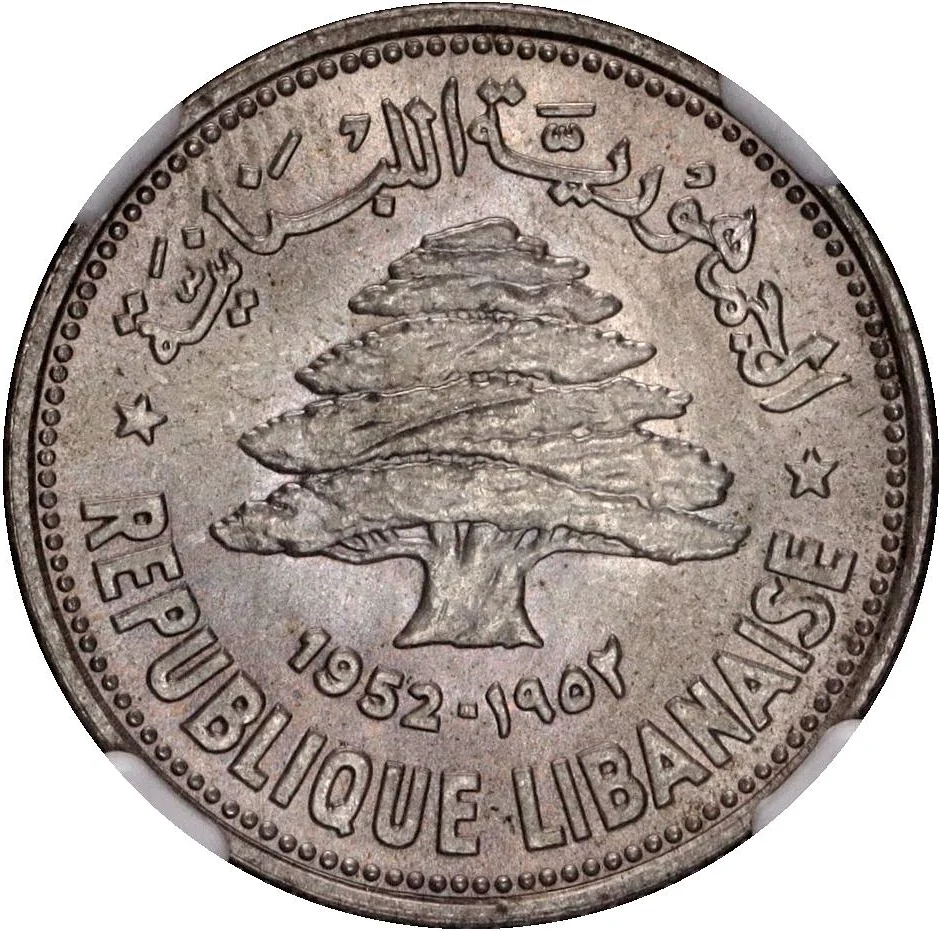
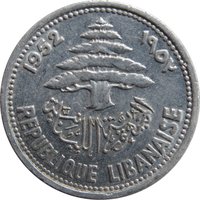
Obverse
Description:
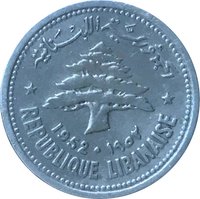
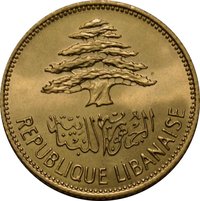
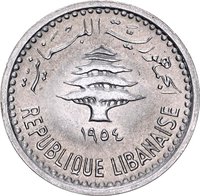
Cedar: symbol of Lebanon.
Inscription:
الجمهؤريَّة اللبنانيَّة
REPUBLIQUE LIBANAISE
1952·١٩٥٢
REPUBLIQUE LIBANAISE
1952·١٩٥٢
Translation:
Lebanese Republic
Lebanese Republic
1952 1952
Lebanese Republic
1952 1952
Designer: Paul Korolef
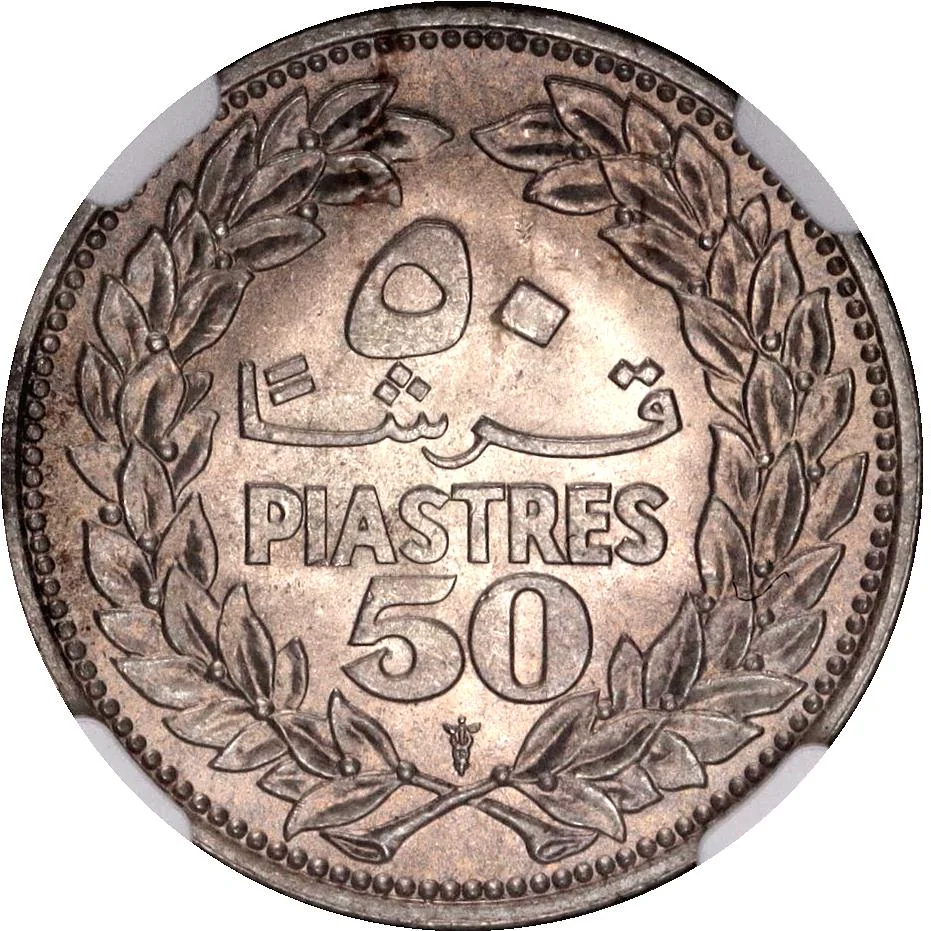
Reverse
Description:
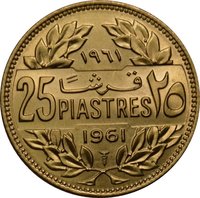
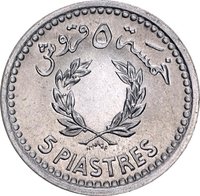
Two oak branches with acorns flanking the denominations.
Inscription:
٥٠
قرشاً
50
PIASTRES
قرشاً
50
PIASTRES
Translation:
Fifty
Piastres
Piastres
Language: Arabic
Designer: Paul Korolef
Edge
Milled
Mints
| Name | Mark |
|---|---|
| Royal Dutch Mint | — |
Mintings
| Year | Mint Mark | Mintage | Quality | Collection |
|---|---|---|---|---|
| 1952 | — | 7,200,000 |
Historical background
In 1952, Lebanon faced a severe currency and economic crisis rooted in the fiscal imbalances of the post-independence era. Following World War II, the Lebanese pound (lira) was pegged to the French franc, a link maintained even after Lebanon gained independence in 1943. However, a significant budget deficit, fueled by excessive government spending and a reliance on inflationary financing from the Banque du Liban (then a private institution), led to a rapid depletion of foreign currency reserves. By early 1952, confidence in the currency had collapsed, triggering a run on banks and a sharp devaluation of the pound on the black market, which severely eroded purchasing power and sparked widespread social unrest.
The political dimension of the crisis was paramount. President Bechara El Khoury’s administration was widely accused of corruption and financial mismanagement, with the currency instability seen as a direct result. Public protests, led by a coalition of opposition figures including Camille Chamoun and Pierre Gemayel, culminated in a general strike in September 1952 that paralyzed the country. Facing untenable pressure, President El Khoury was forced to resign on September 18, 1952, handing power to the military before the election of Camille Chamoun as his successor.
The resolution of the immediate currency crisis came with the election of President Chamoun and the swift enactment of key reforms. In 1953, his government passed the New Banking Control Law and, most crucially, the 1954 Law of Money and Credit. This legislation established a modern, independent central bank, the Banque du Liban, in 1956, which was tasked with maintaining currency stability and halting inflationary financing. These institutional reforms, coupled with a new fixed peg of the Lebanese pound to the US dollar, restored monetary confidence and laid the foundation for the era of financial prosperity and banking dominance that characterized Lebanon in the subsequent decades.
The political dimension of the crisis was paramount. President Bechara El Khoury’s administration was widely accused of corruption and financial mismanagement, with the currency instability seen as a direct result. Public protests, led by a coalition of opposition figures including Camille Chamoun and Pierre Gemayel, culminated in a general strike in September 1952 that paralyzed the country. Facing untenable pressure, President El Khoury was forced to resign on September 18, 1952, handing power to the military before the election of Camille Chamoun as his successor.
The resolution of the immediate currency crisis came with the election of President Chamoun and the swift enactment of key reforms. In 1953, his government passed the New Banking Control Law and, most crucially, the 1954 Law of Money and Credit. This legislation established a modern, independent central bank, the Banque du Liban, in 1956, which was tasked with maintaining currency stability and halting inflationary financing. These institutional reforms, coupled with a new fixed peg of the Lebanese pound to the US dollar, restored monetary confidence and laid the foundation for the era of financial prosperity and banking dominance that characterized Lebanon in the subsequent decades.
Series: 1952 Lebanon circulation coins
🌱 Very Common