

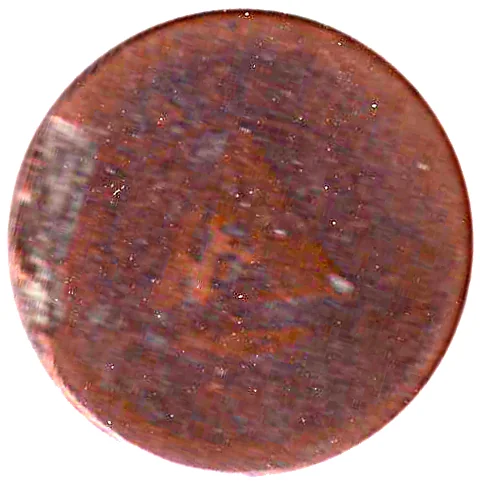
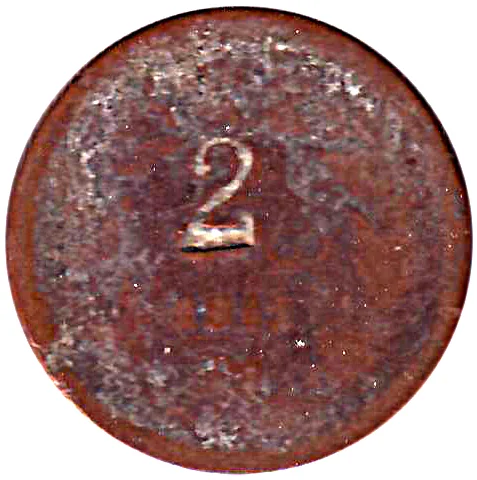
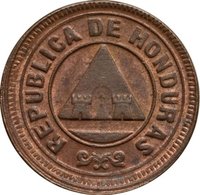
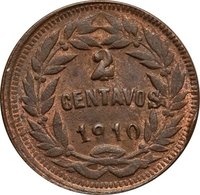
2 centavos – Honduras
Add to wishlist
Honduras
Categories
| Symbols> Coat of Arms |
Mintings
| Year | Mint Mark | Mintage | Quality | Collection |
|---|---|---|---|---|
| 1912 | — | — |
Historical background
In 1912, Honduras operated under a fragmented and unstable monetary system, a legacy of its colonial past and 19th-century economic turmoil. The official currency was the silver Honduran Peso, but its circulation was limited and its value inconsistent. The economy was dominated by the U.S. Gold Dollar, which was the preferred currency for international trade, particularly for the powerful American banana companies like United Fruit Company that controlled key export sectors. This created a de facto dollarized economy for major transactions, while various forms of silver coinage and even devalued paper notes from previous governments circulated locally, leading to confusion and a lack of a unified national currency standard.
This monetary disarray was a direct symptom of Honduras's profound political and fiscal weakness. The country was heavily indebted to British banks and, increasingly, to American lenders, having defaulted on its foreign debt multiple times throughout the late 19th century. The government's chronic lack of specie (hard currency) and its inability to control the money supply undermined both domestic commerce and its international credit. Furthermore, the political instability of the era, marked by frequent coups and internal conflicts, prevented any sustained monetary reform, leaving the financial system vulnerable to manipulation by foreign commercial interests.
The situation culminated in 1912 with a pivotal financial intervention. To stabilize the Honduran state and secure American economic interests, the U.S. government facilitated a refinancing loan through New York bankers. A key condition of this loan was the establishment of fiscal controls, including the creation of the Banco de la República in 1913. While full monetary reform would take more time, the 1912 agreement set the stage for the eventual introduction of the Honduran Lempira in 1931, finally providing a stable, national currency managed by a central bank. Thus, 1912 represents a turning point where external pressure began to impose order on Honduras's chaotic currency landscape.
This monetary disarray was a direct symptom of Honduras's profound political and fiscal weakness. The country was heavily indebted to British banks and, increasingly, to American lenders, having defaulted on its foreign debt multiple times throughout the late 19th century. The government's chronic lack of specie (hard currency) and its inability to control the money supply undermined both domestic commerce and its international credit. Furthermore, the political instability of the era, marked by frequent coups and internal conflicts, prevented any sustained monetary reform, leaving the financial system vulnerable to manipulation by foreign commercial interests.
The situation culminated in 1912 with a pivotal financial intervention. To stabilize the Honduran state and secure American economic interests, the U.S. government facilitated a refinancing loan through New York bankers. A key condition of this loan was the establishment of fiscal controls, including the creation of the Banco de la República in 1913. While full monetary reform would take more time, the 1912 agreement set the stage for the eventual introduction of the Honduran Lempira in 1931, finally providing a stable, national currency managed by a central bank. Thus, 1912 represents a turning point where external pressure began to impose order on Honduras's chaotic currency landscape.
✨ Legendary