

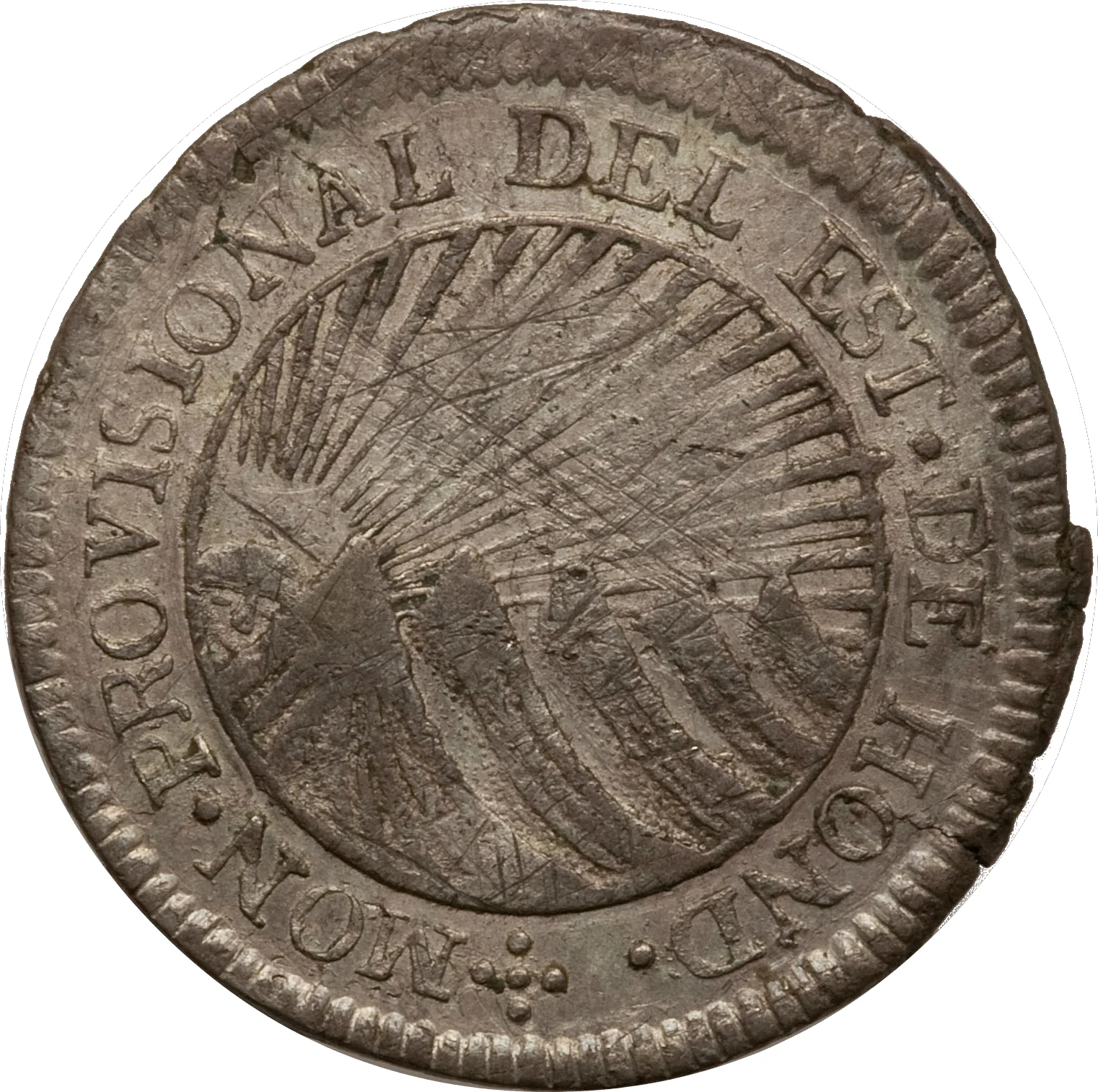
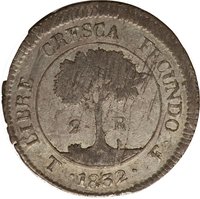
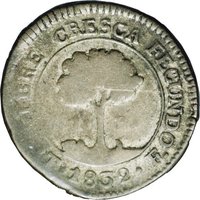
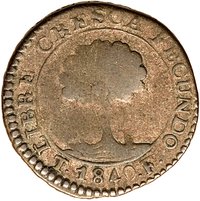
Obverse
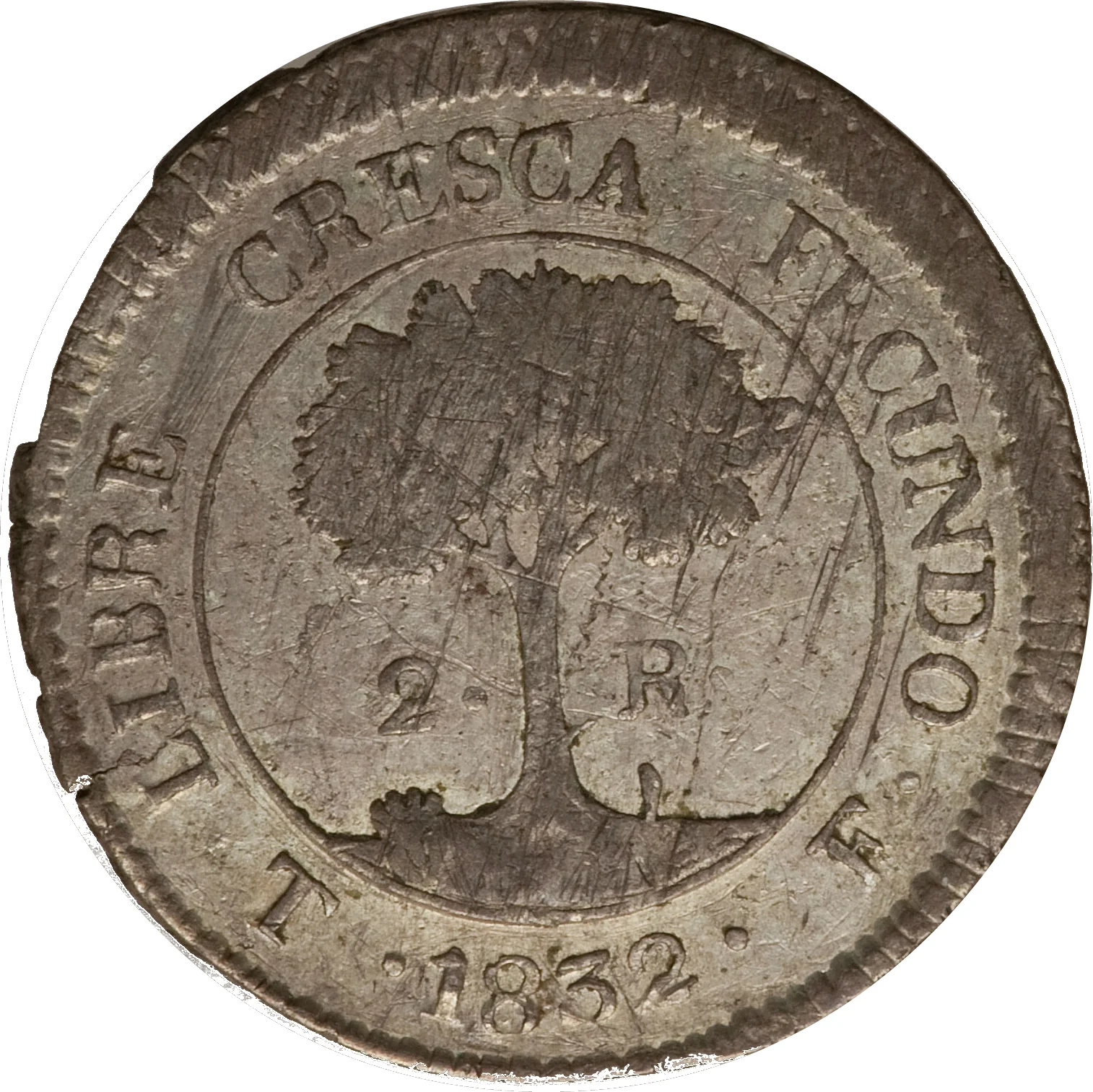
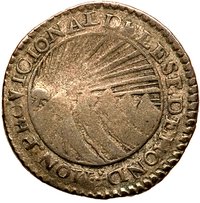
Reverse
Edge
Mints
| Name | Mark |
|---|---|
| Casa Nacional de la Moneda | T |
Historical background
In 1832, Honduras was not an independent nation issuing its own sovereign currency but a state within the Federal Republic of Central America. This federation, formed after independence from Spain in 1821, struggled with profound internal divisions and a lack of centralized fiscal authority. Consequently, the currency situation was chaotic and fragmented. While the federal government in Guatemala City had authorized the minting of national coins, production was limited and irregular. The most common circulating coins were often old Spanish colonial pieces, such as silver reales and gold escudos, alongside a smattering of coins from other nations like Mexico and Peru, all valued by their weight and metallic content.
The Honduran state government, facing chronic revenue shortages and the costs of regional administration, had little capacity to regulate this monetary mosaic. Barter remained a significant method of exchange, especially in rural areas. To address the acute shortage of circulating medium, the state government, under the leadership of Governor José María Martínez Salinas, resorted to issuing paper money. These treasury notes, known as vales, were intended to pay public employees and soldiers, and were meant to be redeemable later for hard currency. However, public confidence in this paper was low due to the government's unstable finances and the federation's worsening political crisis.
Thus, the currency landscape of 1832 was defined by uncertainty and instability. It reflected the broader failure of the Central American federation to create a unified economic system. The coexistence of foreign and colonial coinage, scarce federal issues, and shaky local paper money created a complex and inefficient environment for trade, hindering economic development and exacerbating the political tensions that would ultimately lead to the federation's dissolution and Honduras' emergence as a fully independent republic in 1839.
The Honduran state government, facing chronic revenue shortages and the costs of regional administration, had little capacity to regulate this monetary mosaic. Barter remained a significant method of exchange, especially in rural areas. To address the acute shortage of circulating medium, the state government, under the leadership of Governor José María Martínez Salinas, resorted to issuing paper money. These treasury notes, known as vales, were intended to pay public employees and soldiers, and were meant to be redeemable later for hard currency. However, public confidence in this paper was low due to the government's unstable finances and the federation's worsening political crisis.
Thus, the currency landscape of 1832 was defined by uncertainty and instability. It reflected the broader failure of the Central American federation to create a unified economic system. The coexistence of foreign and colonial coinage, scarce federal issues, and shaky local paper money created a complex and inefficient environment for trade, hindering economic development and exacerbating the political tensions that would ultimately lead to the federation's dissolution and Honduras' emergence as a fully independent republic in 1839.
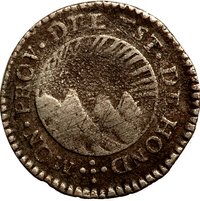
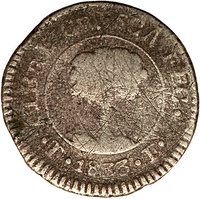
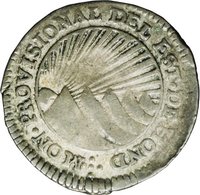
💎 Extremely Rare