

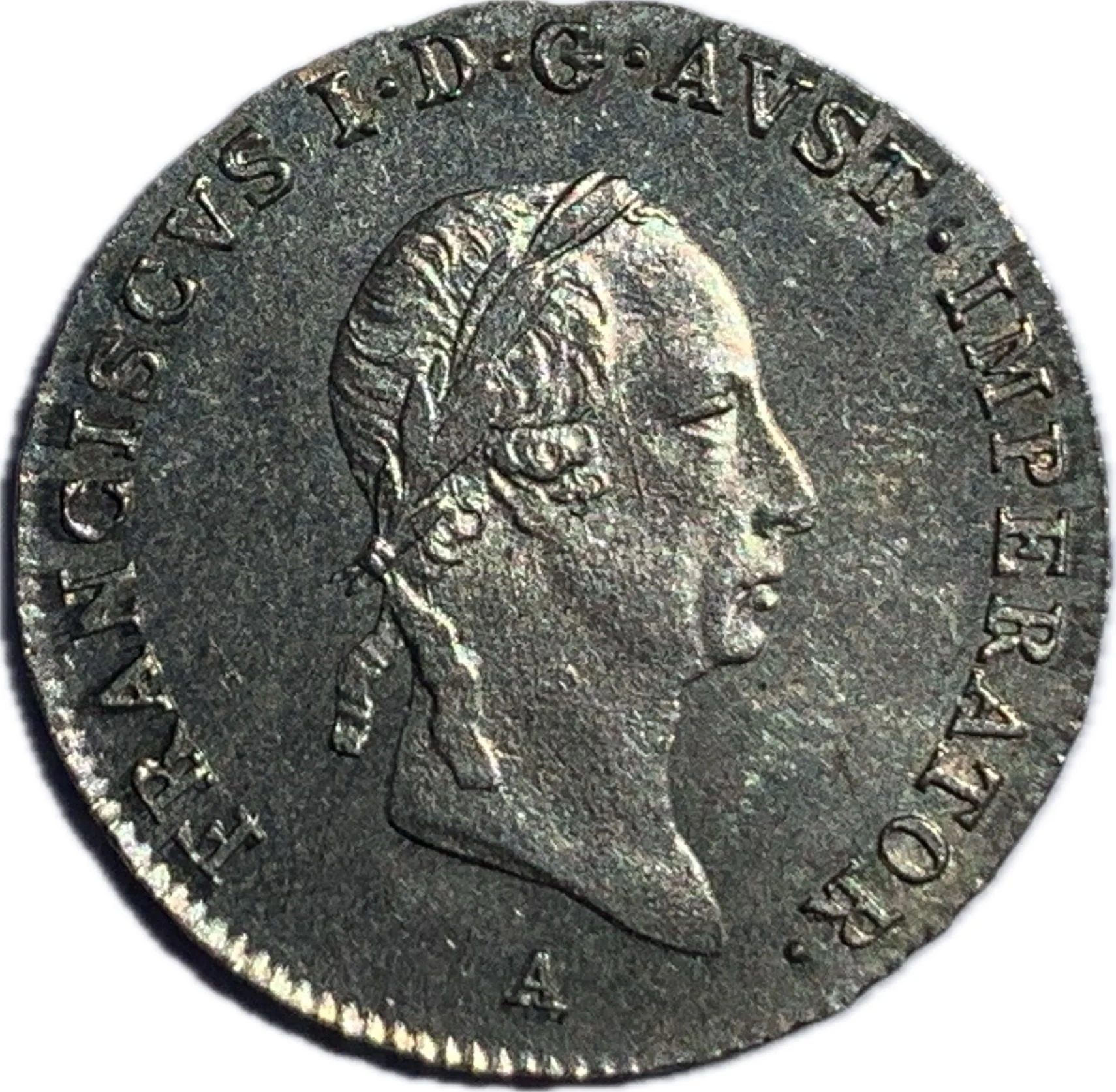
3 Kreuzer – Austrian Empire
Austria
Context
Years: 1825–1831
Country: Austria 
Issuer: Austrian Empire
Ruler: Francis I of Austria
Currency:
(1754—1857)
Demonetized: Yes
Total mintage: 1,718,000
Material
References
KM: #Click to copy to clipboard2119
Numista: #25242
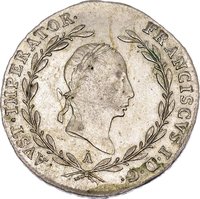
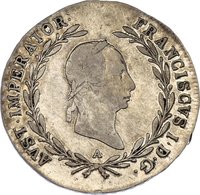
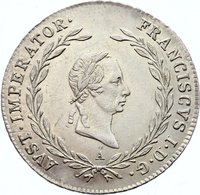
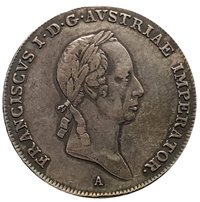
Obverse
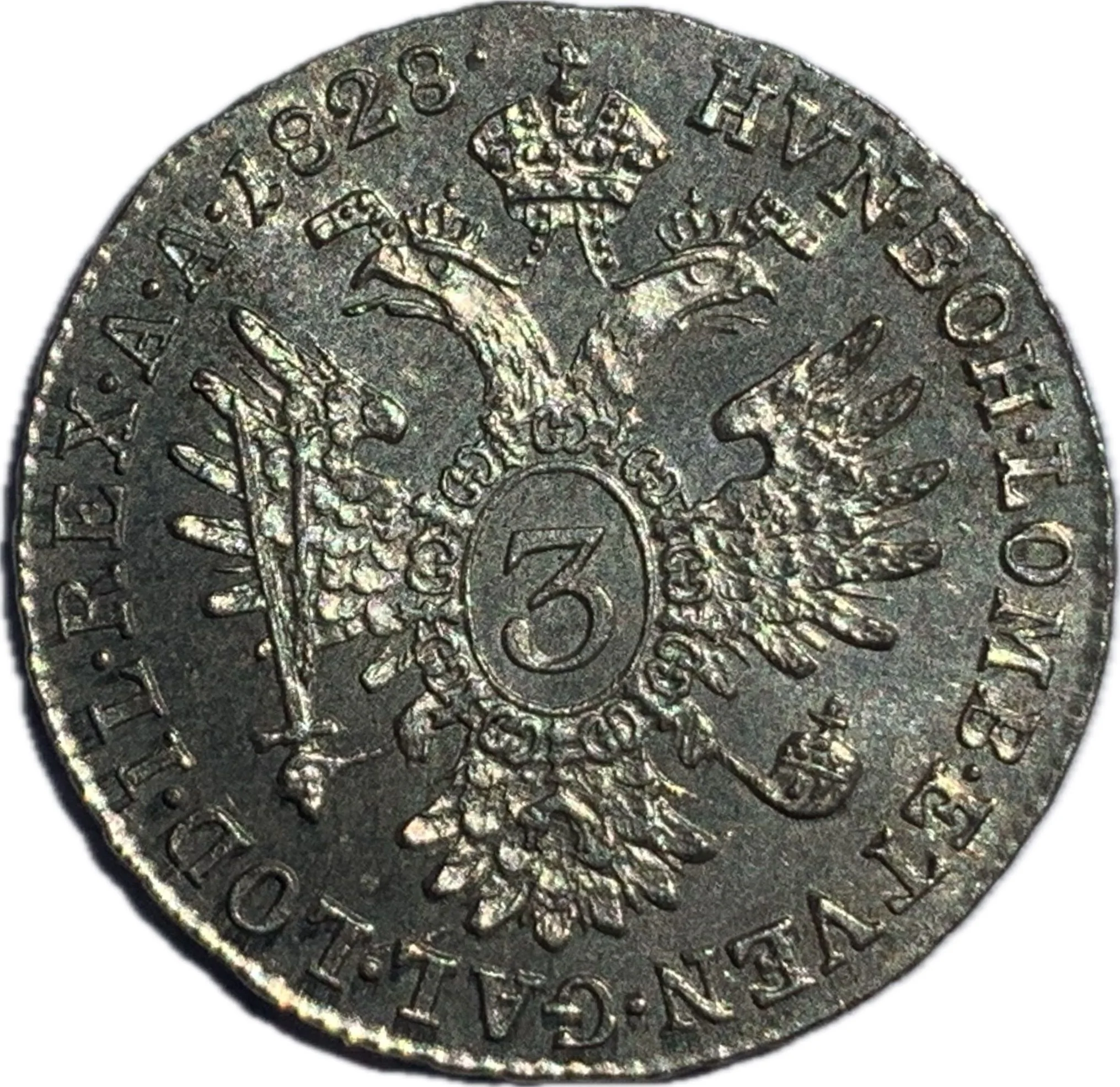
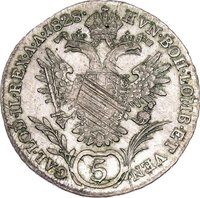
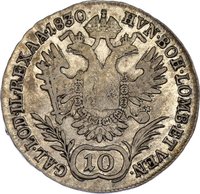
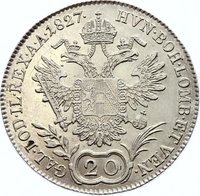
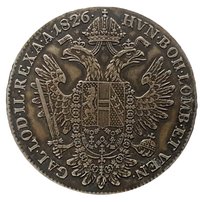
Reverse
Description:
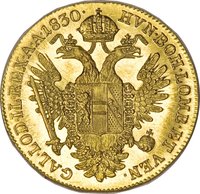
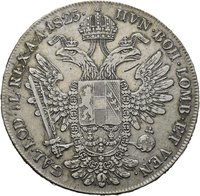
Double-headed imperial eagle, value on breast. Legend around (starting at 1 o'clock), date within legend.
Inscription:
HVN•BOH•LOMB•ET VEN•GAL•LOD•IL•REX•A•A•1829•
3
3
Script: Latin
Edge
Mints
| Name | Mark |
|---|---|
| Münze Österreich | A |
| Kremnica | B |
| Alba Iulia | E |
| Baia Mare | G |
Mintings
Historical background
In 1825, the Austrian Empire's currency situation was characterized by the aftermath of the costly Napoleonic Wars and the state bankruptcy of 1811. To finance its military campaigns, the Habsburg monarchy had resorted to printing vast quantities of paper money (Bancozettel), leading to severe hyperinflation and a collapse in public trust. The 1811 Finanzpatent declared a state bankruptcy, mandating a drastic conversion of old paper notes into new ones at a rate of 5:1, wiping out a large portion of public and private debt but causing widespread economic hardship and loss of confidence in the monetary system.
By the mid-1820s, the empire was operating under a complex and unstable dual-currency system. The official unit of account was the Conventionsthaler (or Convention Coin Standard), a silver-based currency used for large transactions and international trade. However, the everyday circulating medium remained the depreciated paper Vienna Currency (Wiener Währung), which fluctuated against the silver standard. This created constant confusion in commerce, as prices, wages, and contracts had to be negotiated with reference to two different monetary units, with the paper currency consistently trading at a significant discount to silver.
The situation in 1825 was one of fragile stability, but with underlying weakness. The government, under Prince Metternich and Finance Minister Count Stadion, was committed to eventual monetary reform and a return to a metallic standard to restore long-term credibility. However, the immense costs of maintaining the empire's vast bureaucracy and conservative political order, coupled with the fear of triggering another financial crisis, meant that decisive action was postponed. Consequently, the currency system remained a patchwork of obligations and unstable values, acting as a persistent drag on economic modernization and integration within the empire throughout the Biedermeier period.
By the mid-1820s, the empire was operating under a complex and unstable dual-currency system. The official unit of account was the Conventionsthaler (or Convention Coin Standard), a silver-based currency used for large transactions and international trade. However, the everyday circulating medium remained the depreciated paper Vienna Currency (Wiener Währung), which fluctuated against the silver standard. This created constant confusion in commerce, as prices, wages, and contracts had to be negotiated with reference to two different monetary units, with the paper currency consistently trading at a significant discount to silver.
The situation in 1825 was one of fragile stability, but with underlying weakness. The government, under Prince Metternich and Finance Minister Count Stadion, was committed to eventual monetary reform and a return to a metallic standard to restore long-term credibility. However, the immense costs of maintaining the empire's vast bureaucracy and conservative political order, coupled with the fear of triggering another financial crisis, meant that decisive action was postponed. Consequently, the currency system remained a patchwork of obligations and unstable values, acting as a persistent drag on economic modernization and integration within the empire throughout the Biedermeier period.
🌟 Uncommon