

10 centavos – Chile
Add to wishlist
Chile
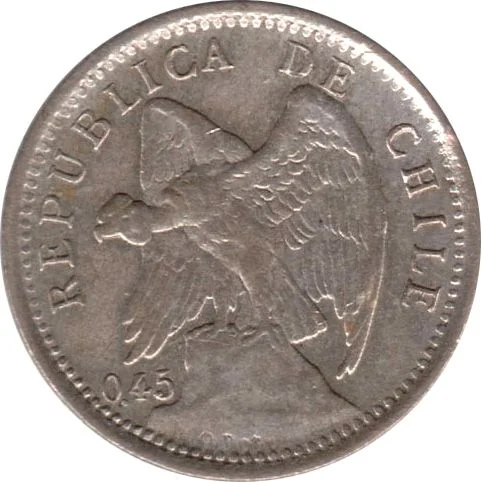
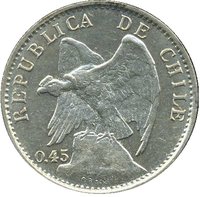
Obverse
Description:
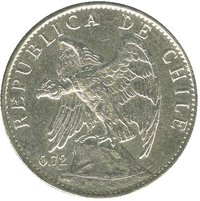
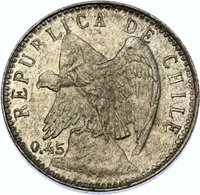
Defiant condor perched left.
Inscription:
REPUBLICA DE CHILE
0,45
O. Roty.
0,45
O. Roty.
Translation:
REPUBLIC OF CHILE
0.45
O. Roty.
0.45
O. Roty.
Script: Latin
Engraver: Louis-Oscar Roty
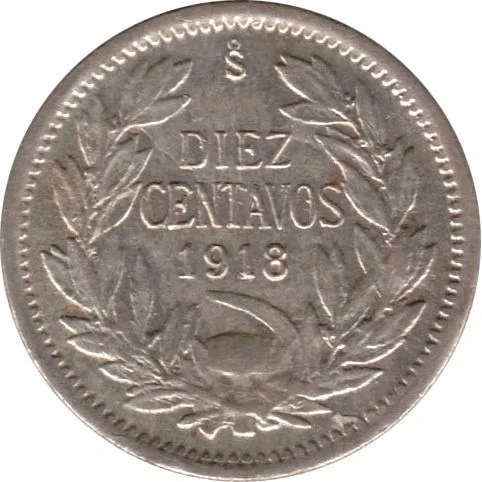
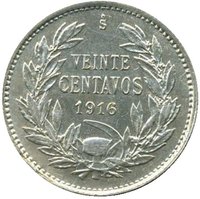
Reverse
Edge
Reeded
Mints
| Name | Mark |
|---|---|
| Casa de Moneda de Chile | (So) |
Mintings
| Year | Mint Mark | Mintage | Quality | Collection |
|---|---|---|---|---|
| 1915 | So | 1,619,995 | ||
| 1916 | So | 2,854,898 | ||
| 1917 | So | 735,726 | ||
| 1918 | So | — |
Historical background
In 1915, Chile's currency situation was characterized by the dominance of the gold-standard peso, known as the peso oro, which had been established in 1895. This system provided a period of notable monetary stability and was a key factor in Chile's integration into the global economy, facilitating foreign investment and trade, particularly in the critical nitrate and copper sectors. The currency was managed by private banks of issue, with the state's role limited by the 1895 law, and the country's fiscal health was heavily dependent on export revenues from the nitrate mines of the northern Atacama Desert.
However, this stability was vulnerable to external shocks. The outbreak of the First World War in 1914 profoundly disrupted Chile's economy. European markets were thrown into chaos, and maritime trade routes became hazardous, leading to a sharp decline in nitrate exports. This caused a significant reduction in state revenue and a drain on gold reserves as the trade balance turned negative. Consequently, the convertibility of paper money into gold was suspended in 1914, effectively taking Chile off the strict gold standard for the duration of the conflict, though the peso oro remained the official unit of account.
By 1915, the nation was navigating a new reality of inconvertible paper currency. The government, under President Ramón Barros Luco, authorized increased issuance of paper money (billetes fiscales) to cover budget shortfalls and maintain economic activity, leading to the beginnings of inflationary pressure. This period marked a pivotal shift from the pre-war era of metallic stability to one of managed fiduciary currency, setting the stage for the fiscal and monetary challenges that would continue in the postwar years as Chile grappled with the decline of the nitrate era.
However, this stability was vulnerable to external shocks. The outbreak of the First World War in 1914 profoundly disrupted Chile's economy. European markets were thrown into chaos, and maritime trade routes became hazardous, leading to a sharp decline in nitrate exports. This caused a significant reduction in state revenue and a drain on gold reserves as the trade balance turned negative. Consequently, the convertibility of paper money into gold was suspended in 1914, effectively taking Chile off the strict gold standard for the duration of the conflict, though the peso oro remained the official unit of account.
By 1915, the nation was navigating a new reality of inconvertible paper currency. The government, under President Ramón Barros Luco, authorized increased issuance of paper money (billetes fiscales) to cover budget shortfalls and maintain economic activity, leading to the beginnings of inflationary pressure. This period marked a pivotal shift from the pre-war era of metallic stability to one of managed fiduciary currency, setting the stage for the fiscal and monetary challenges that would continue in the postwar years as Chile grappled with the decline of the nitrate era.
🌱 Fairly Common