

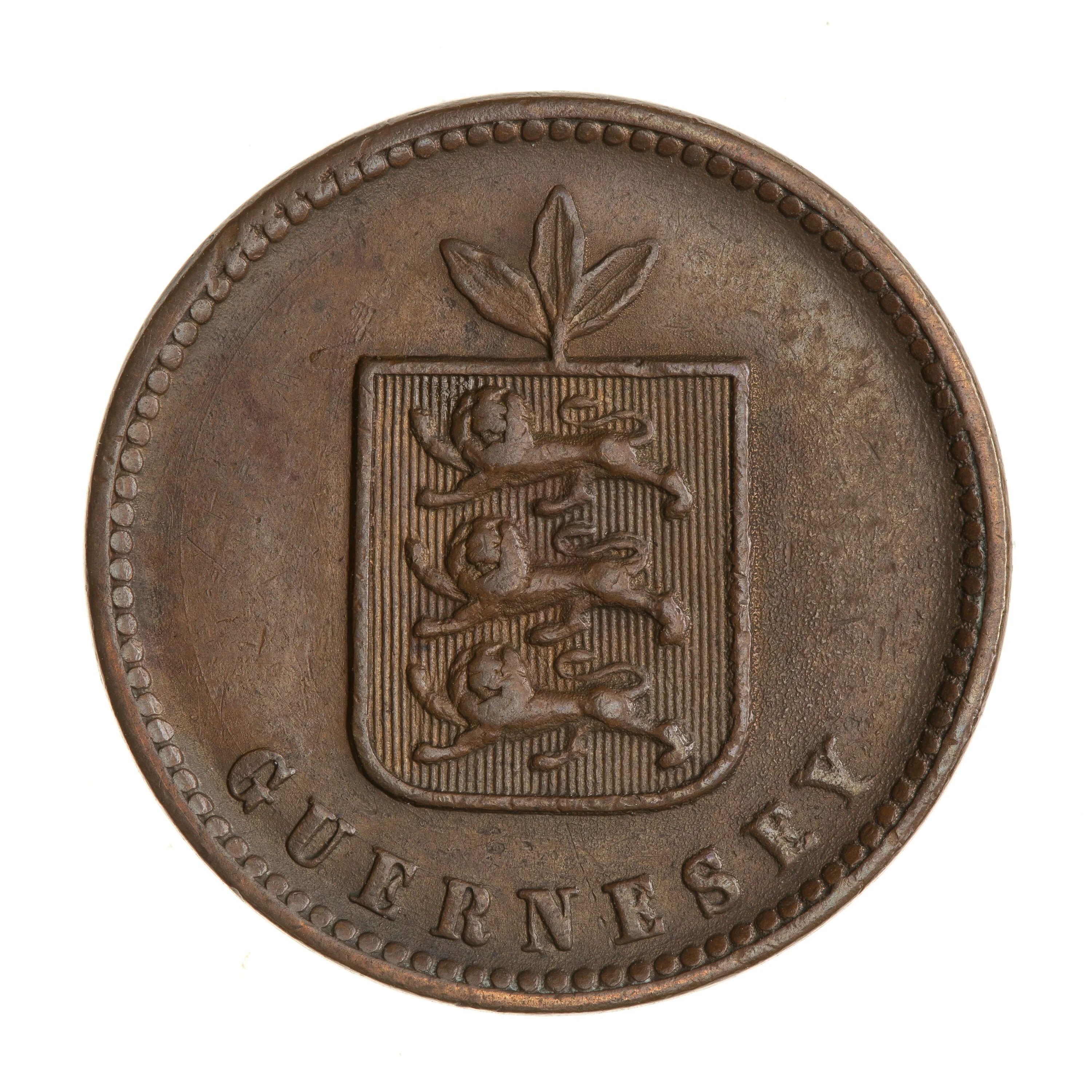
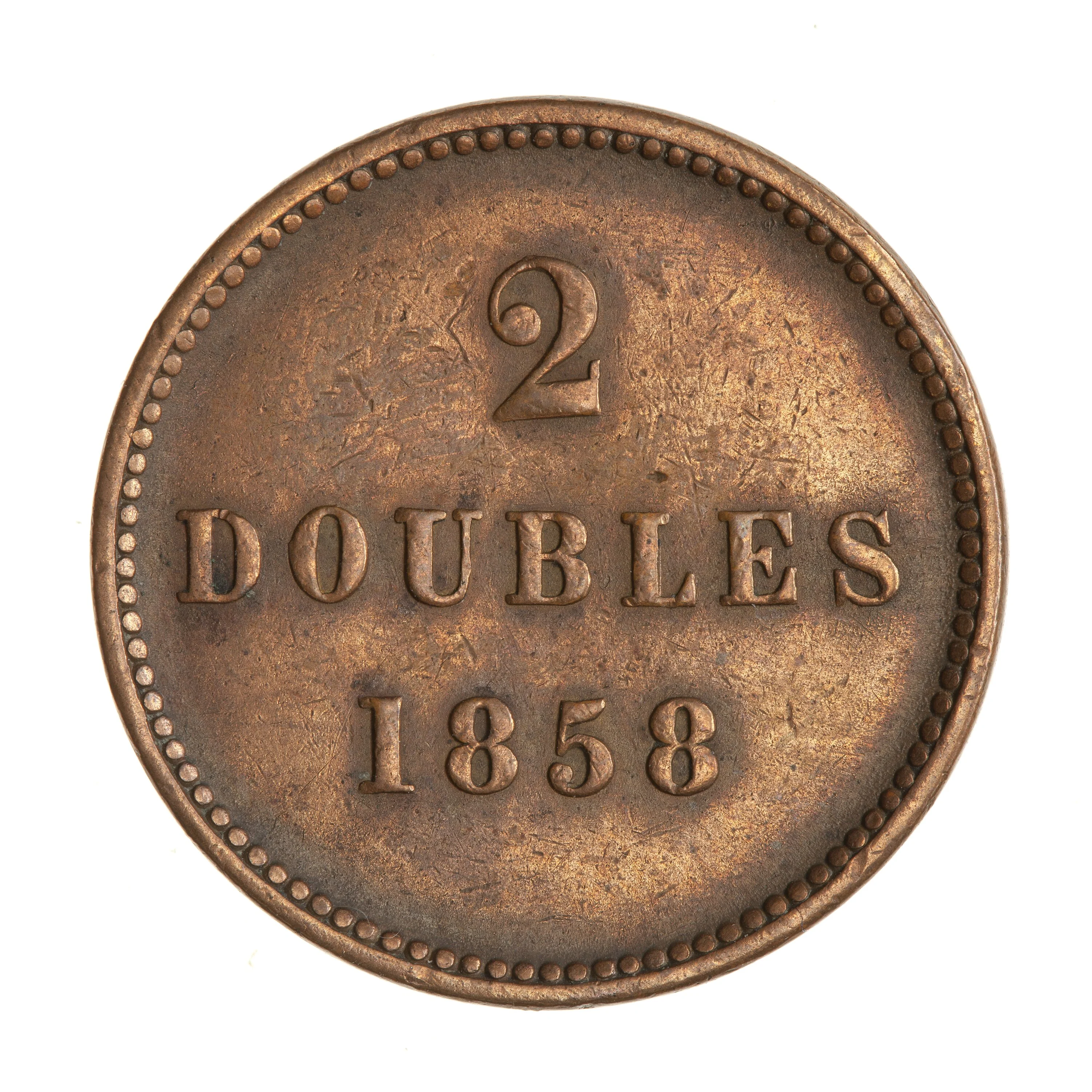
2 doubles – Guernsey
Add to wishlist
Context
Year: 1858
Country: British Crown dependencies
Issuer: Guernsey
Ruler: Victoria
Currency:
(1808—1971)
Demonetized: Yes
Total mintage: 56,000
Material
References
KM: #
Numista: #24927
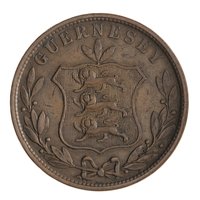
Obverse
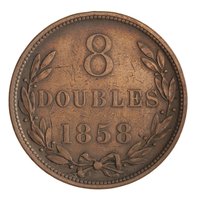
Reverse
Edge
Plain
Categories
| Symbols> Coat of Arms |
Mintings
| Year | Mint Mark | Mintage | Quality | Collection |
|---|---|---|---|---|
| 1858 | — | 56,000 |
Historical background
In 1858, Guernsey's currency situation was a complex and locally managed affair, distinct from the mainland United Kingdom. While the British pound sterling was the official standard, the island's economy was awash with a diverse mix of physical currency. Alongside British gold sovereigns and silver coinage, French francs and louis d'or circulated freely due to the island's strong trade links with Normandy and Brittany. This created a dual-currency environment where everyday transactions often required mental calculations between two monetary systems.
This practical bimetallism was underpinned by a critical shortage of official British small change, particularly copper and silver coins. To fill this void, various private tokens and even defaced Spanish dollars (pieces of eight) were used for smaller transactions. The States of Guernsey had previously issued its own copper tokens in the 1830s to alleviate this problem, but by 1858, the system remained makeshift. The island's banking system was also in its infancy, with notes issued by local private banks adding another layer to the monetary mosaic.
Consequently, 1858 fell within a period of transition and local adaptation. The British government's official coinage was recognised but physically scarce, leading to a de facto acceptance of foreign coin as legal tender within the island. This pragmatic solution facilitated commerce but was not without its challenges, including exchange rate fluctuations and confusion. This situation would eventually lead to more formalised solutions, including the States issuing their own sterling-denominated coinage from 1830 onwards and later paper currency, but in 1858, the pockets of Guernsey residents remained a jumble of international currencies.
This practical bimetallism was underpinned by a critical shortage of official British small change, particularly copper and silver coins. To fill this void, various private tokens and even defaced Spanish dollars (pieces of eight) were used for smaller transactions. The States of Guernsey had previously issued its own copper tokens in the 1830s to alleviate this problem, but by 1858, the system remained makeshift. The island's banking system was also in its infancy, with notes issued by local private banks adding another layer to the monetary mosaic.
Consequently, 1858 fell within a period of transition and local adaptation. The British government's official coinage was recognised but physically scarce, leading to a de facto acceptance of foreign coin as legal tender within the island. This pragmatic solution facilitated commerce but was not without its challenges, including exchange rate fluctuations and confusion. This situation would eventually lead to more formalised solutions, including the States issuing their own sterling-denominated coinage from 1830 onwards and later paper currency, but in 1858, the pockets of Guernsey residents remained a jumble of international currencies.
🌟 Limited