

10 gulden – Netherlands
Add to wishlist
Netherlands
Context
Years: 1818–1840
Issuer: Netherlands
Ruler: William I
Currency:
(1817—2001)
Demonetized: Yes
Total mintage: 15,762,534
Material
References
KM: #
Numista: #24447
Value
Exchange value: 10 NLG
Bullion value: $934.31
Obverse
Description:
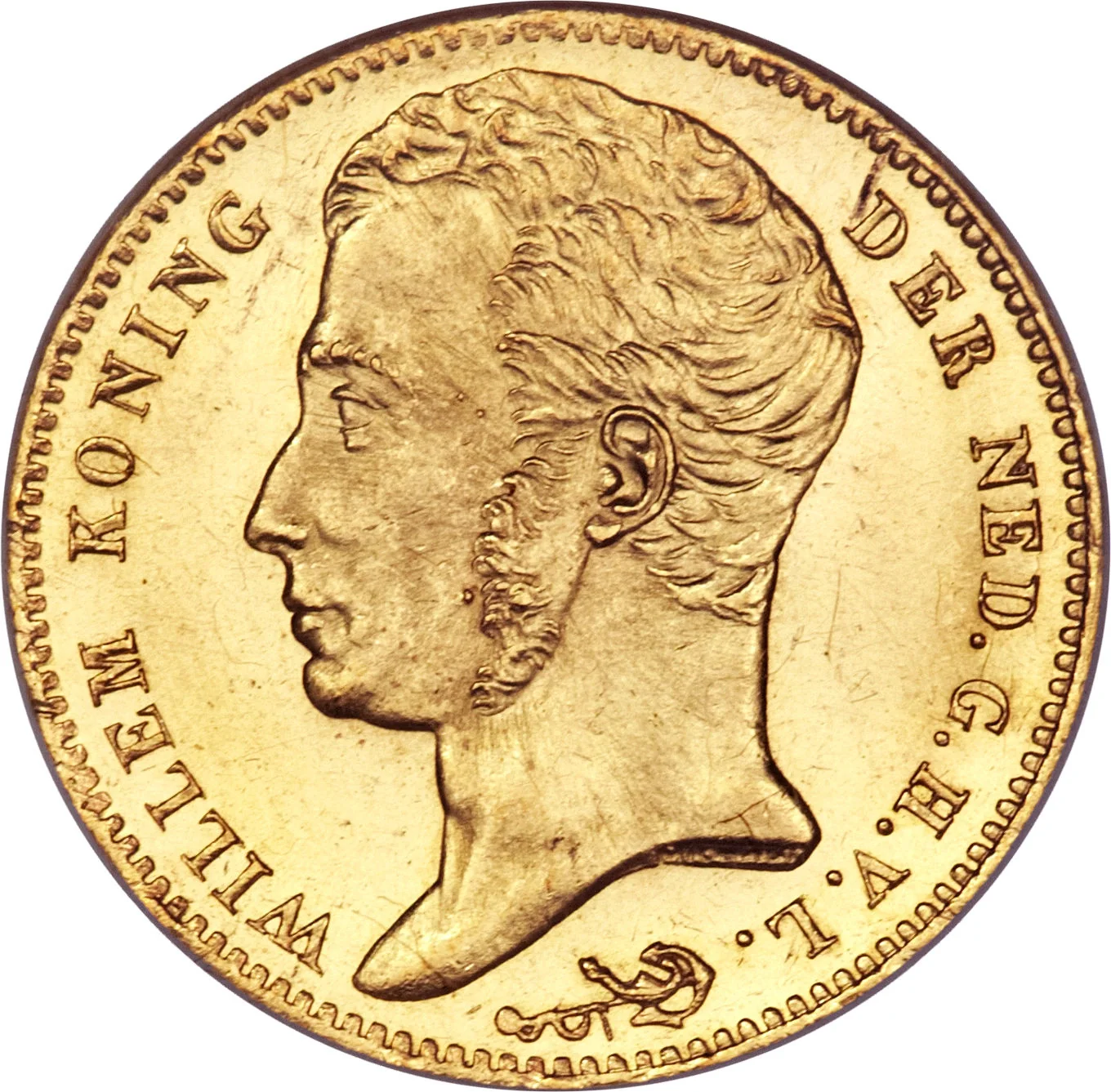
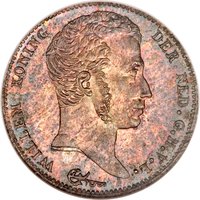
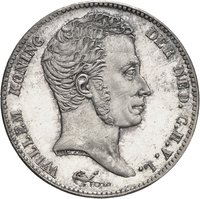
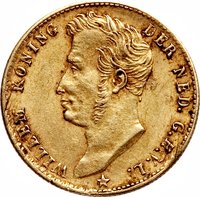
Willem I left, engraver named on truncation.
Inscription:
WILLEM KONING DER NED. G. H. V. L.
Translation:
WILLIAM KING OF THE NED. G. H. V. L.
Script: Latin
Language: Dutch
Engraver: Auguste-François Michaut
Reverse
Description:
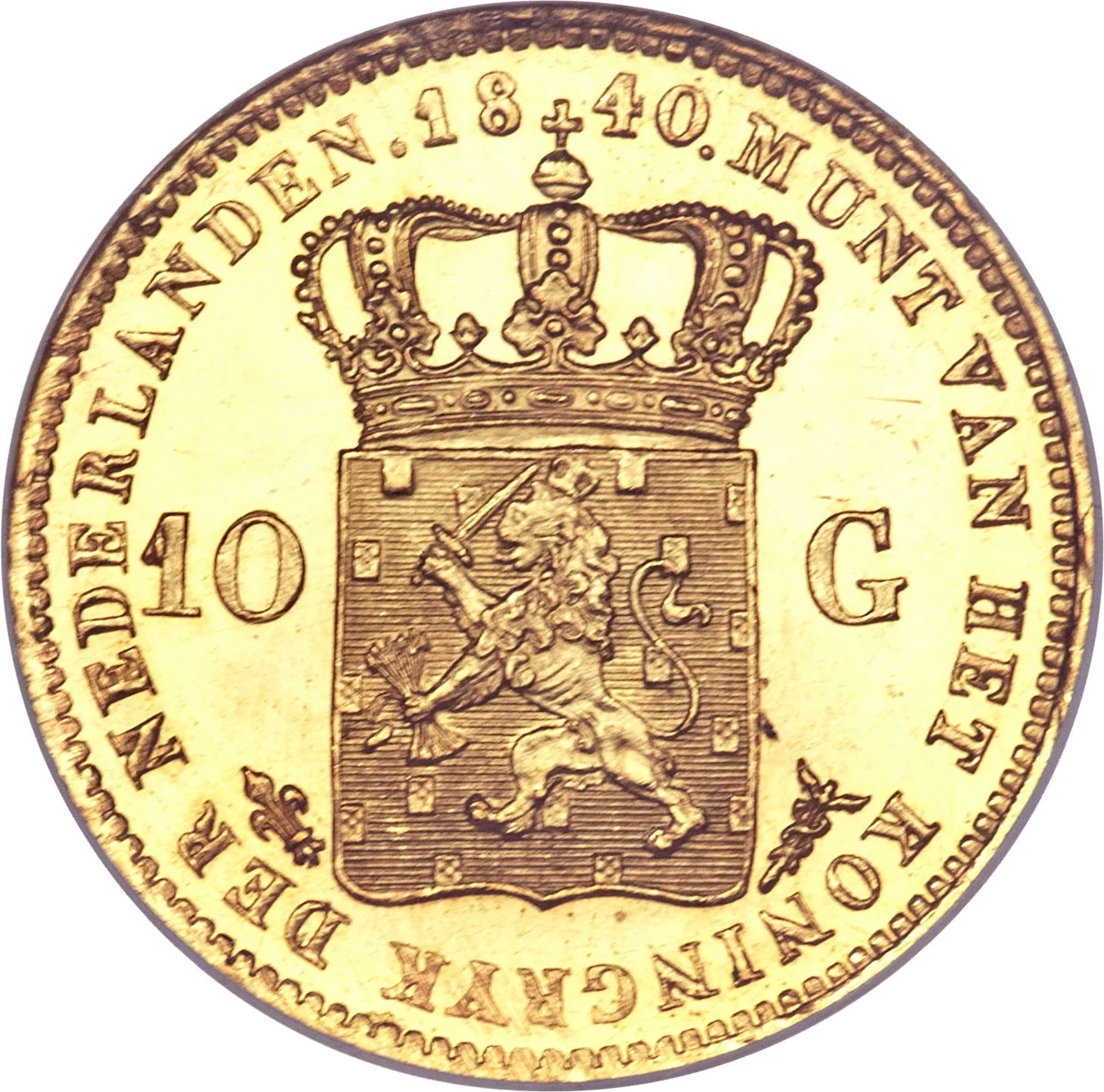
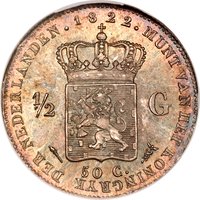
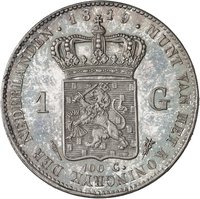
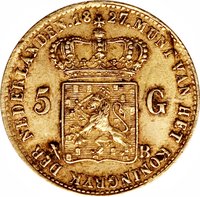
Dutch coat of arms divides value. Privy mark left, mint mark right.
Inscription:
MUNT VAN HET KONINGRYK DER NEDERLANDEN
1840
10 G
1840
10 G
Translation:
Coin of the Kingdom of the Netherlands
1840
10 Cents
1840
10 Cents
Script: Latin
Language: Dutch
Engraver: Auguste-François Michaut
Edge
Categories
| Symbol> Crown |
| Symbols> Coat of Arms |
Mints
| Name | Mark |
|---|---|
| Royal Dutch Mint | — |
| Royal Mint of Belgium | B |
Mintings
| Year | Mint Mark | Mintage | Quality | Collection |
|---|---|---|---|---|
| 1818 | — | — | ||
| 1819 | — | 107,413 | ||
| 1820 | — | 33,187 | ||
| 1822 | — | 47,560 | ||
| 1823 | — | 266,248 | ||
| 1824 | B | 3,735,006 | ||
| 1824 | — | 336,333 | ||
| 1825 | — | 228,365 | ||
| 1825 | B | 3,821,017 | ||
| 1826 | — | — | ||
| 1826 | B | 78,552 | ||
| 1827 | B | 133,736 | ||
| 1828 | — | 14,640 | ||
| 1828 | B | 561,849 | ||
| 1829 | B | 83,943 | ||
| 1829 | — | 9,484 | ||
| 1830 | — | 568,434 | ||
| 1831 | — | 98,959 | ||
| 1832 | — | 1,372,000 | ||
| 1833 | — | 721,362 | ||
| 1837 | — | 457,686 | ||
| 1839 | — | 326,404 | ||
| 1840 | — | 2,760,356 |
Historical background
Following the Napoleonic Wars and the establishment of the United Kingdom of the Netherlands in 1815, the nation faced a complex and fragmented monetary system. The country was a patchwork of old provincial coins, French francs from the occupation period, and various foreign currencies circulating from trade. This lack of uniformity hindered commerce, state finance, and economic recovery, creating an urgent need for a stable, national currency to unify the new kingdom under King William I.
In response, the Dutch government enacted the Monetary Law of 1816 (effective 1818), which established the Dutch guilder (gulden) as the sole national unit of currency. The system was deliberately bimetallic, based on both silver and gold. The guilder was formally defined as containing 9.613 grams of fine silver, while a ten-guilder piece was minted in gold. This move was a return to pre-Napoleonic Dutch monetary tradition, deliberately distancing the new state from the French franc system and asserting economic independence.
However, the 1818 reform contained a critical flaw: the official mint ratio between gold and silver was set slightly differently from the prevailing market ratios in neighboring countries, particularly Britain. This discrepancy inadvertently encouraged the export of silver coinage, as it was undervalued at the Dutch mint. Consequently, despite the law's intent, the Netherlands soon experienced a shortage of small silver currency in daily circulation, a problem that would persist and necessitate further adjustments in the decades to follow.
In response, the Dutch government enacted the Monetary Law of 1816 (effective 1818), which established the Dutch guilder (gulden) as the sole national unit of currency. The system was deliberately bimetallic, based on both silver and gold. The guilder was formally defined as containing 9.613 grams of fine silver, while a ten-guilder piece was minted in gold. This move was a return to pre-Napoleonic Dutch monetary tradition, deliberately distancing the new state from the French franc system and asserting economic independence.
However, the 1818 reform contained a critical flaw: the official mint ratio between gold and silver was set slightly differently from the prevailing market ratios in neighboring countries, particularly Britain. This discrepancy inadvertently encouraged the export of silver coinage, as it was undervalued at the Dutch mint. Consequently, despite the law's intent, the Netherlands soon experienced a shortage of small silver currency in daily circulation, a problem that would persist and necessitate further adjustments in the decades to follow.
💎 Very Rare