

5 gulden – Netherlands
Add to wishlist
Netherlands
Context
Years: 1826–1827
Issuer: Netherlands
Ruler: William I
Currency:
(1817—2001)
Demonetized: Yes
Total mintage: 2,989,740
Material
References
KM: #
Numista: #38123
Value
Exchange value: 5 NLG
Bullion value: $464.57
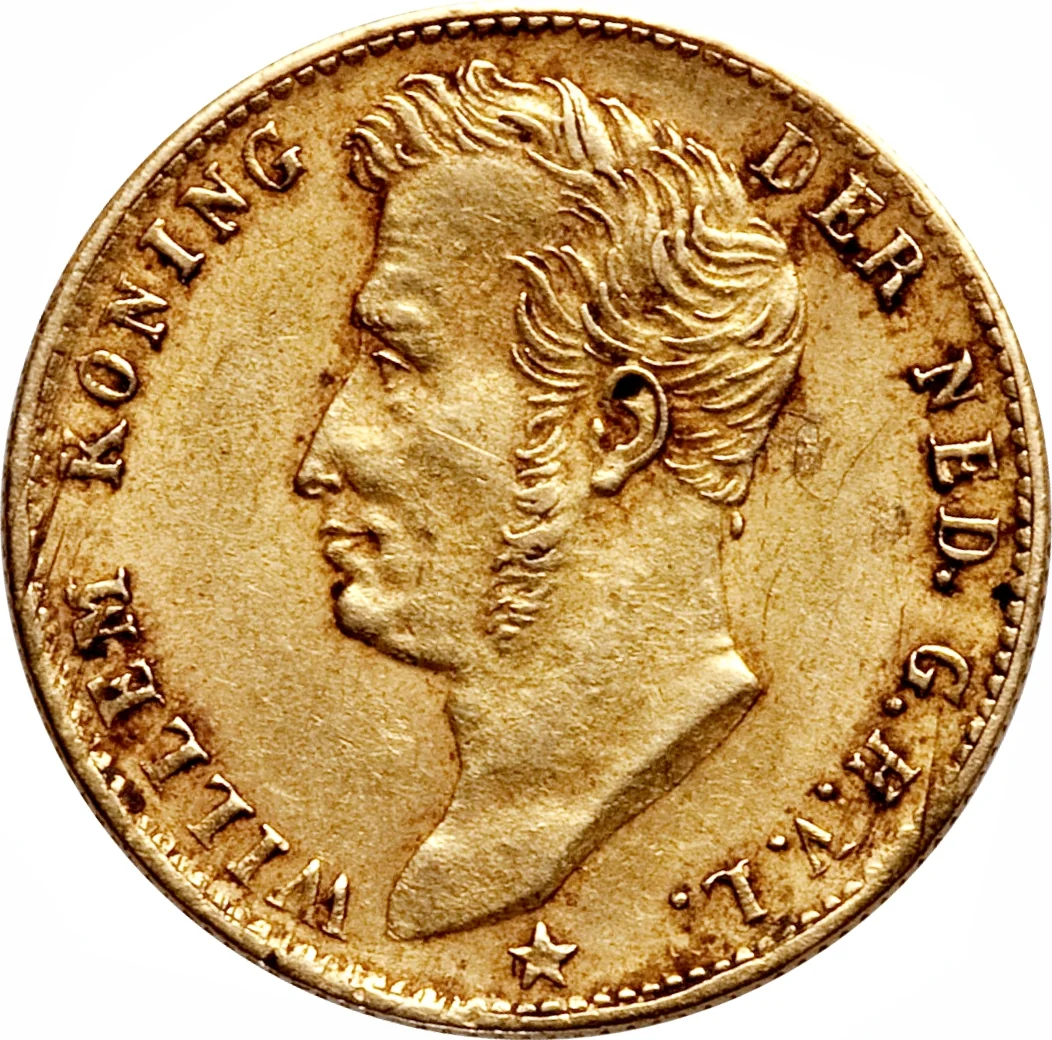
Obverse
Description:
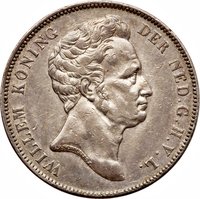
King Willem, left-facing bust.
Inscription:
WILLEM KONING DER NED. G. H. V. L. ★
Translation:
WILLIAM KING OF THE NED. G. H. V. L. ★
Script: Latin
Language: Dutch
Engraver: Joseph-Pierre Braemt
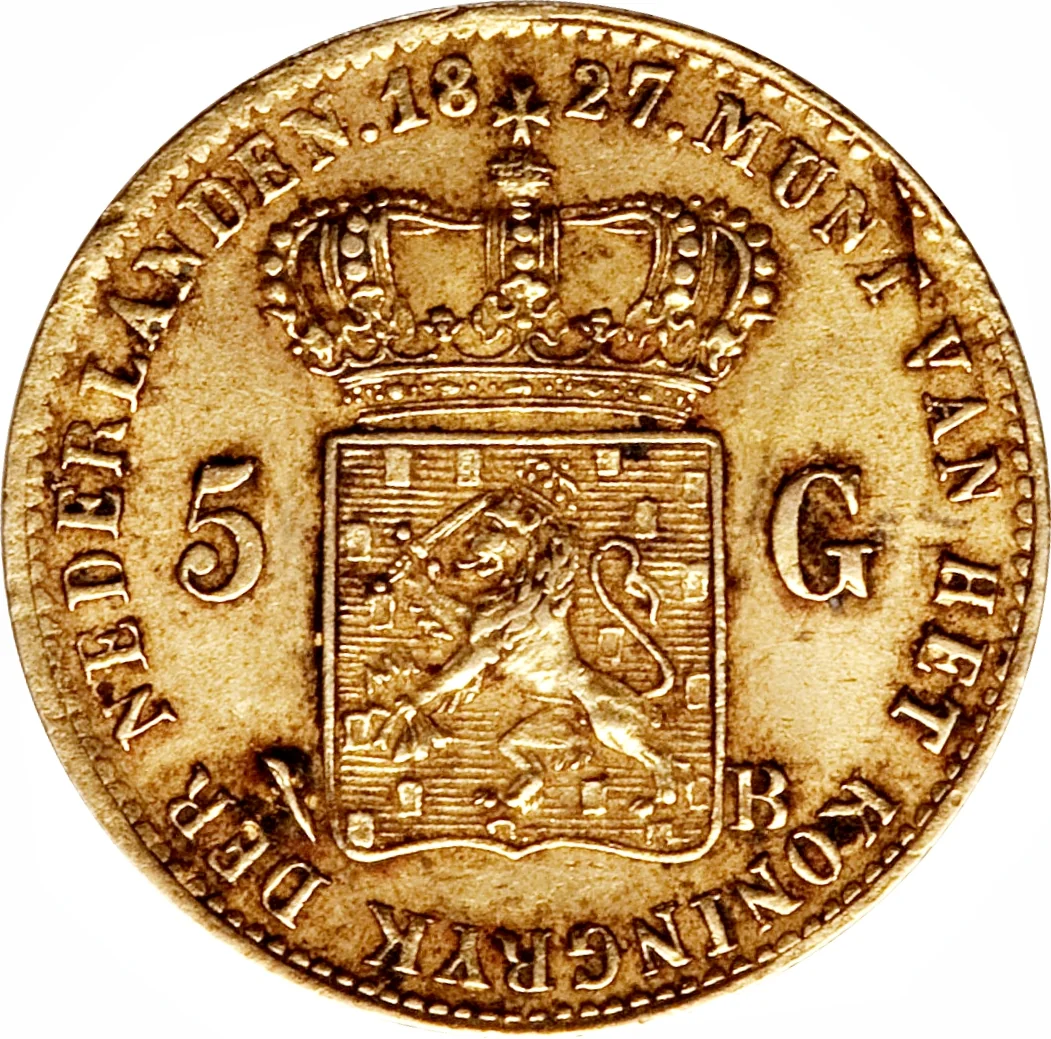
Reverse
Edge
Reeded
Categories
| Symbol> Crown |
| Symbols> Coat of Arms |
Mints
| Name | Mark |
|---|---|
| Royal Dutch Mint | — |
| Royal Mint of Belgium | B |
Historical background
In 1826, the Kingdom of the Netherlands, which then included modern-day Belgium, operated under a complex and transitional monetary system. Following the Napoleonic Wars and the creation of the United Kingdom of the Netherlands in 1815, King William I sought to establish a stable, unified currency. The result was the introduction of the Dutch guilder (gulden) as the official unit of account in 1816, based on a silver standard. However, the practical circulation in 1826 was far from uniform, with a mix of older regional coins, foreign currencies, and the new national coinage all in concurrent use.
The official standard, defined by the Money Decree of 1816, pegged the guilder to silver, with one guilder containing 9.613 grams of fine silver. Alongside this, a gold currency was also minted, with the ten-guilder coin, but the system remained fundamentally bimetallic in practice, leading to the recurring challenges of valuing and maintaining both metals in circulation. In everyday commerce, people in 1826 still encountered a plethora of older coins from the Dutch Republic, French francs from the occupation period, and even Spanish and German coins, which complicated trade and required constant reference to official exchange lists.
This period was one of consolidation and gradual enforcement of the new national currency. The year 1826 fell within a broader effort by the state to assert monetary sovereignty and streamline the economy. However, full standardization was still a work in progress, and the monetary landscape remained somewhat fragmented until the Belgian Revolution of 1830, which would soon precipitate a new crisis and ultimately lead to the separation of the Belgian and Dutch monetary systems.
The official standard, defined by the Money Decree of 1816, pegged the guilder to silver, with one guilder containing 9.613 grams of fine silver. Alongside this, a gold currency was also minted, with the ten-guilder coin, but the system remained fundamentally bimetallic in practice, leading to the recurring challenges of valuing and maintaining both metals in circulation. In everyday commerce, people in 1826 still encountered a plethora of older coins from the Dutch Republic, French francs from the occupation period, and even Spanish and German coins, which complicated trade and required constant reference to official exchange lists.
This period was one of consolidation and gradual enforcement of the new national currency. The year 1826 fell within a broader effort by the state to assert monetary sovereignty and streamline the economy. However, full standardization was still a work in progress, and the monetary landscape remained somewhat fragmented until the Belgian Revolution of 1830, which would soon precipitate a new crisis and ultimately lead to the separation of the Belgian and Dutch monetary systems.
💎 Extremely Rare