

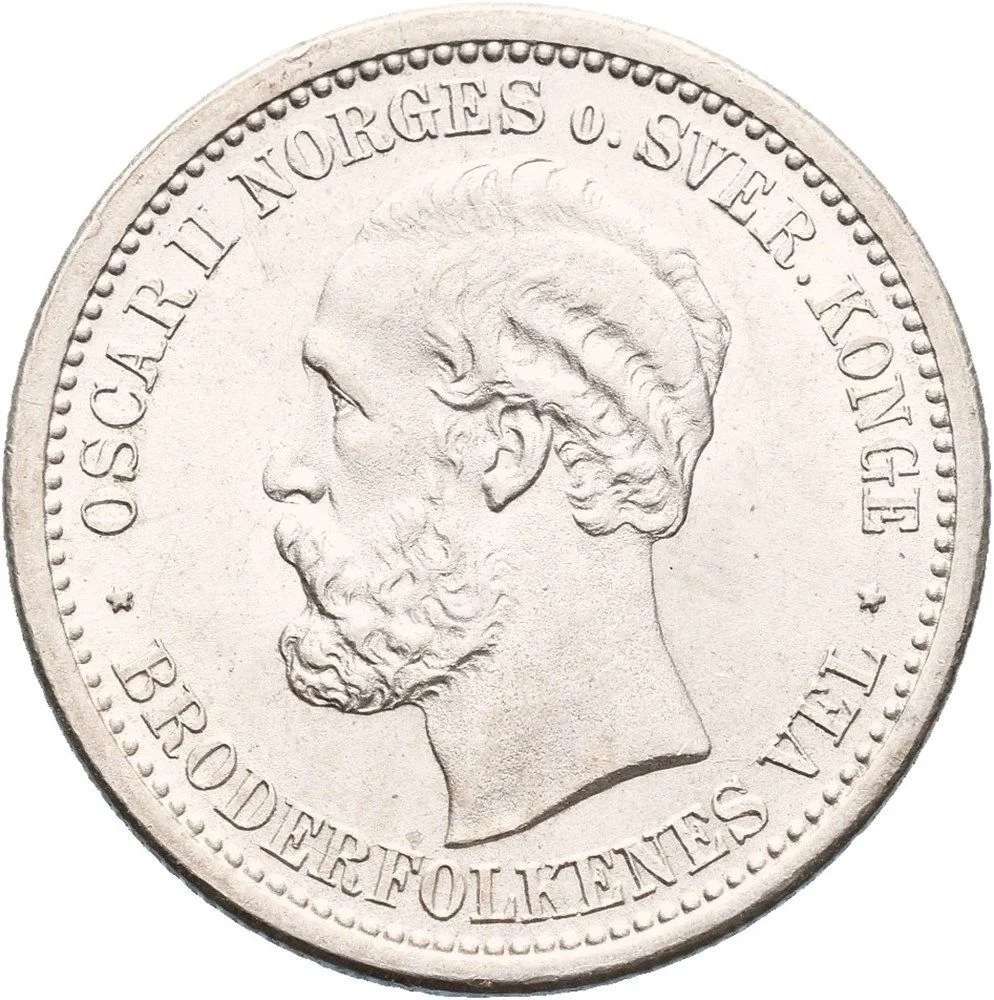
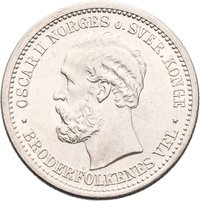
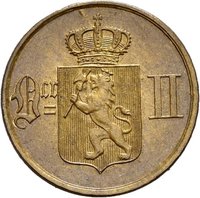
Obverse
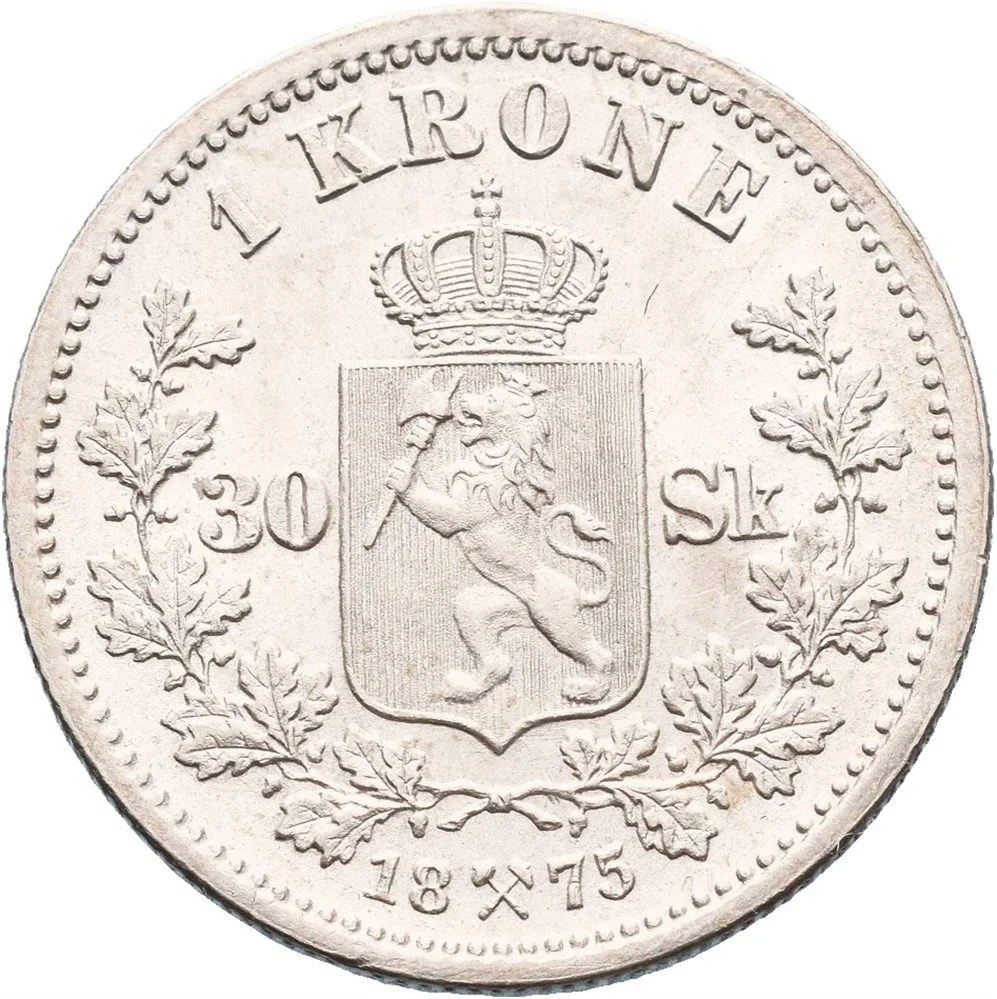
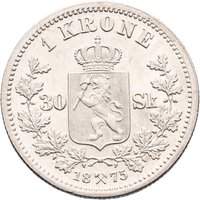
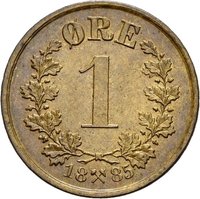
Reverse
Description:
Shield with crowned lion holding a halberd on vertical lines. Old value inside shield, new value above. Wreath surrounds shield. Date and mintmark below. Beaded rim.
Inscription:
1 KRONE
30 | Sk
18 ⚒ 75
30 | Sk
18 ⚒ 75
Script: Latin
Edge
Reeded
Mints
| Name | Mark |
|---|---|
| Norwegian Mint | — |
Mintings
| Year | Mint Mark | Mintage | Quality | Collection |
|---|---|---|---|---|
| 1875 | — | 600,000 |
Historical background
Norway’s currency situation in 1875 was defined by a pivotal and strategic shift: the adoption of the gold standard and the introduction of the Norwegian krone (NOK) as the nation’s new monetary unit. This reform, enacted by the Storting (parliament) in 1873 and implemented on 4 June 1875, moved Norway away from the older speciedaler system, which was based on a silver standard. The change was not made in isolation but was part of a coordinated Scandinavian Monetary Union, formed with Denmark and Sweden, which agreed to establish mutually interchangeable currencies backed by gold. This union aimed to facilitate trade and economic stability across the region by creating a uniform currency system.
The driving forces behind this transition were both practical and economic. The period saw significant fluctuations in the value of silver relative to gold on the international market, creating instability for nations on a silver standard. By joining the emerging global trend toward gold, Norway sought to attract foreign investment, stabilize its exchange rates, and better integrate its economy with major trading partners like Britain and Germany. The new krone was subdivided into 100 øre, replacing the complex system of speciedaler and skilling, and was defined as containing 0.403226 grams of pure gold.
While the Scandinavian Monetary Union functioned smoothly for decades, its core principle of interchangeable coins was effectively suspended after World War I, and the union was formally dissolved in the 1920s. Nevertheless, the 1875 reform successfully established the modern Norwegian krone, firmly placing the country on the gold standard and providing a stable monetary foundation for its subsequent industrial development. The krone, though no longer gold-backed, remains Norway’s currency to this day, marking the lasting legacy of this 19th-century financial realignment.
The driving forces behind this transition were both practical and economic. The period saw significant fluctuations in the value of silver relative to gold on the international market, creating instability for nations on a silver standard. By joining the emerging global trend toward gold, Norway sought to attract foreign investment, stabilize its exchange rates, and better integrate its economy with major trading partners like Britain and Germany. The new krone was subdivided into 100 øre, replacing the complex system of speciedaler and skilling, and was defined as containing 0.403226 grams of pure gold.
While the Scandinavian Monetary Union functioned smoothly for decades, its core principle of interchangeable coins was effectively suspended after World War I, and the union was formally dissolved in the 1920s. Nevertheless, the 1875 reform successfully established the modern Norwegian krone, firmly placing the country on the gold standard and providing a stable monetary foundation for its subsequent industrial development. The krone, though no longer gold-backed, remains Norway’s currency to this day, marking the lasting legacy of this 19th-century financial realignment.
💎 Very Rare