

20 francs – Monaco
Add to wishlist
Monaco
Context
Years: 1878–1879
Issuer: Monaco
Ruler: Charles III
Currency:
(1837—1960)
Demonetized: Yes
Total mintage: 100,000
Material
References
KM: #
Numista: #24359
Value
Bullion value: $891.35
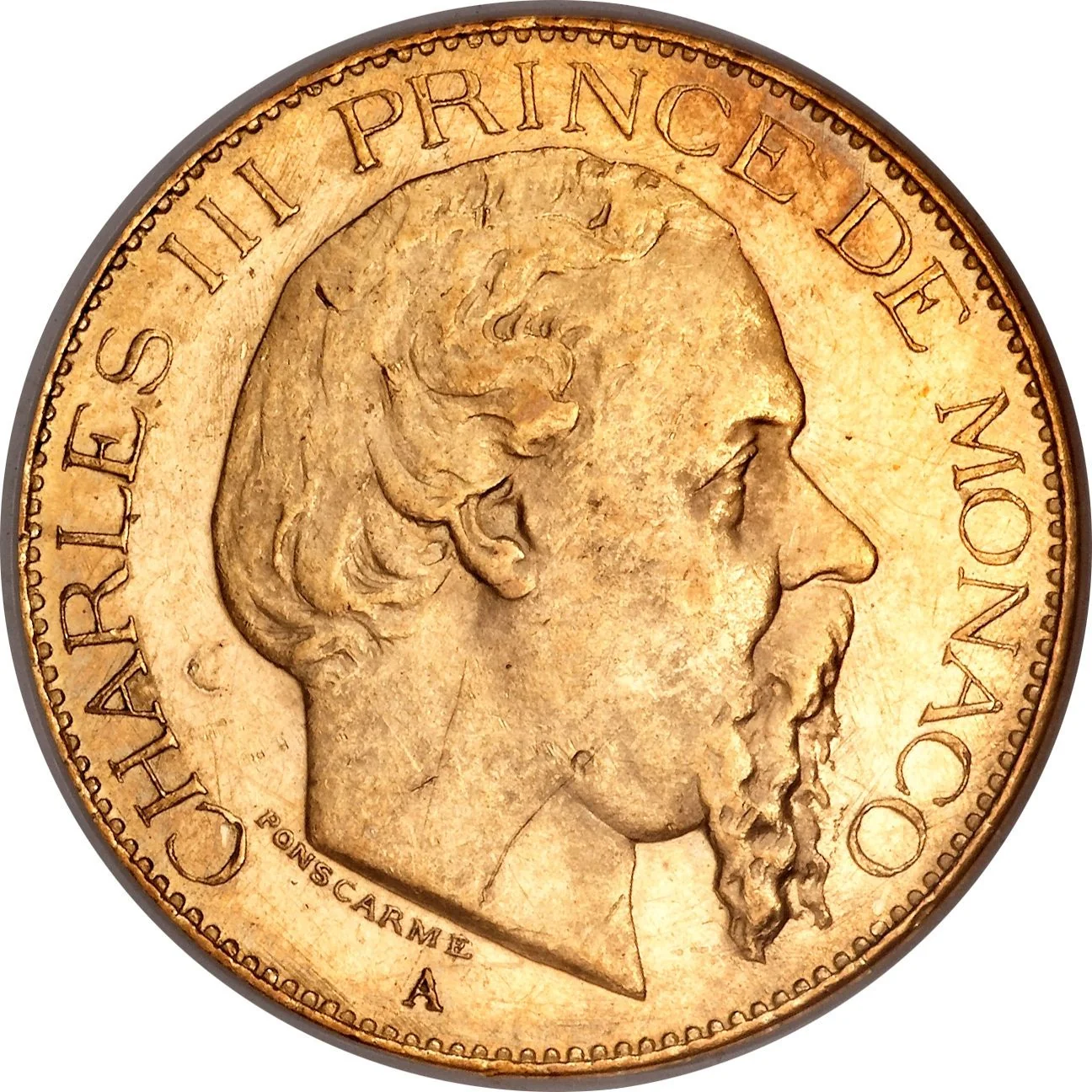
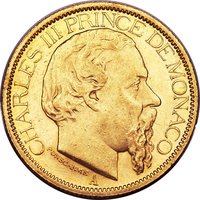
Obverse
Description:
Prince Charles III facing right
Inscription:
CHARLES III PRINCE DE MONACO
PONSCARME
A
PONSCARME
A
Translation:
CHARLES III PRINCE OF MONACO
PONSCARME
PONSCARME
Script: Latin
Language: French
Engraver: Hubert Ponscarme
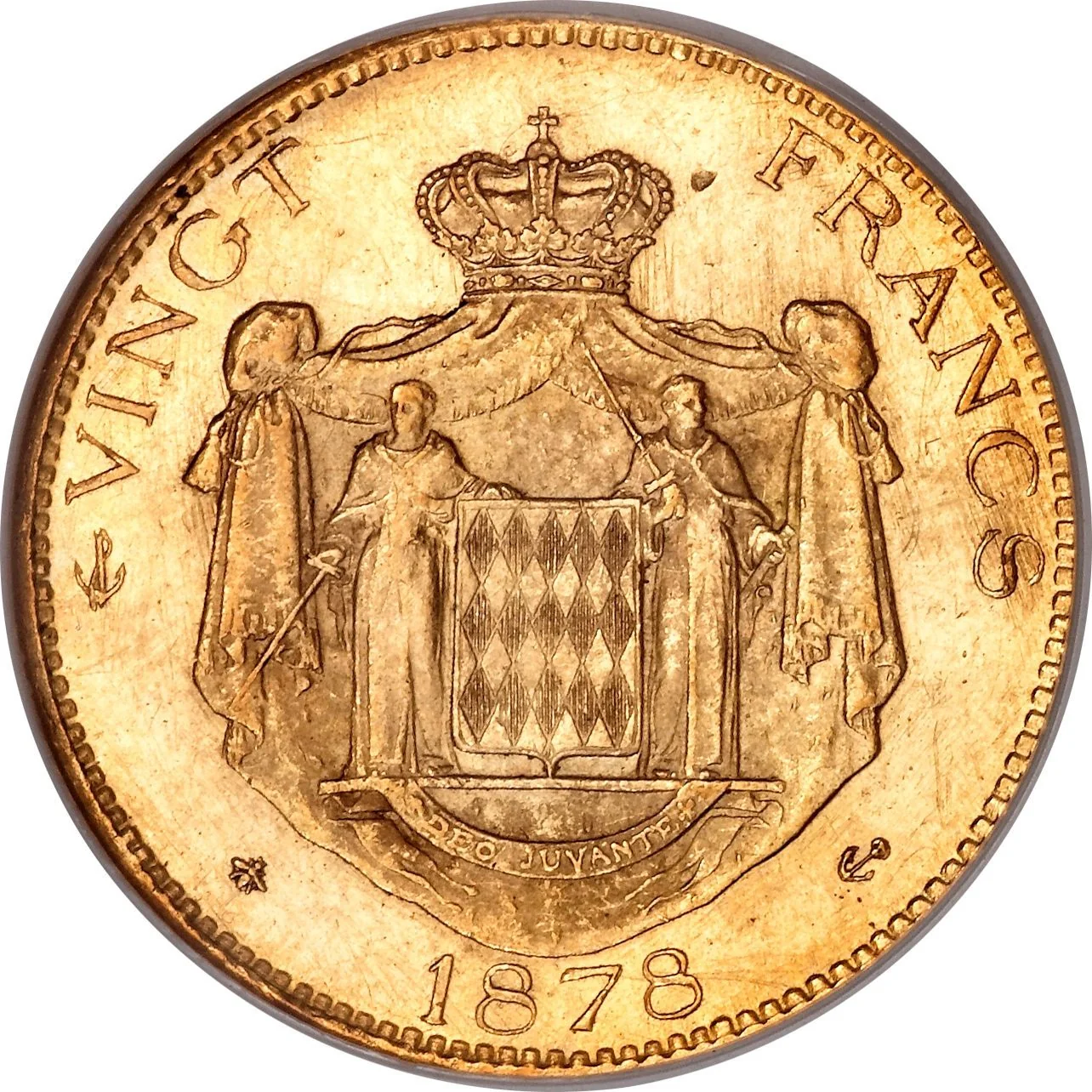
Reverse
Description:
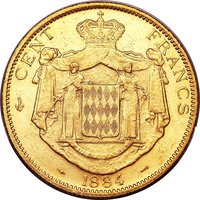
Monaco's coat of arms with date.
Inscription:
VINGT FRANCS
1878
1878
Script: Latin
Engraver: Hubert Ponscarme
Edge
Reeded
Mints
| Name | Mark |
|---|---|
| Monnaie de Paris | A |
Historical background
In 1878, Monaco's currency situation was intrinsically tied to that of France, following the principality's adoption of the French franc under the terms of the 1865 Latin Monetary Union (LMU). This treaty, which Monaco joined in 1865, created a standardized bimetallic system across several European nations, fixing the value of silver to gold. Consequently, the French franc circulated as legal tender in Monaco, and Monegasque coinage (struck at the Paris Mint) was minted to identical specifications, ensuring seamless interchangeability. The principality had effectively ceded its monetary sovereignty to the LMU framework, which provided monetary stability and facilitated trade with its powerful neighbour.
However, the broader LMU system was under significant strain by 1878. A global glut of silver, following large discoveries and Germany's shift to a gold standard, was driving down the metal's market value. This threatened the Union's fixed 15.5:1 silver-to-gold ratio, as it became profitable to mint silver coins from cheap bullion and exchange them for gold at par. While France and other members had temporarily suspended the free minting of silver in 1873 to protect their gold reserves, the systemic instability was acute. For Monaco, this meant the currency it relied upon was backed by an international agreement facing a profound crisis.
Therefore, Monaco's position in 1878 was one of passive dependence on a faltering system. The principality, with its small economy, had no independent capacity to influence monetary policy or adjust to the looming bimetallic crisis. Its financial stability was entirely contingent on the decisions made in Paris and by other LMU members. The period marked a tense prelude to the eventual demonetization of silver within the Union, a process that would solidify a de facto gold standard, further cementing Monaco's use of a French-dominated currency system for the century to follow.
However, the broader LMU system was under significant strain by 1878. A global glut of silver, following large discoveries and Germany's shift to a gold standard, was driving down the metal's market value. This threatened the Union's fixed 15.5:1 silver-to-gold ratio, as it became profitable to mint silver coins from cheap bullion and exchange them for gold at par. While France and other members had temporarily suspended the free minting of silver in 1873 to protect their gold reserves, the systemic instability was acute. For Monaco, this meant the currency it relied upon was backed by an international agreement facing a profound crisis.
Therefore, Monaco's position in 1878 was one of passive dependence on a faltering system. The principality, with its small economy, had no independent capacity to influence monetary policy or adjust to the looming bimetallic crisis. Its financial stability was entirely contingent on the decisions made in Paris and by other LMU members. The period marked a tense prelude to the eventual demonetization of silver within the Union, a process that would solidify a de facto gold standard, further cementing Monaco's use of a French-dominated currency system for the century to follow.
💎 Very Rare