

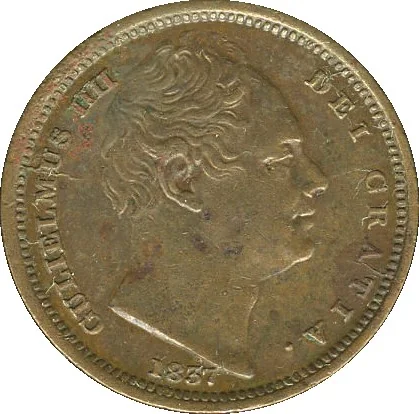
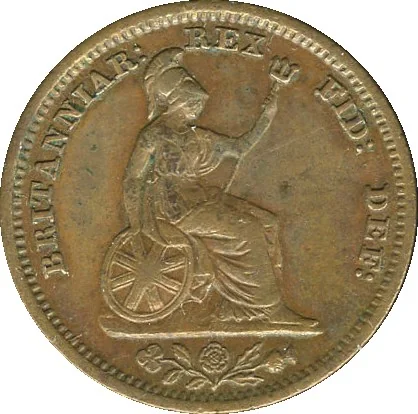
½ farthing – Ceylon
Add to wishlist
Sri Lanka
Context
Year: 1837
Country: Sri Lanka
Issuer: Ceylon
Ruler: William IV
Currency:
(1828—1869)
Demonetization: 31 December 1869
Total mintage: 1,935,300
Material
References
KM: #
Numista: #24357
Obverse
Reverse
Edge
Plain
Mints
| Name | Mark |
|---|---|
| Royal Mint (Tower Hill) | — |
Mintings
| Year | Mint Mark | Mintage | Quality | Collection |
|---|---|---|---|---|
| 1837 | — | 1,935,300 |
Historical background
In 1837, the currency situation in Ceylon (present-day Sri Lanka) was a complex and problematic legacy of its colonial transition. The island, then a British Crown Colony, operated under a chaotic multi-currency system. This included British silver coins, Indian gold pagodas and silver rupees, Dutch rix-dollars, and a vast quantity of low-value copper coins of various origins. This proliferation of currencies, all with fluctuating and unofficial exchange rates, created severe confusion for trade, taxation, and daily transactions, hampering economic administration and causing significant inconvenience to the public.
The core of the crisis was a severe shortage of official, small-denomination coinage that could facilitate everyday commerce. To fill this void, a massive influx of counterfeit copper coins, particularly from the Indian state of Travancore, flooded the market. These debased coins were widely accepted out of necessity, but they further eroded trust in the monetary system and effectively drove genuine British copper coinage out of circulation (Gresham's Law). The government's attempts to introduce its own copper coinage in previous years had failed to solve the problem, leaving the economy dependent on an unstable and fraudulent medium of exchange.
Recognising the urgent need for reform, the colonial government was on the cusp of decisive action in 1837. This culminated in the Ceylon Coinage Ordinance of 1839, which was being prepared in the preceding years. The ordinance would demonetize all foreign copper coins and introduce a unified, decimalized currency system pegged to British sterling, with the rupee subdivided into 100 cents. Thus, the situation in 1837 was one of peak disorder, directly prompting the structural reforms that would establish a modern, standardized currency for the island.
The core of the crisis was a severe shortage of official, small-denomination coinage that could facilitate everyday commerce. To fill this void, a massive influx of counterfeit copper coins, particularly from the Indian state of Travancore, flooded the market. These debased coins were widely accepted out of necessity, but they further eroded trust in the monetary system and effectively drove genuine British copper coinage out of circulation (Gresham's Law). The government's attempts to introduce its own copper coinage in previous years had failed to solve the problem, leaving the economy dependent on an unstable and fraudulent medium of exchange.
Recognising the urgent need for reform, the colonial government was on the cusp of decisive action in 1837. This culminated in the Ceylon Coinage Ordinance of 1839, which was being prepared in the preceding years. The ordinance would demonetize all foreign copper coins and introduce a unified, decimalized currency system pegged to British sterling, with the rupee subdivided into 100 cents. Thus, the situation in 1837 was one of peak disorder, directly prompting the structural reforms that would establish a modern, standardized currency for the island.
⭐ Rare