

⅓ farthing – Malta
Add to wishlist
Malta
Context
Material
Diameter: 16 mm
Weight: 1.57 g
Shape: Round
Composition: Copper
Standard: Gold twentieth ounce
Magnetic: No
Technique: Milled
Alignment: Medal alignment
flip
References
KM: #
Numista: #23651
Obverse
Description:
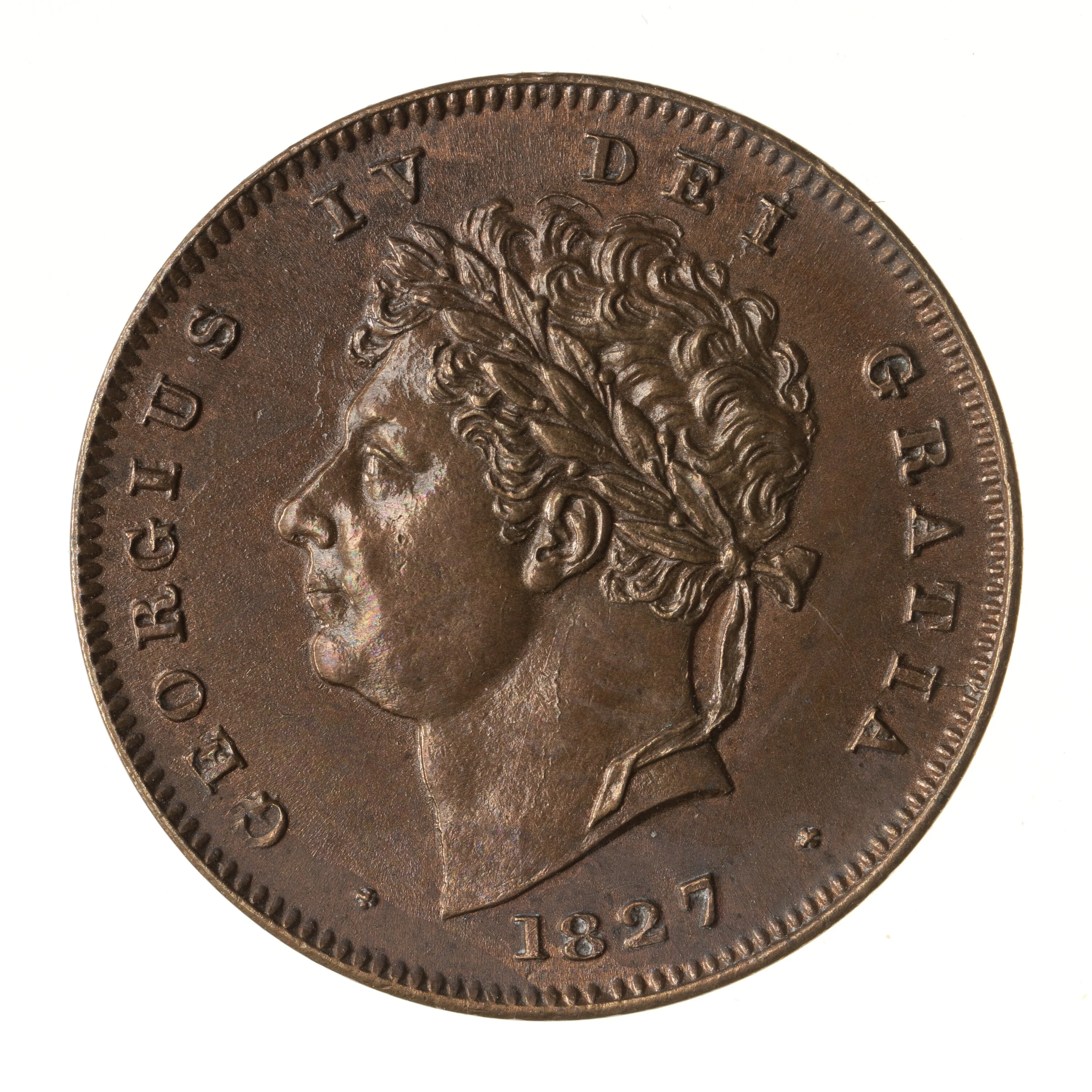
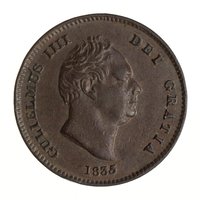
George IV laureate left, legend around, date below.
Inscription:
GEORGIUS IV DEI GRATIA
· 1827 ·
· 1827 ·
Translation:
George IV by the Grace of God
Script: Latin
Language: Latin
Engraver: William Wyon
Reverse
Description:
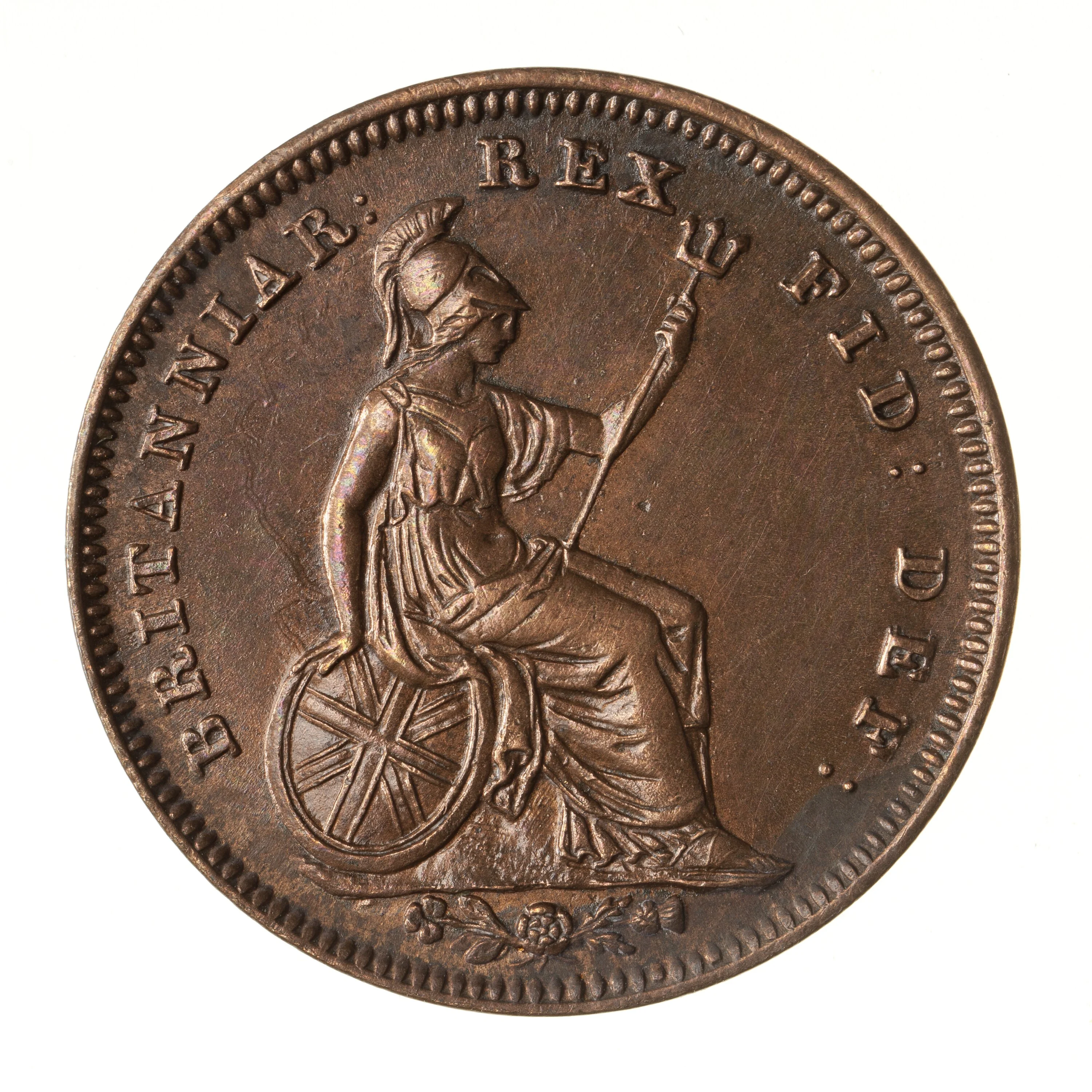
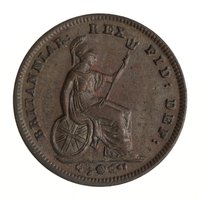
Britannia seated right, holding trident and shield with Union flag, legend around, national flowers below.
Inscription:
BRITANNIAR: REX FID: DEF:
Translation:
King of the Britains, Defender of the Faith
Script: Latin
Language: Latin
Engraver: William Wyon
Edge
Plain
Mints
| Name | Mark |
|---|---|
| Royal Mint (Tower Hill) | — |
Mintings
| Year | Mint Mark | Mintage | Quality | Collection |
|---|---|---|---|---|
| 1827 | — | — | ||
| 1827 | — | — | Proof |
Historical background
In 1827, Malta's currency situation was complex and transitional, reflecting its recent shift from the rule of the Knights of St. John to British control in 1814. The island was a monetary bazaar, with a multitude of coins from different empires circulating simultaneously. The most dominant and trusted currency was the Spanish dollar (or piece of eight), alongside a confusing mix of Sicilian, Neapolitan, Ottoman, and other European coins. The British Pound Sterling was officially introduced but remained largely confined to government and military transactions, struggling to gain acceptance among the local Maltese population and merchants.
This monetary chaos created significant practical problems. Exchange rates between the various coins fluctuated wildly, leading to uncertainty in trade and daily commerce. The British authorities, seeking to impose order and integrate Malta into their imperial system, had proclaimed Sterling as the sole legal tender in 1825. However, this 1825 proclamation was met with strong resistance and was largely ignored, as the populace clung to the familiar, silver-based Spanish dollars. By 1827, the situation was one of de facto non-compliance, with the old, heterogeneous system stubbornly persisting.
Consequently, 1827 represents a year of failed policy and ongoing negotiation. The British colonial government, recognizing the impracticality of its earlier decree, was in the process of reconsidering its approach. This would eventually lead to the Compromise of 1828, which established a fixed rate between the Sterling pound and the widely preferred scudo system (based on the Spanish dollar), creating a stable dual-currency system that would last for decades. Thus, in 1827, Malta was caught between an unenforceable new order and an entrenched old one, awaiting a pragmatic solution to its monetary disarray.
This monetary chaos created significant practical problems. Exchange rates between the various coins fluctuated wildly, leading to uncertainty in trade and daily commerce. The British authorities, seeking to impose order and integrate Malta into their imperial system, had proclaimed Sterling as the sole legal tender in 1825. However, this 1825 proclamation was met with strong resistance and was largely ignored, as the populace clung to the familiar, silver-based Spanish dollars. By 1827, the situation was one of de facto non-compliance, with the old, heterogeneous system stubbornly persisting.
Consequently, 1827 represents a year of failed policy and ongoing negotiation. The British colonial government, recognizing the impracticality of its earlier decree, was in the process of reconsidering its approach. This would eventually lead to the Compromise of 1828, which established a fixed rate between the Sterling pound and the widely preferred scudo system (based on the Spanish dollar), creating a stable dual-currency system that would last for decades. Thus, in 1827, Malta was caught between an unenforceable new order and an entrenched old one, awaiting a pragmatic solution to its monetary disarray.
🌟 Uncommon